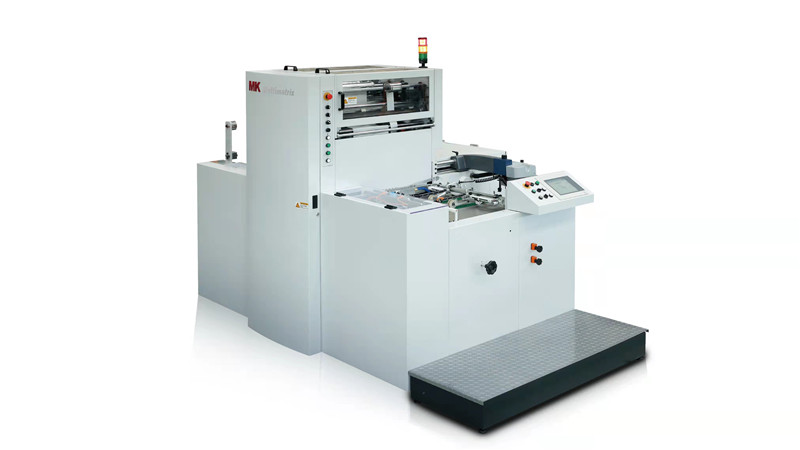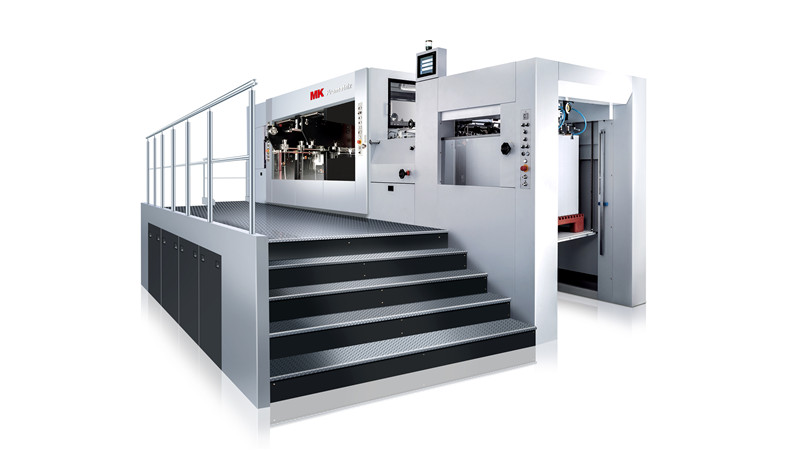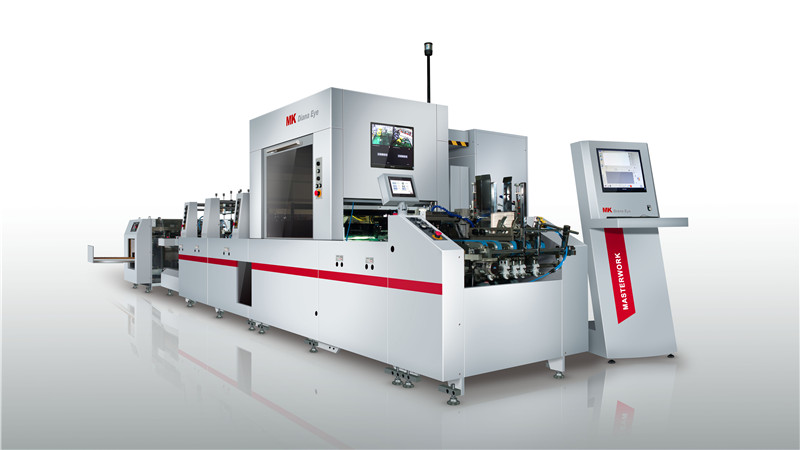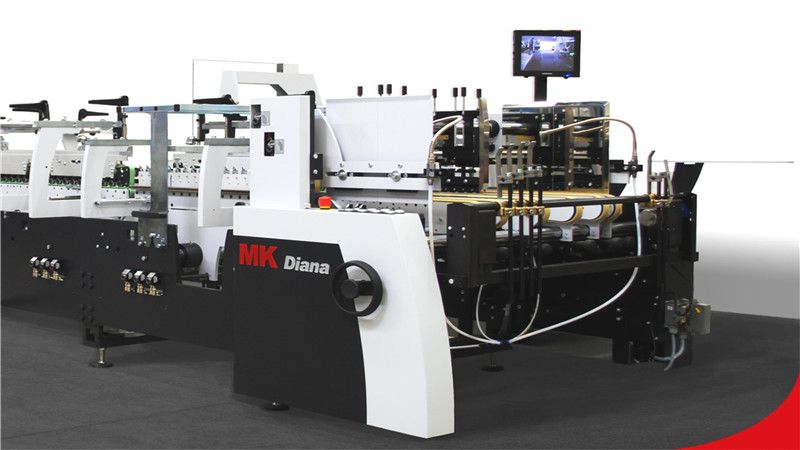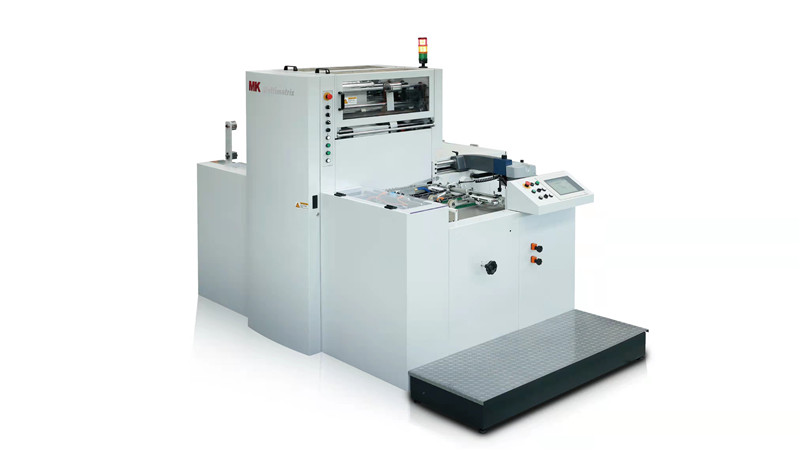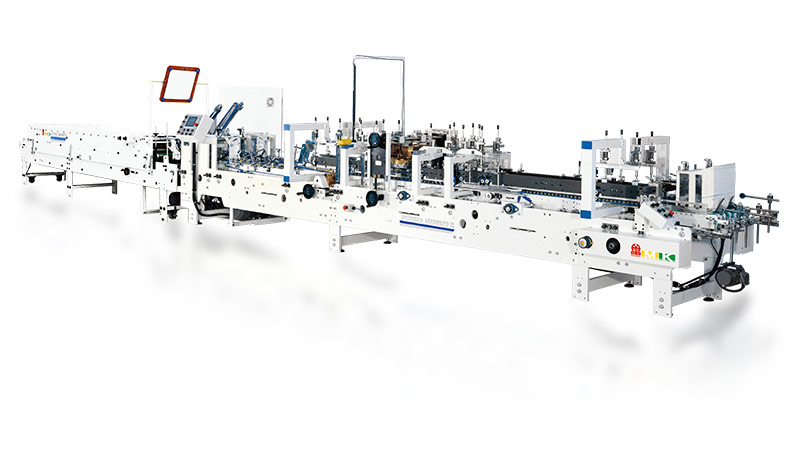
For folding carton and premium packaging production, foil stamping and die cutting machine are often two important post-press processes. Foil stamping adds metallic or decorative elements to the printed sheet, while die cutting creates the final carton shape, crease lines, windows, openings, and other structural features.
Traditionally, manufacturers may complete these processes on separate machines. The printed sheets first pass through a foil stamping machine, are collected and prepared again, and then enter a die cutting machine. Another option is a combined machine that integrates foil stamping, die cutting, stripping, and even blanking into a continuous production process.
So which configuration is better?
Separate machines usually provide greater production flexibility and independent capacity, while a combined foil stamping and die cutting machine can reduce sheet handling, intermediate storage, make-ready steps, and registration risks when the same job requires both processes.
The right choice depends on the manufacturer's order structure, production volume, finishing requirements, available floor space, and overall workflow.
Before comparing machine configurations, it is useful to understand why the two processes are frequently used together.
Hot foil stamping transfers metallic, pigment, holographic, or specialty foil onto selected areas of a printed substrate by applying heat and pressure.
It is commonly used for:
Brand logos
Product names
Metallic borders
Decorative patterns
Holographic elements
Premium graphics
Embossed foil effects
This process is particularly common in cosmetics, pharmaceuticals, confectionery, wine and spirits, gift p ackaging, and other premium folding cartons.
Die cutting converts a printed sheet into the required packaging structure.
It can create:
Outer carton profiles
Creasing lines
Windows
Openings
Perforations
Special shapes
Structural packaging elements
For many folding cartons, both processes are required before the carton moves to folding and gluing.
That creates an important production decision:
Should the sheet move through separate machines for each operation, or should several finishing processes be completed during one machine pass?
In a conventional separate-machine workflow, production may look like this:
Printing → Foil Stamping → Sheet Collection → Transfer → Die Cutting → Stripping → Folding and Gluing
The foil stamping and die cutting machines operate independently.
This approach remains common because it gives manufacturers considerable flexibility in production planning.
For example, one machine can process a foil stamping order while the die cutter handles an unrelated carton job.
The biggest advantage is that each machine can be scheduled independently.
Not every carton requires foil stamping.
A packaging plant may produce:
Standard cartons requiring only die cutting
Premium cartons requiring foil stamping
Embossed cartons
Cartons requiring foil stamping and die cutting
Commercial printing products with no carton converting
With separate machines, each job can be routed only through the equipment it needs.
This can be particularly useful for commercial converters serving a broad customer base.
Separate machines can work on different orders simultaneously.
While the foil stamping machine processes one premium packaging job, the die cutter can run another high-volume carton order.
For plants with large and varied workloads, this parallel production capability can significantly affect overall factory capacity.
If only 20% of orders require foil stamping but nearly every folding carton requires die cutting, the two machines do not necessarily need identical capacity.
Manufacturers can configure their equipment around actual production demand.
For example, a plant may operate several die cutters but only one foil stamping machine.
Separate machines can be optimized around a particular operation.
Operators can focus on:
Foil temperature
Foil tension
Stamping pressure
Die preparation
Cutting pressure
Stripping setup
This can be helpful when jobs have complex or specialized finishing requirements.
The flexibility of separate equipment also introduces additional production steps.
After foil stamping, sheets must usually be:
Delivered from the machine.
Stacked.
Moved to an intermediate area.
Prepared for the next operation.
Loaded into the die cutter.
Registered again.
Every additional handling stage requires time and labor.
For high-volume production, these seemingly small steps can become significant.
Sheets waiting between foil stamping and die cutting become work-in-progress, or WIP.
Factories therefore need space for:
Pallets
Intermediate storage
Production staging
Sheet transportation
This can complicate workflow in facilities where floor space is limited.
When the sheet enters the second machine, its position must be registered again.
For a simple carton this may not be a major problem.
But when the foil needs to align precisely with:
Printed graphics
Die-cut edges
Windows
Embossed areas
Small decorative elements
registration becomes much more important.
Each additional pass through another machine introduces another opportunity for positioning variation.
A combined system integrates multiple converting functions into one production platform.
A typical process might look like:
Printing → Foil Stamping → Die Cutting → Stripping → Blanking
with several operations taking place during one continuous sheet flow.
Instead of completing foil stamping, collecting the sheets, moving them to another machine, and registering them again, the sheet passes sequentially through dedicated stations.
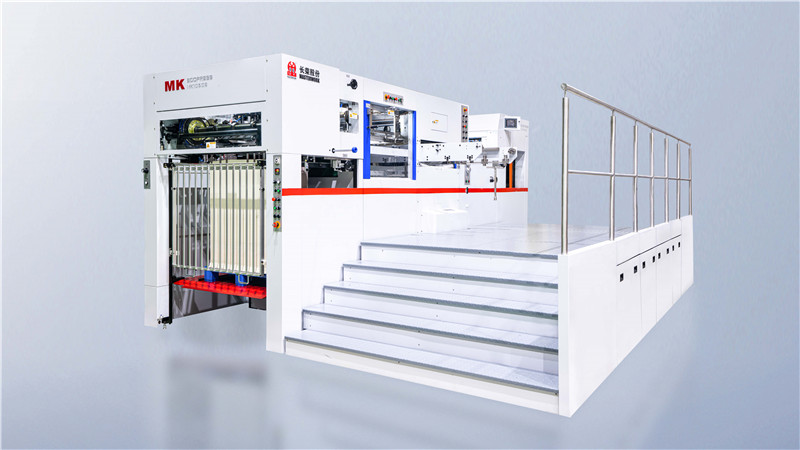
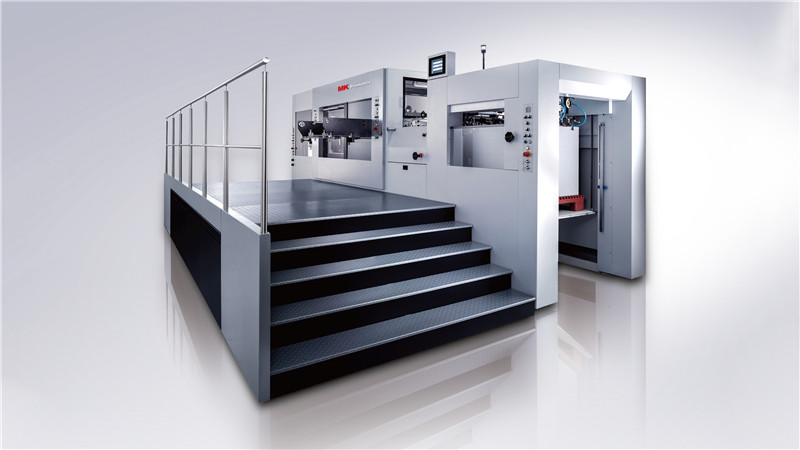
Masterwork's Duopress 106FCSB is an example of this configuration. It is designed to perform hot foil stamping, die cutting, stripping, and blanking within one production process. The machine uses two working stations, with the first typically used for foil stamping before the sheet continues through the subsequent converting stages.
This type of configuration is especially relevant for high-value folding cartons that consistently require several finishing processes.
One of the clearest advantages is the reduction in material movement.
With separate machines:
Foil → Deliver → Stack → Move → Reload → Register → Die Cut
With an integrated system:
Foil → Die Cut → Strip → Blank
Reducing intermediate handling can lower:
Manual handling requirements
Pallet movement
Internal transportation
Production waiting time
WIP inventory
This becomes increasingly important as production volume grows.
Machine speed alone does not determine factory productivity.
Consider two machines that can each process thousands of sheets per hour.
If sheets spend several hours waiting between foil stamping and die cutting, the total lead time can still be long.
A combined system aims to improve the entire workflow rather than simply one individual process.
For example, one pass through the Duopress 106FCSB can cover stamping, embossing, die cutting, stripping, and blanking operations. Its published specifications list maximum machine speed at up to 5,000 sheets per hour, depending on the application.
For the right job structure, eliminating intermediate production stages may be more valuable than comparing the headline speed of individual machines.
Registration is especially important in premium packaging.
Imagine a cosmetic carton where:
The printed logo is black.
A thin gold foil outline surrounds the logo.
An embossed area must align with the foil.
The carton edge passes only a few millimeters from the design.
If stamping and cutting are completed on different machines, sheet positioning has to be established at each production stage.
An integrated workflow reduces the number of times the sheet is removed and reintroduced into another production process.
This can help manufacturers maintain more consistent relationships between decorative and structural elements.
Separate machines require production areas not only for equipment but also for material movement.
Factories may need space between processes for:
Finished pallets from the foil stamper
Waiting pallets for die cutting
Forklift access
Material staging
Quality inspection
An integrated machine may reduce the amount of intermediate storage required.
This can be particularly valuable in packaging plants where space is expensive or production layouts are already crowded.
Some packaging designs regularly combine:
Printing + Foil Stamping + Embossing + Die Cutting + Stripping + Blanking
Running all of these as separate stages can create a long production route.
Combined equipment is particularly attractive when the same types of jobs repeatedly require multiple finishing operations.
Masterwork positions the Duopress 106FCSB for applications including cosmetics, confectionery, liquor packaging, and other high-value folding boxes where several finishing processes may be needed. The machine supports paper from 90 g/m², carton board up to 2,000 g/m², and corrugated board up to 2 mm according to its published specifications.
| Factor | Separate Machines | Combined Machine |
|---|---|---|
| Foil stamping | Separate operation | Integrated station |
| Die cutting | Separate operation | Integrated station |
| Sheet handling | More | Less |
| Intermediate storage | Usually required | Reduced |
| Re-registration | Required between processes | Reduced |
| Parallel production | Strong advantage | More limited |
| Workflow length | Longer | Shorter |
| Production flexibility | High | Best for defined workflows |
| Floor-space efficiency | Depends on layout | Can reduce WIP areas |
| Complex premium cartons | Effective but multi-stage | Particularly suitable |
| Equipment utilization | Independent | Functions tied to same platform |
| Downtime impact | One process may continue | Multiple integrated processes can be affected |
Products
Contact us
Related Information
Content

We look forward to hearing from you. In order to respond to your message more quickly, we need some information. *These are required