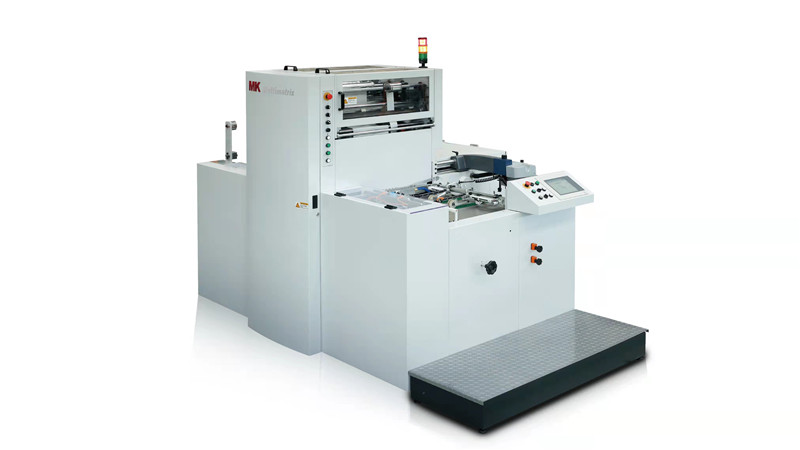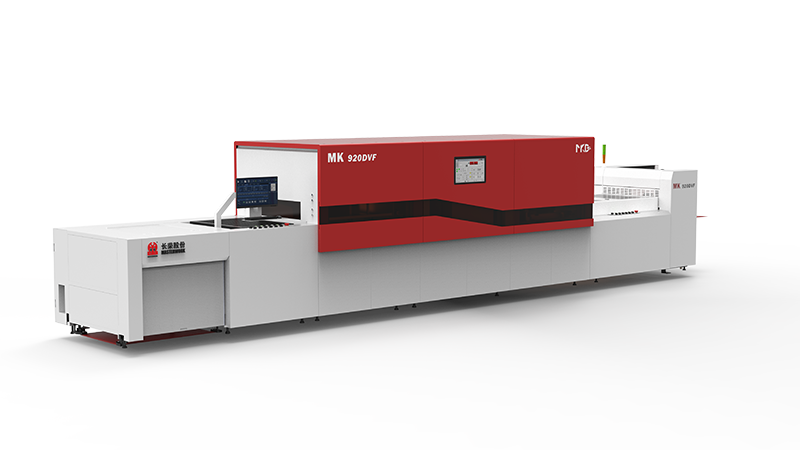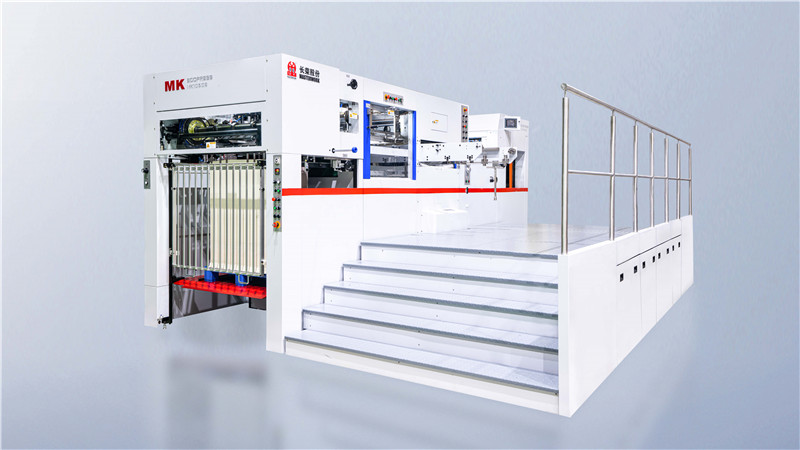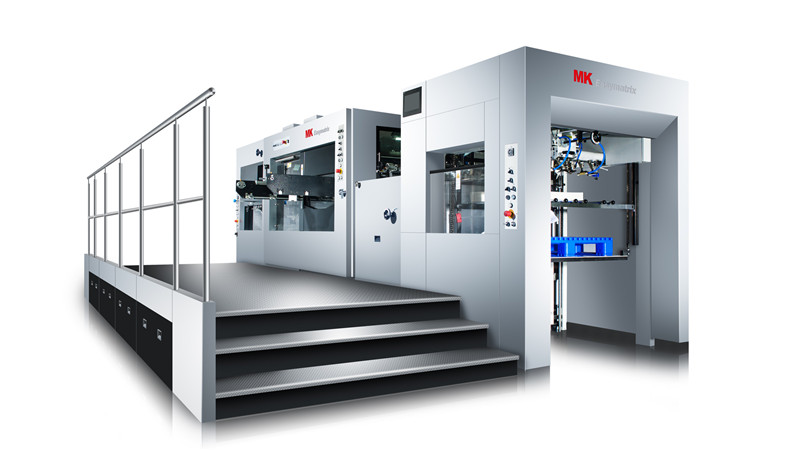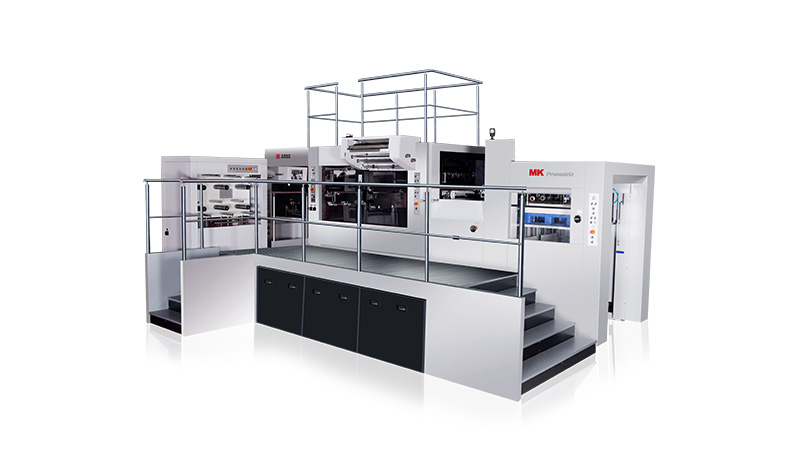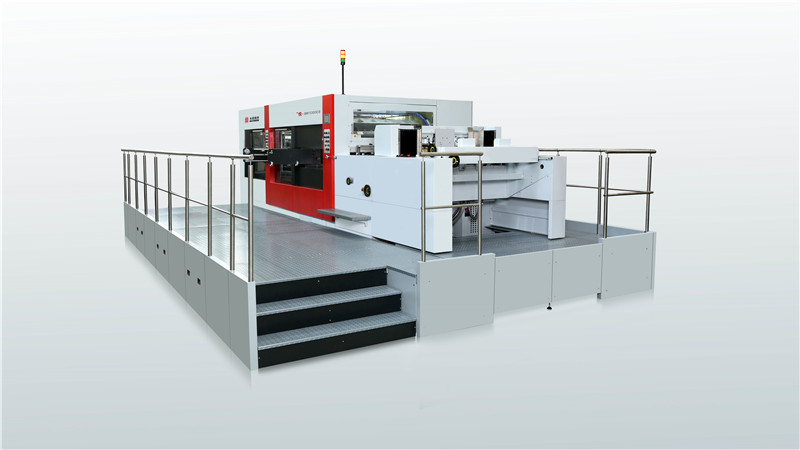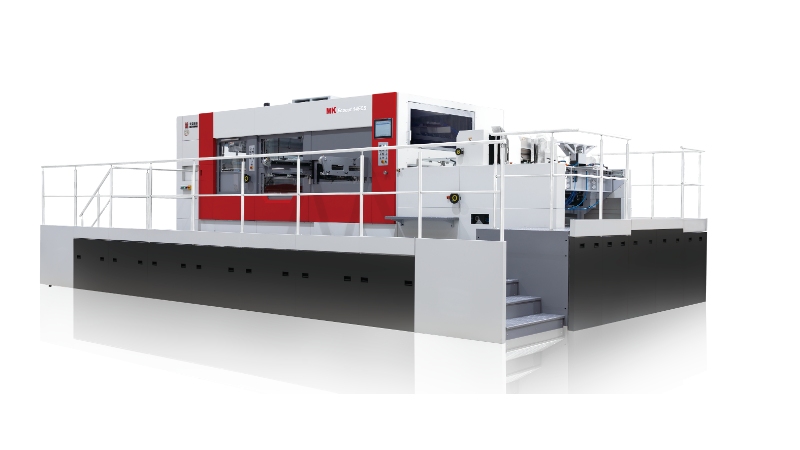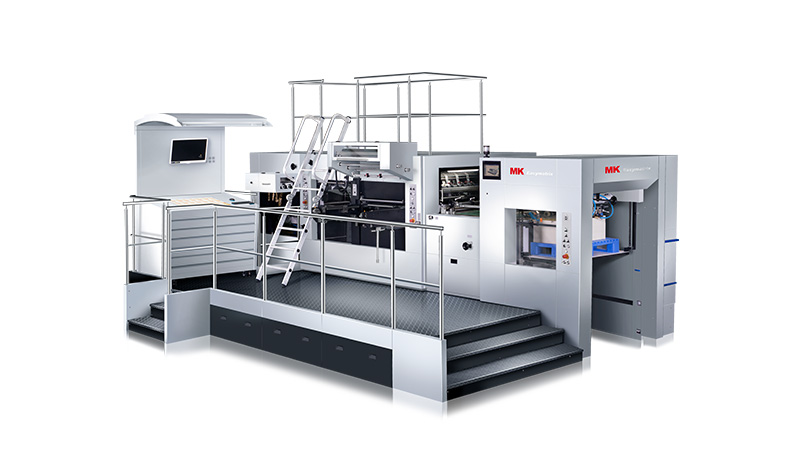
A foil stamping machine can process a wide range of substrates, including paper, paperboard, cardboard, coated and laminated materials, and certain plastics. Hot stamping technology can also be applied to leather, synthetic materials, and some other surfaces, depending on the equipment and foil system being used.
For industrial printing and packaging production, however, the most common applications are paper-based packaging materials. A modern foil stamping machine uses controlled heat, pressure, and foil transfer to create metallic, colored, holographic, or decorative effects on packaging and printed products.
The important point is that material compatibility is not determined by the substrate name alone. Surface coating, thickness, heat resistance, smoothness, foil type, stamping pressure, and production speed can all affect the final result.
The following table provides a practical overview of materials commonly encountered in foil stamping applications.
| Material | Foil Stamping Suitability | Common Applications | Key Considerations |
|---|---|---|---|
| Paper | Excellent | Cards, labels, commercial printing | Surface smoothness and coating |
| Paperboard | Excellent | Folding cartons, cosmetic boxes, pharmaceutical packaging | Thickness, coating and pressure |
| Solid cardboard | Excellent | Premium boxes, rigid packaging components | Pressure uniformity |
| Corrugated board | Application-dependent | Corrugated packaging, displays | Flute structure and surface flatness |
| Coated paper/board | Excellent when compatible | Luxury cartons, retail packaging | Coating and foil adhesion |
| Laminated board | Application-dependent | Premium and protective packaging | Lamination surface and heat resistance |
| Plastic sheets | Application-dependent | Containers, decorative packaging, consumer products | Heat sensitivity and surface energy |
| Leather/PU | Application-dependent | Covers, accessories, branded products | Surface texture and foil formulation |
| Synthetic materials | Application-dependent | Specialty products | Material and foil compatibility |
For packaging manufacturers, paper, paperboard, solid cardboard, and coated board are generally the most common substrates for automatic flatbed foil stamping.
Paper is one of the easiest and most widely used materials for foil stamping.
Hot foil can be applied to many paper products, including:
Greeting cards
Labels
Invitations
Book covers
Paper bags
Promotional materials
Premium printed products
The relatively flat surface of paper makes it suitable for detailed foil patterns, small text, logos, borders, and decorative graphics.
However, different papers can still behave differently during stamping. Highly textured or porous paper may require different pressure, temperature, or foil formulations compared with smooth coated paper.
For this reason, two papers with the same grammage do not necessarily require identical stamping settings.
Paperboard is one of the most important materials for industrial foil stamping machines because it is extensively used in packaging.
Typical applications include:
Cosmetic cartons
Pharmaceutical boxes
Food packaging
Confectionery packaging
Wine and spirits cartons
Electronics packaging
Gift boxes
Luxury retail packaging
Foil stamping is particularly useful in these applications because metallic and holographic effects can highlight logos, brand names, borders, product information, and decorative elements without requiring metallic printing ink.
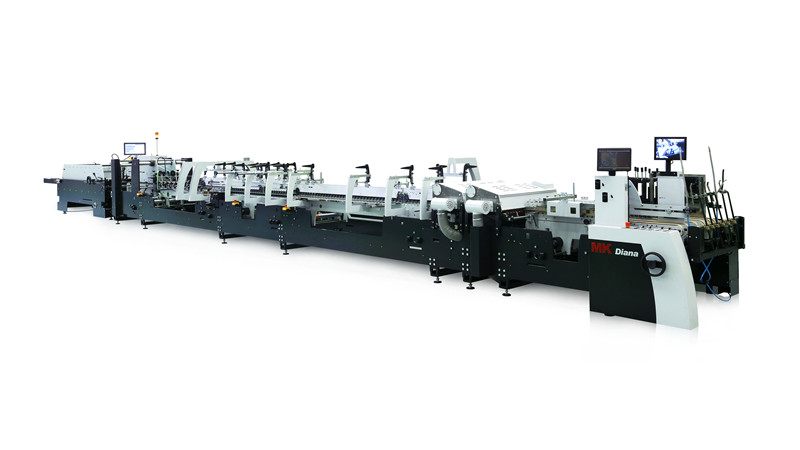
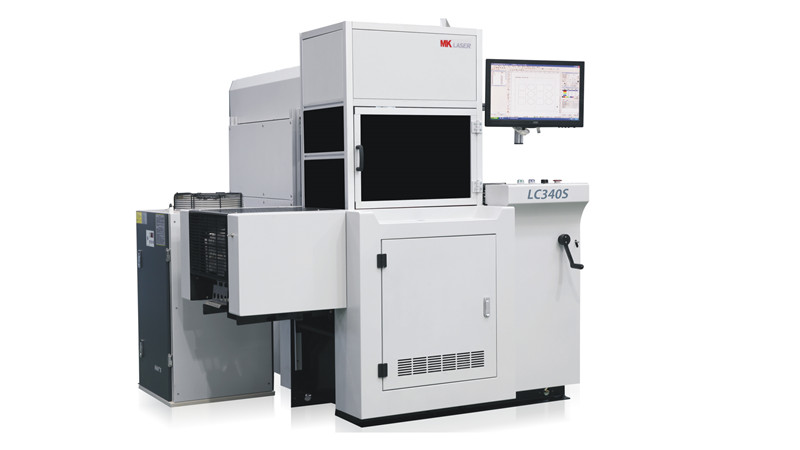
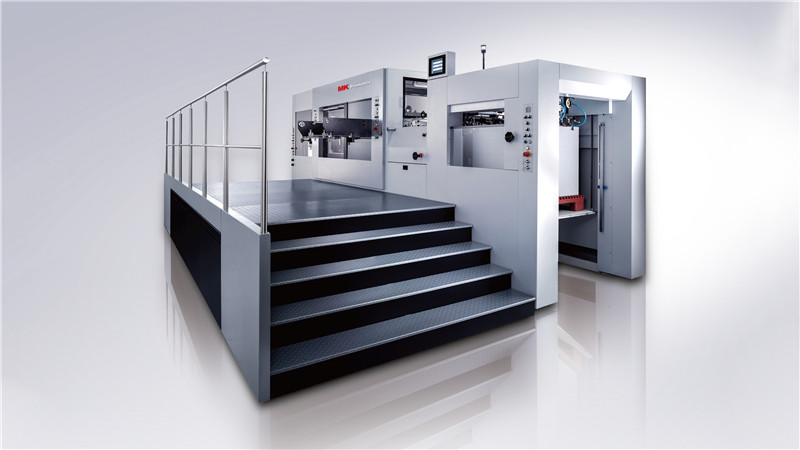
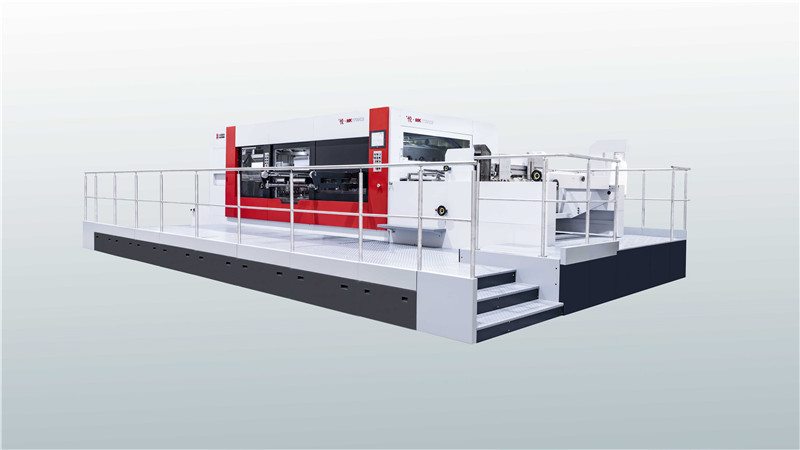
Masterwork's automatic hot stamping solutions are designed particularly around printing and packaging production, including folding cartons and other sheet-fed packaging products. The company's systems combine precise registration, temperature control, pressure control, and automated sheet handling for consistent industrial production.
For more information about how the process works, see our guide to the working principle of a hot stamping machine.
Thicker solid cardboard can also be processed by suitable foil stamping equipment.
This material is often used for:
Premium packaging
Gift packaging
Luxury boxes
High-end product packaging
Packaging inserts and decorative components
Compared with thin paper, thicker board places greater demands on sheet feeding, pressure distribution, registration, and machine stability.
The exact material capacity therefore depends on the machine model.
For example, Masterwork's Easymatrix 106 FC is specified to process paper from 90 g/m² and solid cardboard up to 2,000 g/m². This illustrates why packaging manufacturers should compare actual substrate specifications with the technical capabilities of the selected machine rather than simply asking whether a machine can process "cardboard."
Corrugated board can also be compatible with foil stamping, but it requires more careful evaluation than conventional folding carton board.
The main challenge is its structure.
Unlike solid paperboard, corrugated material contains a fluted layer. Excessive pressure may affect the board structure, while insufficient pressure may lead to incomplete foil transfer.
Other factors include:
Surface flatness
Flute type
Board thickness
Liner quality
Printed or laminated surface
Stamping area
Die design
For suitable equipment, corrugated board can be processed successfully. For example, Masterwork lists corrugated cardboard up to 4.0 mm among the processable materials for the Easymatrix 106 FC.
However, manufacturers should always evaluate the specific board construction rather than treating all corrugated materials as identical.
Many premium packaging products use coated substrates because coatings improve print appearance, surface smoothness, or protection.
These materials are generally suitable for hot foil stamping, but the coating becomes an additional part of the bonding system.
The foil is not bonding directly to the base paperboard. Instead, it may be bonding to:
foil → coating → paperboard
As a result, successful foil transfer depends on how the adhesive layer of the foil interacts with the coating surface.
Potential issues include:
Poor foil adhesion
Incomplete transfer
Pinholes
Flaking
Uneven edges
Loss of fine detail
If a packaging job involves a special coating, testing the actual finished substrate is preferable to testing uncoated board alone.
Laminated paper and paperboard are common in premium packaging, but their foil stamping performance depends heavily on the laminate.
A laminated surface may be smoother than untreated paperboard, but it may also respond differently to heat and foil adhesive.
Important factors include:
Lamination material
Surface treatment
Heat resistance
Surface energy
Foil adhesive formulation
Stamping temperature
For this reason, manufacturers should provide the actual laminated sample when evaluating a foil stamping solution.
Testing the base board without the final lamination may not accurately represent production conditions.
Hot stamping can also be used on certain plastic materials, including applications involving PVC, PET, PP, and other compatible plastics.
Typical applications can include:
Plastic packaging components
Containers
Cosmetic packaging
Decorative panels
Consumer product components
Branded plastic surfaces
However, plastics require more careful temperature control than paperboard.
Hot foil stamping depends on heat to activate the foil release and adhesive layers. If the substrate has limited heat resistance, excessive temperature or dwell time can cause:
Deformation
Shrinkage
Surface damage
Poor dimensional stability
The correct combination of foil type, surface treatment, temperature, pressure, and contact time therefore becomes especially important when stamping plastic.
This is also why manufacturers should not assume that a foil performing well on paperboard will automatically perform equally well on plastic.
Hot stamping technology can also be applied to leather, PU, and various synthetic surfaces.
Common applications include:
Notebook covers
Branded accessories
Leather goods
Promotional products
Decorative products
These materials are frequently associated with specialty hot stamping equipment rather than large-format packaging presses.
Masterwork's core automatic foil stamping equipment is primarily positioned around industrial printing and packaging applications, so manufacturers processing non-paper substrates should confirm their exact product, size, material construction, and production requirements before selecting a machine configuration.
Simply knowing the material category is not enough. Five factors are especially important.
Hot stamping requires close contact between the die, foil, and substrate.
A smooth surface generally makes it easier to achieve:
Sharp edges
Fine text
Solid foil coverage
Consistent transfer
Rough, textured, or porous materials may require greater process adjustment.
Varnishes, coatings, inks, laminations, and other surface treatments can change foil adhesion.
The final production substrate should therefore be tested whenever possible.
Hot stamping applies heat directly through the die.
Paperboard generally tolerates the process well, while some plastics and synthetic materials may deform if the temperature or contact time is too high.
Substrate thickness affects feeding, pressure, registration, and machine configuration.
An industrial foil stamping machine therefore has defined minimum and maximum material specifications.
Not every foil is designed for every substrate.
Metallic foil, pigment foil, holographic foil, and specialty foils may use different adhesive systems. Selecting the correct foil for the substrate is as important as selecting the correct machine settings.
Material compatibility is closely connected to three major foil stamping variables:
temperature, pressure, and dwell time or production speed.
Temperature activates the foil release and adhesive system.
Pressure creates sufficient contact between the die, foil, and material.
Dwell time determines how long heat and pressure interact with the substrate.
These variables affect each other. Increasing production speed, for example, reduces the effective contact time and may require adjustments elsewhere in the process.
This is why there is no single universal foil stamping temperature or pressure that works for every material.
For packaging manufacturers, the safest approach is to test the actual finished substrate.
A useful test should reproduce the production construction as closely as possible, including:
Base material
Printing ink
Surface coating
Lamination
Foil type
Die design
Stamping area
This is particularly important for high-volume packaging production because a small compatibility issue can become significant when thousands or millions of sheets are processed.
If foil is not transferring correctly, material compatibility should be considered alongside temperature, pressure, foil tension, die condition, and machine setup. Masterwork also summarizes several of these issues in its hot stamping machine FAQ.
Before selecting a machine, packaging manufacturers should define more than simply whether they process "paper" or "cardboard."
Useful information includes:
Substrate type
Minimum and maximum thickness
Sheet dimensions
Coated or laminated condition
Product type
Required foil area
Number of foil colors or effects
Production volume
Required production speed
Whether die cutting, embossing, or stripping is also required
For example, a folding carton manufacturer running coated paperboard at high volume has very different requirements from a producer handling thick corrugated material or heat-sensitive plastic sheets.
Masterwork offers multiple automatic foil stamping machine configurations for printing and packaging applications. Machine selection can be based on substrate specifications, production capacity, product format, finishing requirements, and the functions required in the overall post-press workflow.
A foil stamping machine can process paper, paperboard, solid cardboard, coated and laminated materials, corrugated board, and certain plastics, while hot stamping technology can also be applied to leather, PU, fabrics, and other synthetic materials with suitable equipment.
For industrial packaging production, paper and paperboard remain among the most common substrates. But successful foil stamping depends on more than the material name. Surface condition, coating, thickness, heat resistance, foil compatibility, temperature, pressure, and production speed all influence the final result.
Therefore, when selecting a foil stamping machine, manufacturers should evaluate the actual finished substrate together with their required sheet size, production speed, foil effect, and downstream finishing process. A material sample and clearly defined production specifications make it much easier to determine the appropriate foil stamping solution.
Products
Contact us
Related Information
Content

We look forward to hearing from you. In order to respond to your message more quickly, we need some information. *These are required