Industrial Die Cutting Machine for Corrugated Packaging
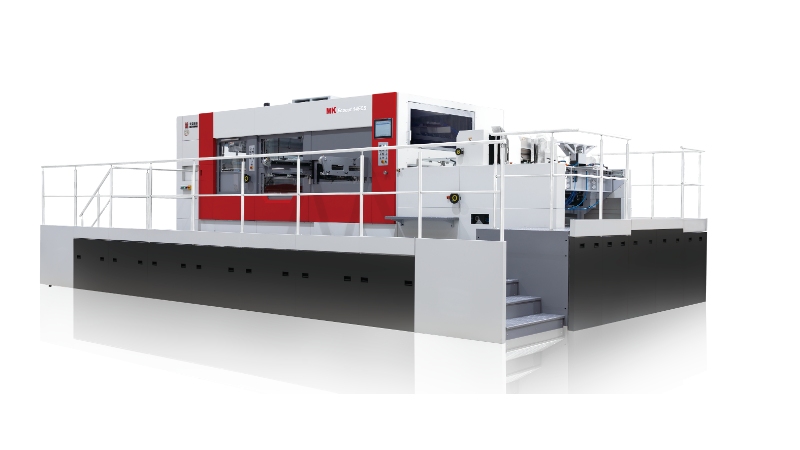
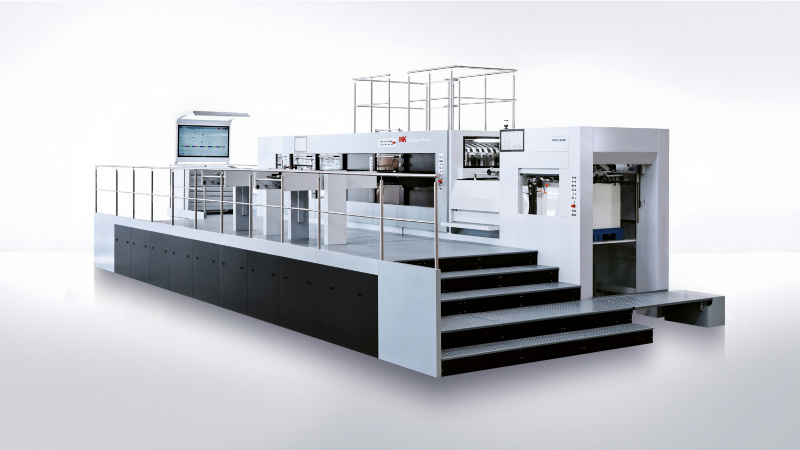
An industrial die cutting machine for corrugated packaging must do more than cut large sheets. It must feed warped board reliably, register printed graphics accurately, apply sufficient pressure without crushing the flutes, remove complex waste, and deliver stable stacks at production speed. For medium- and large-format packaging, an automatic flatbed system is often selected because it combines controlled pressure, accurate creasing, flexible tooling, in-line stripping, and efficient handling of corrugated and litho-laminated board.
Corrugated packaging production creates challenges that are less significant in ordinary folding carton work. The sheets are thicker, larger, less flat, and more difficult to transport. Their internal flute structure must remain strong after cutting and creasing, while printed or laminated surfaces must be protected from scratches and misregistration.
Sheet loading → Feeding → Registration → Die cutting and creasing → Waste stripping → Delivery and stacking
A machine that performs well at the die-cutting station but feeds poorly, leaves waste in the sheet, or creates unstable delivery piles will still restrict the production line.
Why Corrugated Packaging Requires a Different Die Cutting Solution
Corrugated board is made from one or more fluted mediums bonded between liner sheets. This structure provides strength with relatively low material weight, but it also makes the board more difficult to process consistently.
A folding carton sheet is usually thin, smooth, and comparatively flat. Corrugated board may vary in thickness, stiffness, moisture content, flute profile, surface quality, and flatness from one production batch to another.
Corrugated Material Characteristic
Production Challenge
Greater thickness
Requires sufficient clearance, cutting pressure, and suitable tooling
Internal flute structure
Can be crushed by excessive or poorly distributed pressure
Sheet warpage
Makes separation, feeding, and registration more difficult
Large sheet dimensions
Increase sheet inertia and transport instability
Variable stiffness
Changes how the board reaches the front and side lays
Rough or coated surface
Influences friction, suction, and scratch risk
Litho-laminated surface
Requires accurate print-to-cut registration
Multiple board layers
Increase cutting resistance and creasing complexity
Complex waste sections
Require reliable automatic stripping
Large finished blanks
Create additional delivery and stacking challenges
These variables explain why a conventional small-format paperboard machine cannot always be enlarged and used as a reliable large format die cutting machine. The feeder, gripper transport, platen structure, stripping station, delivery section, and control system must all be designed for the larger and thicker substrate.
Common Challenges in Large-Format Corrugated Die Cutting
The most common production problems do not originate from one component alone. They are usually caused by an interaction between the material, die, feeder, registration system, pressure setting, and waste-removal configuration.
Controlled pressure and correctly selected crease tooling
Internal waste remains
Inadequate stripping tools or unstable sheet position
Center-positioned automatic stripping
Waste falls into the machine
Poor waste control
Dedicated gripper-edge and waste-edge removal
Changeovers take too long
Heavy tooling and manual alignment
Centerline positioning and quick-lock systems
Delivery piles are unstable
Large blanks, high speed, poor jogging
Front, rear, and side pile alignment
Too much manual handling
Basic feeding and delivery configuration
Pre-feeder, non-stop delivery, conveyors, or logistics integration
An effective automatic die cutting solution should address these issues as part of one coordinated machine architecture rather than treating each problem as a separate optional feature.
Feeding Warped and Heavy Corrugated Sheets
Feeding is one of the most critical parts of an automatic corrugated die cutting machine. If the sheet does not enter the machine flat, square, and at the correct time, the downstream registration and die-cutting systems cannot fully correct the error.
Why Corrugated Sheets Warp
Corrugated sheets may curve upward, downward, or diagonally because of:
Uneven moisture content
Temperature differences
Improper storage
Flute-liner tension
Lamination stress
Ink and coating application
Changes in factory humidity
Uneven stacking pressure
Large sheets amplify the problem because even a small degree of curvature can produce a substantial height difference across a 1300, 1450, or 1700 mm format.
Bottom Suction and Front-Edge Feeding
Bottom suction feeding can be advantageous for printed corrugated materials because the feeding mechanism contacts the lower surface rather than repeatedly dragging across the printed top liner.
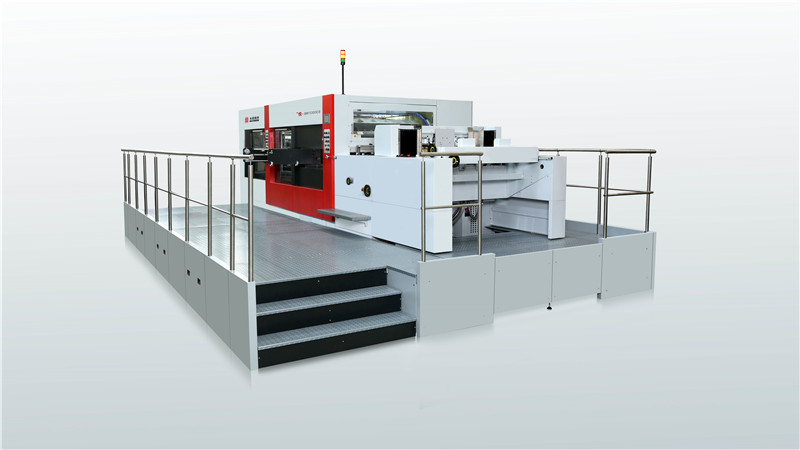
The Masterwork Ecocut 130CS uses a patented downside suction mechanism intended to reduce surface scratches and improve the transport of warped sheets. Its sheet feeding is controlled by a high-torque servo motor so that the board reaches the front lay in a stable position.
For larger formats, a front-edge feeding system can provide strong suction and controlled delivery of the leading edge. On the Ecocut 170CS, the feeding design includes high-suction front-edge feeding, an auxiliary feeding device, servo-controlled sheet deceleration, extended front lays, and wider front-lay stoppers for corrugated board.
Features to Evaluate in a Corrugated Feeder
A buyer should evaluate the feeder using actual production materials, including warped and litho-laminated sheets.
Important functions include:
Adjustable suction zones
Air blowing and sheet separation
Double-sheet detection
Missing-sheet detection
Auxiliary manual feeding
Servo-controlled acceleration
Sheet deceleration before registration
Adjustable front-lay height
Left and right side lays
Surface protection
Pile lifting
Pre-feeder compatibility
A feeder should not only operate with perfectly flat demonstration sheets. It should maintain stable production with the board conditions normally encountered in the customer’s factory.
Registration and Sheet Transport at Large Formats
Registration becomes more difficult as the sheet becomes larger and heavier. A large corrugated sheet carries more inertia during acceleration and deceleration, which can cause skewing, bouncing, or movement against the lays.
Front and Side Registration
The front lays establish the longitudinal position of the sheet. Side lays establish the lateral position.
For large corrugated board, these components should provide:
Sufficient contact area
Adjustable height
Stable control of warped edges
Fast position correction
Reliable sheet detection
Consistency at production speed
A wider front-lay stopper can provide more stable contact with a large sheet. Pneumatic side alignment can help position different corrugated formats without damaging the edge.
Gripper Transport
After registration, the gripper bar carries the sheet through the die-cutting and stripping stations. The system must hold the sheet securely while accelerating and stopping repeatedly.
Gripper transport affects:
Registration repeatability
Cutting position
Stripping alignment
Gripper margin
Sheet release
Delivery stability
A large-format machine requires sufficient rigidity in the gripper bars, chains, guides, and drive system. Any transport variation can become visible as print-to-cut misregistration or incomplete stripping.
Registration for Printed Corrugated Packaging
Basic shipping cartons may tolerate relatively generous positional variation. Premium retail packaging and displays usually do not.
Registration becomes especially important for:
Litho-laminated boxes
Point-of-purchase displays
Beverage packaging
Electronics packaging
Food and gift boxes
Packaging with windows
Products with narrow printed borders
Designs combining cutting, creasing, and perforation
For these products, the industrial cardboard cutting machine must align the die with the printed graphics rather than simply produce the correct external dimensions.
Cutting Pressure Without Flute Crushing
Corrugated board must be cut completely while preserving its structural function.
If pressure is too low, the cutting rule may not penetrate all layers. If pressure is excessive, the board may be compressed, marked, or weakened.
What Determines Required Cutting Pressure?
Required pressure depends on:
Board thickness
Flute profile
Liner strength
Number of board layers
Total cutting-rule length
Number of blanks per sheet
Internal openings
Perforation pattern
Creasing-rule length
Cutting-rule condition
Packing and cutting plate condition
Simultaneous embossing or special operations
A complex multi-blank display layout may require substantially more force than a simple shipping carton made from the same board.
Pressure Distribution Is as Important as Maximum Pressure
A high maximum pressure rating is not sufficient if force is not distributed evenly across the platen.
Uneven pressure may produce:
Complete cutting at one side
Incomplete cutting at the opposite side
Deep creases in one area
Weak creases in another
Excessive makeready packing
Faster rule wear
Damage to the cutting plate
A large format flatbed die cutter therefore requires a rigid frame, stable drive mechanism, accurately machined platen, and controllable pressure adjustment.
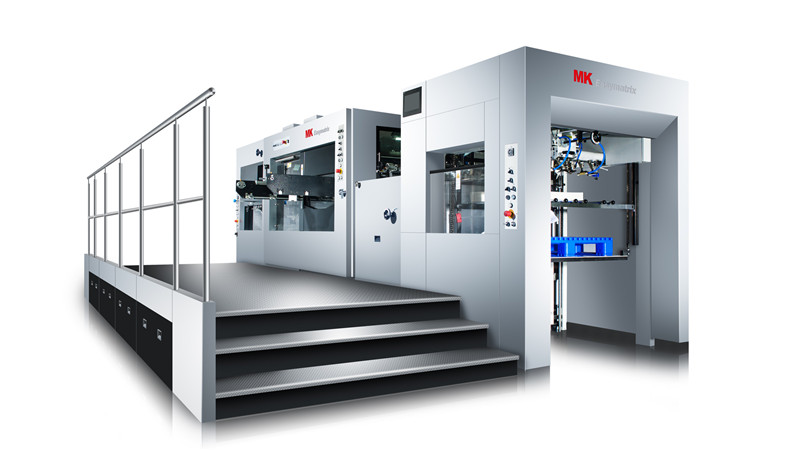
The Ecocut 145CS and Ecocut 170CS both publish a maximum die-cutting pressure of 400 T. Their die-cutting sections include pneumatic locking and center positioning for the cutting plate, while the lower plate incorporates handling support to make plate movement more manageable.
Protecting Corrugated Strength
Flute crushing can reduce:
Compression strength
Stacking performance
Edge crush performance
Product protection
Carton appearance
Folding consistency
Pressure should therefore be adjusted to complete the cut and form the crease without compressing a larger area than necessary.
The tooling design is equally important. Rule height, crease width, crease depth, matrix selection, rubber hardness, nick placement, and board direction should all be matched to the substrate.
Creasing Large Corrugated Packaging
Cutting creates the external shape, but creasing determines whether the finished packaging folds correctly.
Poor creasing can cause:
Uneven folding
Cracked printed liners
Bulging panels
Misaligned glue joints
Inaccurate carton dimensions
Difficulty on automatic folder gluers
Reduced structural strength
Factors Affecting Crease Quality
Factor
Possible Effect
Creasing-rule height
Crease may be too deep or too shallow
Matrix width
Fold may crack or become poorly defined
Board flute direction
Fold resistance can vary
Liner quality
Surface may crack under pressure
Moisture level
Board may become brittle or too soft
Pressure setting
Excessive pressure may crush the flute
Sheet position
Crease may not align with printed panels
Tool wear
Crease consistency may decline during long runs
The best crease configuration should be confirmed through material testing. The same tooling setup may not work equally well on E-flute, B-flute, C-flute, and double-wall board.
Litho-Laminated Board Die Cutting
Litho laminated board die cutting combines the structural demands of corrugated material with the visual standards of high-quality printed packaging.
A printed top sheet is laminated to corrugated board before die cutting. This process creates packaging with strong shelf impact, but it introduces additional production variables.
Multi-blank layouts may contain complex internal waste
Equipment Requirements
A suitable corrugated flatbed die cutter should provide:
Low-scratch feeding
Stable registration
Controlled sheet deceleration
Strong gripper transport
Uniform platen pressure
Accurate creasing
Automatic stripping
Reliable delivery alignment
Fast tooling changes
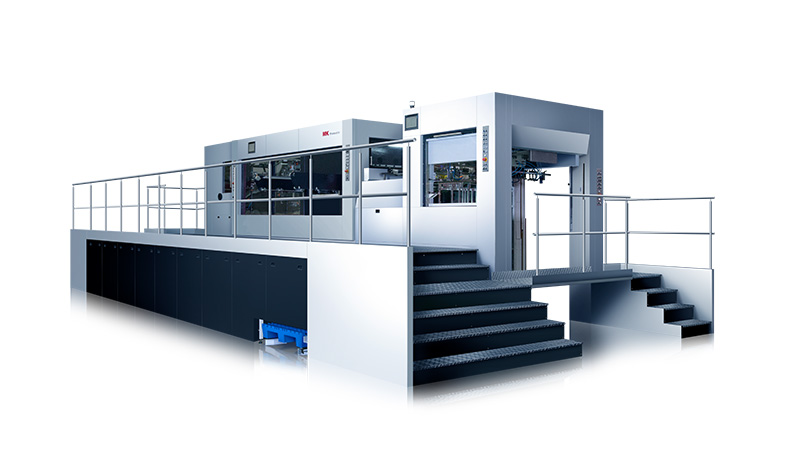
The MK Ecocut 170CS is designed for both corrugated and litho-laminated board from 1 to 8.5 mm and is intended to process large-format, multi-blank layouts. Its published maximum sheet size is 1700 × 1260 mm, with a maximum die-cutting area of 1700 × 1245 mm.
Why Automatic Stripping Matters
After die cutting, the sheet may still contain a large amount of waste.
Typical waste sections include:
Outer sheet trim
Gripper edges
Windows
Handles
Ventilation holes
Display openings
Interior slots
Small enclosed sections
Waste between multiple blanks
Manual stripping is possible, but it can become a bottleneck when sheets are large or layouts are complex.
Accurate stripping requires the stripping tools to align with the cutting die. If the upper, middle, and lower stripping components are not correctly positioned, the system may damage finished blanks or leave waste attached.
Center-positioning systems help operators install stripping tools in a repeatable location. Electric lifting of the upper stripping frame also reduces manual handling, particularly on large-format machines.
The Ecocut 145CS and Ecocut 170CS use centered upper and middle stripping frames, with electric lifting designed to make operation and plate changes more efficient.
Gripper-Edge and Waste-Edge Removal
The gripper edge is necessary for sheet transport, but it normally becomes waste after processing.
Automatic gripper-edge removal prevents the operator from separating this material manually. A waste conveyor can move the removed material away from the delivery area and into a recycling or waste-handling system.
This keeps the production area cleaner and reduces interruption at the delivery section.
Delivery and Stacking of Large Corrugated Sheets
Large-format delivery presents different challenges from small folding carton delivery.
A processed corrugated sheet may be:
Thick
Flexible
Partially stripped
Made up of several large blanks
Difficult to jog accurately
Sensitive to edge damage
Too large for convenient manual handling
Pile Alignment
The delivery system should align the sheet from the front, rear, and sides. Poor pile alignment can cause:
Unstable pallet stacks
Damage during transport
Difficult downstream feeding
Additional manual jogging
Product mixing
Reduced logistics efficiency
High-Pile Delivery
High-pile delivery is appropriate when sheets or blanks will be transported on pallets.
Important considerations include:
Maximum pile height
Pallet dimensions
Automatic pile lowering
Sheet jogging
Operator access
Non-stop pile changes
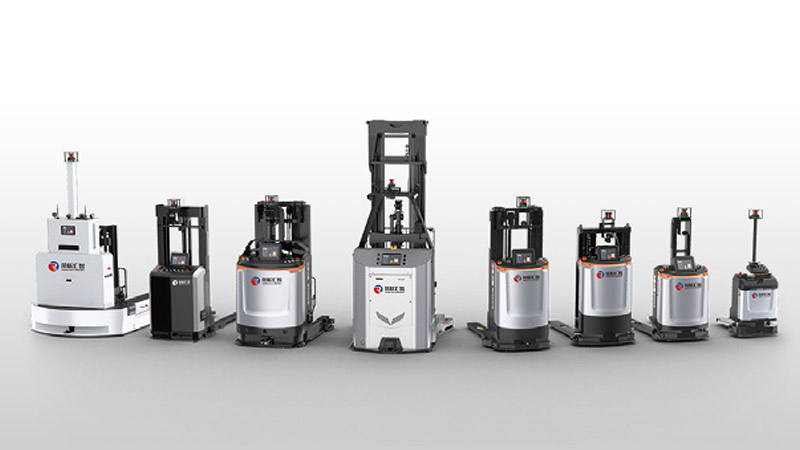
Connection with AGV or conveyor systems
The Ecocut 170CS offers high-stack delivery with an optional automated logistics interface, as well as a conveyor-belt delivery option. Its published high-pile delivery capacity is up to 1450 mm including the pallet.
Counting Conveyor Delivery
A counting conveyor can separate production into defined batches. This may be useful for:
Corrugated box components
Display parts
Manual packing
Batch inspection
Downstream bundling
Orders that do not require high-pile delivery
The delivery configuration should be selected according to the finished product and downstream workflow rather than treated as a standard choice for every factory.
Machine Architecture for Large-Format Corrugated Production
A reliable automatic corrugated die cutting machine combines several systems designed specifically for thick and large substrates.
Extended front lays, side positioning, servo-controlled arrival
Transport
Rigid gripper bars and stable drive
Die-cutting
High pressure, rigid platen, center-positioned plate
Stripping
Centered tooling, electric frame lifting, waste-edge removal
Delivery
Multi-direction jogging and high-pile or conveyor options
Lubrication
Central automatic lubrication
Controls
HMI, modular electrical design, production monitoring
Maintenance
Fault detection and remote-service interface
Logistics
Optional pre-feeder, conveyor, pallet, or AGV connection
Centralized Lubrication
Large machines contain chains, bearings, gears, and other moving components that must operate under repeated load.
Central automatic lubrication:
Reduces manual lubrication work
Improves consistency
Helps protect moving components
Reduces the risk of missed lubrication points
Supports long production shifts
Simplifies preventive maintenance
Both the Ecocut 145CS and 170CS use centralized automatic lubrication for major moving components.
Modular Controls and Remote Maintenance
A modular electrical system can make fault identification and component replacement more manageable.
Remote maintenance interfaces allow technical teams to review machine conditions and control-system information without immediately requiring an on-site visit. This does not replace mechanical service, but it can accelerate diagnosis of control, sensor, alarm, and parameter problems.
Applications of Industrial Corrugated Die Cutting
An industrial die cutting machine for corrugated packaging can support a broad range of box and display structures.
Shipping and Transport Cartons
Applications include:
Industrial equipment boxes
Appliance packaging
Electronics shipping cartons
Automotive parts packaging
Protective transport packaging
E-commerce delivery boxes
These products may require strong creasing, handles, ventilation holes, locking tabs, and protective internal structures.
Food and Beverage Packaging
Typical products include:
Beverage multipacks
Wine and spirits boxes
Produce trays
Food shipping cartons
Takeaway packaging
Shelf-ready cases
Food and beverage work often combines high volume with strict dimensions and consistent folding performance.
Retail and Litho-Laminated Packaging
Applications include:
Premium electronics boxes
Toy packaging
Printed food cartons
Gift packaging
Subscription boxes
Shelf-ready packaging
For these products, litho laminated board die cutting must protect the printed surface and maintain accurate registration.
Point-of-Purchase Displays
Corrugated displays may contain:
Large external profiles
Internal shelves
Locking tabs
Windows
Header sections
Multiple connected components
A large format flatbed die cutter is particularly suitable because several display parts can be arranged on one sheet and processed with complex cutting and creasing rules.
Multi-Blank Packaging
Large sheets may carry several identical or different blanks. Multi-blank production can reduce the number of sheets required, but it also increases:
Total cutting-rule length
Stripping complexity
Pressure demand
Tooling size
Delivery and separation requirements
The machine must maintain cutting and creasing consistency across the complete sheet.
Improving Changeover Efficiency
Large-format machines use large cutting dies, plates, and stripping frames. Without suitable positioning and handling systems, changeovers can consume a significant part of the production schedule.
Sources of Changeover Time
A complete change may involve:
Removing the previous cutting die
Removing the stripping tools
Cleaning the station
Installing the new die
Aligning the cutting plate
Installing upper and middle stripping frames
Adjusting feeder settings
Adjusting side and front lays
Setting pressure
Producing test sheets
Correcting incomplete cuts
Approving production
Center Positioning
Center-positioning systems give the die, plate, and stripping tools a repeatable reference point. This reduces manual measurement and makes it easier to reinstall repeat-job tooling.
Quick-Lock Systems
Pneumatic and quick-lock systems reduce the time required to secure:
Cutting chases
Cutting plates
Stripping frames
Base plates
The Ecocut 170CS uses center positioning and quick-lock systems for its cutting and stripping plates, specifically to reduce job-change and makeready time.
Prepare Tooling Outside the Machine
Where factory layout permits, tooling should be inspected and prepared before the current job finishes.
Pre-makeready may include:
Checking cutting-rule damage
Installing ejection rubber
Preparing stripping pins
Verifying nicks
Cleaning the die
Confirming product orientation
Recording the previous pressure setup
This reduces the amount of work performed while the machine is stopped.
Integrating Existing Dies and Production Equipment
A new industrial cardboard cutting machine should fit the factory’s existing production environment.
Compatibility questions include:
Can existing cutting dies fit the new chase?
Is the rule height compatible?
Does the gripper margin match existing dielines?
Can stripping tools be reused?
Do pallet dimensions match the delivery?
Can the printing or laminating line supply the format?
Can downstream equipment handle the finished blanks?
Does the machine fit the available production space?
Are material flow and operator access practical?
This issue is especially important in large-format production because replacing a library of large cutting dies can create significant disruption.
Masterwork’s customized Ecocut 170CS project for a UK customer illustrates how compatibility can be treated as part of the engineering solution. The machine was adapted to the customer’s production requirements and existing equipment, while the engineering team integrated existing die tooling into the new automatic system. Following installation and commissioning, the machine operated consistently at speeds of up to 5800 sheets per hour while maintaining product quality and production stability. The customer subsequently purchased a second customized Ecocut 170CS within one year.
The importance of this example is not simply the running speed. It shows that large-format automation must account for existing assets, tooling practices, operator workflows, and real production conditions. A technically compatible machine can be integrated with less disruption than a standard machine that requires the factory to redesign every surrounding process.
Selecting the Right Automatic Die Cutting Solution
The correct configuration should be based on the complete application.
Production Condition
Recommended Direction
Medium-format corrugated boxes
130-format machine with stripping
Thick and larger corrugated sheets
145-format reinforced system
Large multi-blank or litho-laminated sheets
170-format system
Warped or printed board
Low-scratch, high-suction feeding
Complex windows and internal waste
Automatic stripping
Heavy tooling
Center positioning and assisted plate handling
Frequent order changes
Quick-lock and repeatable setup systems
Long production runs
Non-stop feeding and delivery
Automated material flow
Conveyor, pallet, pre-feeder, or AGV integration
Premium printed packaging
Stable registration and controlled pressure
An automatic die cutting solution should not be selected by adding every available option. Each feature should address a known production requirement.
For example:
A pre-feeder is valuable when long runs create continuous pile-loading demands.
A counting conveyor is useful when finished products must be supplied in batches.
High-pile delivery is more suitable when output is moved by pallet.
Automatic logistics integration is justified when manual material movement limits machine utilization.
Center-positioned stripping tools are especially valuable when order changes are frequent.
Final Considerations
An industrial die cutting machine for corrugated packaging must be evaluated as a complete production system rather than only as a cutting press.
Large-format corrugated production requires coordinated control of:
Warped-sheet feeding
Printed-surface protection
Front and side registration
Gripper transport
Cutting pressure
Flute protection
Creasing quality
Waste stripping
Tool changeovers
Delivery alignment
Maintenance access
Production-line integration
A medium-format corrugated board die cutting machine may be sufficient for standard boxes and 1–5 mm materials. A reinforced 145-format machine may be more appropriate for larger and thicker structures. A 170-format corrugated flatbed die cutter becomes relevant when the factory processes large multi-blank sheets, thick corrugated structures, litho-laminated retail packaging, and display components.
The final selection should be confirmed with actual substrates, production dies, complex stripping layouts, and realistic operating speeds. The most suitable machine is the one that feeds the buyer’s normal board reliably, maintains registration, completes cutting and creasing across the full format, removes waste consistently, and delivers stable production without transferring bottlenecks to another part of the factory.