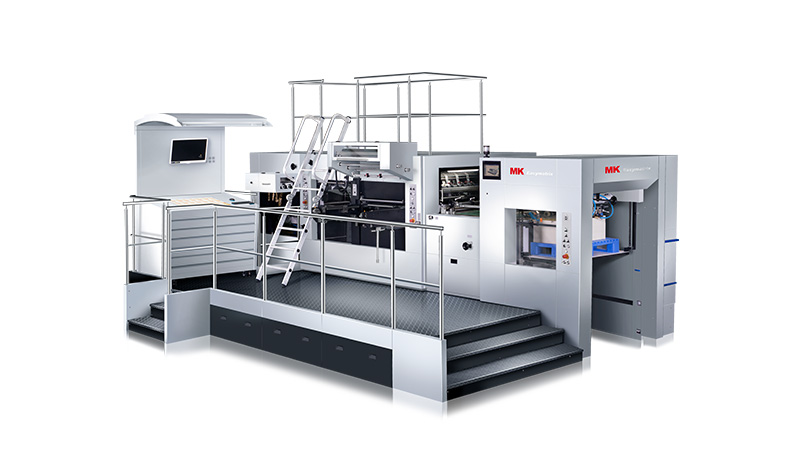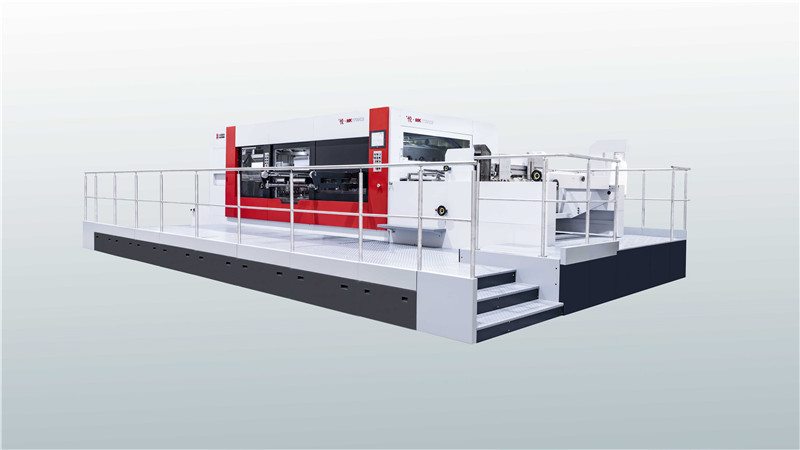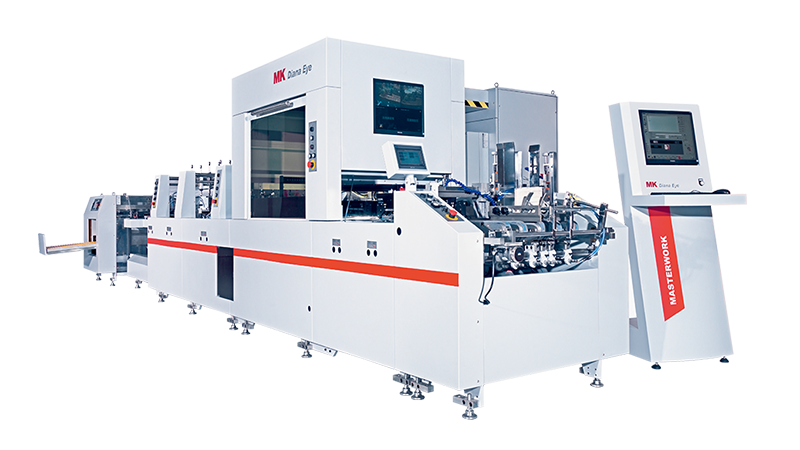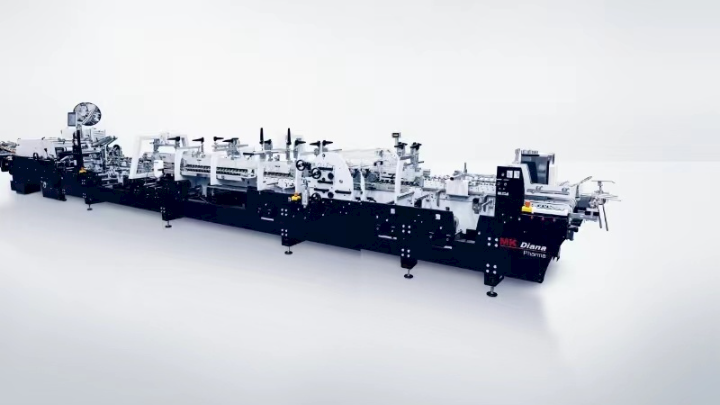
To choose an industrial die cutting machine, start with the substrate, maximum product format, sheet layout, required cutting pressure, registration tolerance, stripping needs, and realistic production volume. Then compare sustainable speed, changeover time, tooling compatibility, labor requirements, maintenance access, and downstream integration. The best machine is not necessarily the largest or fastest model. It is the machine that produces the required packaging quality at the lowest reliable cost per finished blank.
For packaging manufacturers, purchasing a die cutter is a long-term production decision rather than a simple equipment comparison. The machine affects material utilization, output per shift, staffing, waste rates, delivery reliability, tooling investment, and the ability to accept more complex packaging orders.
A useful industrial die cutting machine buying guide must therefore look beyond brochure speed and purchase price. It should help buyers translate their actual production requirements into the correct machine format, structure, level of automation, and supporting systems.
Substrate should be the first factor in any automatic die cutting machine selection process. Material characteristics determine the required feeding method, transport system, pressure, tooling, crease configuration, and waste-removal system.
Two sheets with the same external dimensions may behave very differently if one is coated folding carton board and the other is litho-laminated corrugated board.
Important substrate variables include:
| Material Variable | Why It Matters |
|---|---|
| Material type | Determines feeding, tooling, pressure, and crease requirements |
| Grammage | Influences stiffness, cutting resistance, and sheet handling |
| Thickness | Affects feeder settings, gripper transport, and platen clearance |
| Corrugated flute | Influences board compression, cutting force, and crease design |
| Surface coating | May increase scratching, slipping, or crease-cracking risk |
| Lamination | Can change thickness, stiffness, flatness, and layer adhesion |
| Moisture content | Affects board flexibility, warpage, and crease quality |
| Sheet flatness | Directly affects feeding and registration stability |
| Grain direction | Influences folding behavior and crease cracking |
| Printed surface | Increases the importance of print-to-cut registration |
Folding carton production usually requires accurate cutting, controlled creasing, stable print registration, and clean blank separation.
Typical applications include:
Pharmaceutical cartons
Cosmetic packaging
Food cartons
Beverage packaging
Personal care packaging
Electronics boxes
Tobacco packaging
Premium consumer product cartons
For these applications, the machine should be evaluated for:
Registration accuracy
Crease quality
Cutting repeatability
High-speed sheet transport
Non-stop feeding
Automatic stripping
Blanking
Compatibility with folder-gluer production
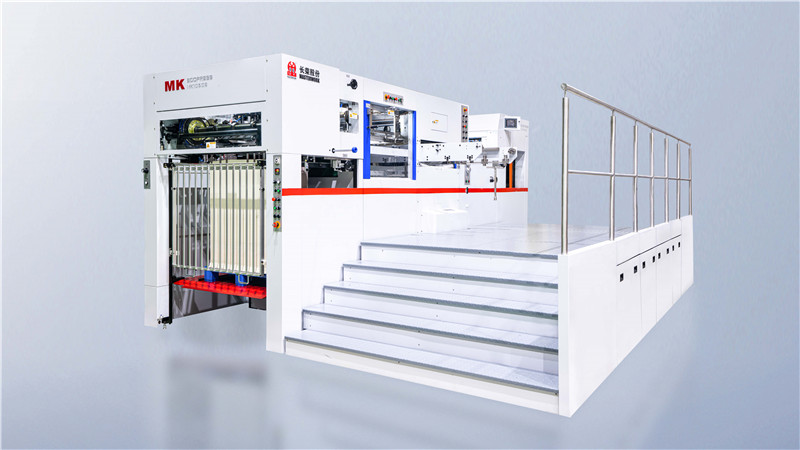
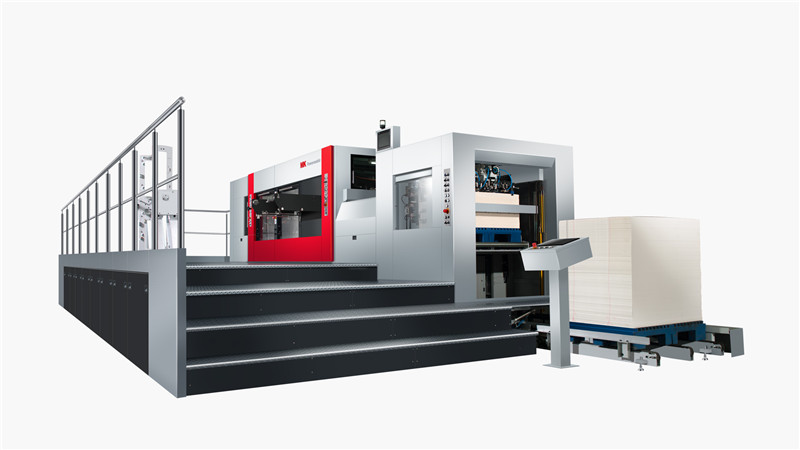
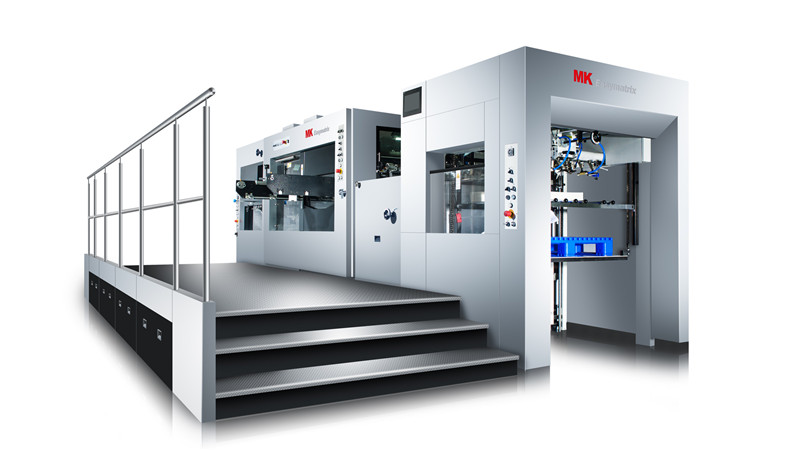
A 106-format automatic flatbed die cutter is widely used for folding carton production because the format aligns with common sheet-fed printing and post-press workflows. Masterwork’s Mastermatrix 106CSB, for example, has a published maximum sheet size of 1060 × 760 mm, a maximum die-cutting format of 1060 × 745 mm, and a rated maximum speed of 9,000 sheets per hour. It is designed for paper and solid board, with limited corrugated-board capability depending on material flatness and thickness.
Corrugated board creates a different set of engineering requirements.
Compared with folding carton board, corrugated sheets are generally:
Thicker
Less flat
More sensitive to compression
More difficult to separate
More affected by flute direction
More challenging to stack
More likely to require large sheet formats
A machine intended for corrugated production should have a feeder designed to handle warped and uneven sheets. It also needs sufficient structural rigidity and pressure control to complete the cut without unnecessarily crushing the flute structure.
Masterwork’s Ecocut 130CS uses a downside suction feeding mechanism and servo-controlled sheet feeding for medium-format corrugated material. Its published working range covers sheets up to 1300 × 960 mm and corrugated board from 1 to 5 mm.
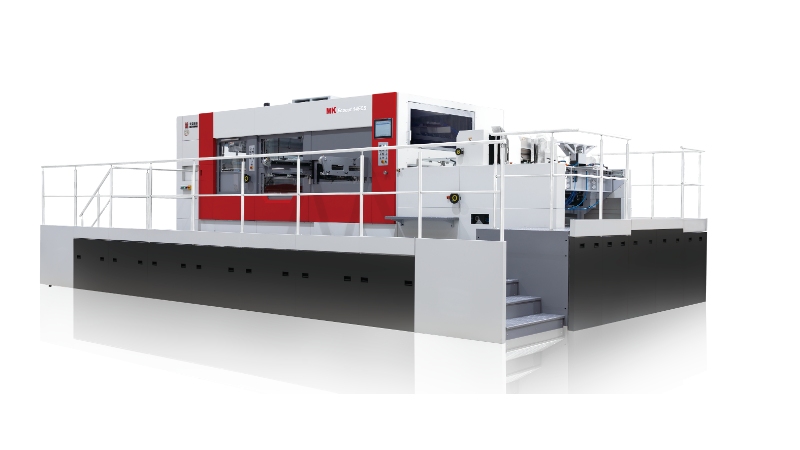
For larger and thicker corrugated applications, the Ecocut 170CS is designed for corrugated and litho-laminated board from 1 to 8.5 mm, including E-, B-, C-, A-, and AB-flute structures.
Litho-laminated packaging combines an offset-printed top sheet with a corrugated base. It offers better graphics than conventional flexo-printed corrugated packaging but may introduce:
Sheet warpage
Surface sensitivity
Uneven board thickness
Lamination stress
More demanding registration requirements
Increased risk of flute crushing
For litho-laminated board, buyers should prioritize stable feeding, print-to-cut registration, controlled platen pressure, surface protection, and automatic stripping.
Coatings, films, metallic surfaces, and other finishing layers may crack or delaminate during creasing if tooling and pressure are not properly matched.
Before choosing a machine, verify whether it can process:
UV-coated board
Film-laminated board
Metallic paperboard
Embossed stock
Anti-scratch surfaces
Recycled board with variable stiffness
Moisture-resistant packaging board
A technically suitable machine should be tested with the actual substrate rather than only an unprinted standard board.
Machine format should be based on the production layout, not simply on the largest sheet the factory might process.
A larger machine usually requires:
More floor space
Larger dies
Heavier tooling
More cutting pressure
Higher energy demand
Larger piles
Greater handling capacity
More expensive upstream and downstream compatibility
At the same time, a machine that is too small may limit material utilization, order flexibility, and future production growth.
The maximum sheet size describes the largest sheet the machine can transport.
The maximum die-cutting area is the usable processing area after allowing for:
Gripper margin
Mechanical clearances
Sheet positioning
Leading and trailing edges
Tooling limitations
Buyers should not assume that the full sheet can be used for finished products.
The actual calculation should consider:
Printable area → Gripper margin → Die-cutting area → Number of blanks → Waste between blanks → Finished output per sheet
The economic value of a machine format depends partly on how many finished products can be arranged on each sheet.
For example, a larger machine may allow:
Four blanks instead of two
Six blanks instead of four
Better nesting of irregular shapes
Reduced edge waste
Fewer press and die-cutting cycles
Lower handling cost per finished carton
However, a larger format is only beneficial when:
The printing press can supply that sheet size
The die layout remains stable
The material can be handled efficiently
The folder gluer can accept the separated blanks
The order volume justifies the tooling and machine investment
| Production Requirement | Typical Machine Direction |
|---|---|
| Small-format commercial or specialty packaging | Compact die cutter |
| High-speed folding carton production | 106-format automatic die cutter |
| Medium-format corrugated packaging | 130-format corrugated die cutter |
| Larger corrugated cartons and thicker board | 145-format machine |
| Large multi-blank corrugated or litho-laminated sheets | 170-format machine |
| Hot stamping, embossing, and die cutting | Dual-station configuration |
| Direct product separation | Machine with blanking |
Masterwork’s portfolio demonstrates why format must be linked to application. Its 106-format machines focus primarily on paperboard and folding cartons, while the Ecocut 130CS and Ecocut 170CS are designed around medium- and large-format corrugated requirements.
An oversized machine may appear to offer more flexibility, but it can create unnecessary cost if most orders use much smaller sheets.
Possible disadvantages include:
Higher machine investment
Larger cutting dies
More difficult tooling handling
Greater floor-space requirement
Higher energy consumption
Lower efficiency on small sheets
More expensive replacement components
Greater operator workload
The correct format is the one that supports the factory’s most profitable current work while providing a reasonable path for future order growth.
Maximum speed is one of the most visible industrial die cutter specifications, but it is also one of the most frequently misunderstood.
A machine rated at 9,000 sheets per hour will not necessarily produce 9,000 acceptable sheets every hour under all production conditions.
Maximum speed may be affected by:
Material type
Material flatness
Board thickness
Product complexity
Number of blanks per sheet
Cutting-rule length
Stripping difficulty
Blanking requirements
Feeder pile changes
Delivery pile changes
Operator experience
Tooling condition
Downstream capacity
Masterwork’s technical guidance notes that sustainable speed, makeready time, waste rate, uptime, MTBF, and overall equipment effectiveness should be considered together. It also notes that makeready can have a greater effect on production cost than maximum speed in short-run and high-mix environments.
| Metric | Meaning |
|---|---|
| Maximum mechanical speed | Highest rated cycle speed under defined conditions |
| Sustainable production speed | Speed maintained with the buyer’s real substrate and tooling |
| Qualified output | Acceptable sheets after rejects are removed |
| Finished output | Total usable blanks produced per hour or shift |
| OEE-adjusted output | Output after availability, performance, and quality losses |
A more useful production calculation is:
Finished blanks per hour = sustainable sheets per hour × blanks per sheet × acceptable quality rate
This calculation may reveal that a slower machine using a more efficient sheet layout produces more finished cartons than a faster machine processing fewer blanks per sheet.
During a machine demonstration or factory acceptance test, buyers should record:
Time required to reach stable speed
Speed maintained for a meaningful test period
Number of feeder stops
Number of double sheets
Registration variation
Incomplete cuts
Remaining waste
Delivery interruptions
Acceptable sheets produced
Operator interventions
A short demonstration at maximum speed is less informative than a sustained production test using the buyer’s actual material and die.
Masterwork reported in June 2026 that it delivered a customized Ecocut 170CS to a UK customer specifically to meet the customer’s production requirements and maintain compatibility with existing equipment. This illustrates an important purchasing principle: the most valuable machine is not always an unchanged standard configuration. A technically appropriate solution may need to fit the buyer’s established tooling, workflow, material handling, and production environment.
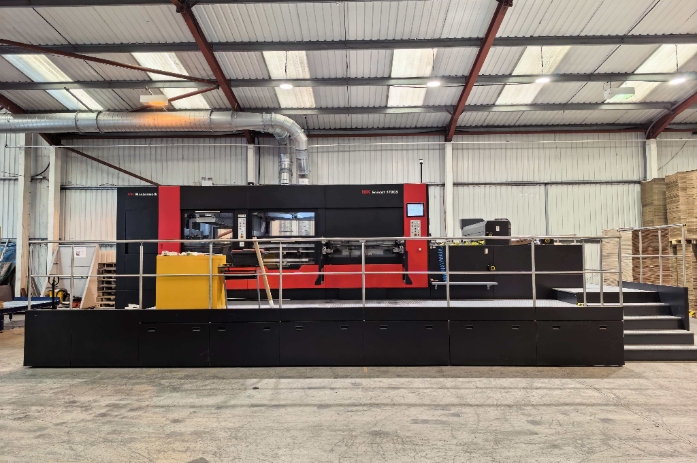
MK customized Ecocut 170CS to a UK customer
Maximum pressure is important, but the pressure figure alone does not determine whether a machine will process a job successfully.
The required cutting force is affected by:
Total cutting-rule length
Number of blanks per sheet
Material thickness
Material density
Corrugated flute type
Number of crease rules
Perforation layout
Embossing area
Internal openings
Cutting-rule sharpness
Cutting plate condition
A sheet containing one simple carton may require much less force than a sheet containing multiple complex cartons with windows, handles, perforations, and long external profiles.
As more cutting rule contacts the material simultaneously, the total force required increases.
Therefore, buyers should provide the machine manufacturer with:
Product dielines
Number of blanks per sheet
Rule length
Material specification
Crease requirements
Embossing requirements
Pressure should be calculated for the most demanding realistic job, not only an average product.
The frame, platen, drive, bearings, and pressure-control system must work together to distribute force evenly.
Insufficient rigidity may result in:
Incomplete cutting in one area
Over-cutting in another area
Uneven creasing
Excessive packing adjustments
Increased makeready
Faster tooling wear
Reduced accuracy over time
Masterwork identifies structural stiffness, registration, drive stability, tooling quality, and control-system precision as key contributors to die-cutting accuracy and repeatability.
Large-format corrugated sheets require more than a physically wider feeder. The machine must maintain pressure and transport stability across a larger working area.
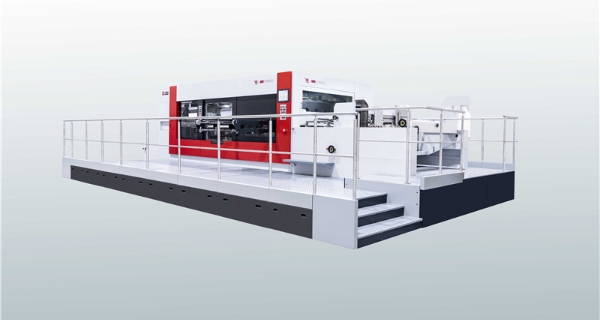
The Ecocut 170CS has published specifications of:
| Specification | Ecocut 170CS |
|---|---|
| Maximum sheet size | 1700 × 1260 mm |
| Maximum die-cutting area | 1700 × 1245 mm |
| Material thickness | 1–8.5 mm corrugated board |
| Maximum pressure | 400 T |
| Maximum rated speed | 6,000 sheets/hour |
These specifications reflect a machine designed around large-format corrugated and litho-laminated production rather than a standard folding-carton machine enlarged without structural changes.
Accuracy should be divided into several separate concepts.
| Accuracy Type | What It Measures |
|---|---|
| Mechanical repeatability | Ability to repeat the same movement |
| Die-cutting accuracy | Consistency of the cut relative to the target position |
| Print-to-cut registration | Alignment between printed graphics and the die |
| Crease-position accuracy | Alignment of folds with the packaging structure |
| Pressure consistency | Uniform cutting and creasing across the sheet |
| Tool-position repeatability | Ability to reinstall tooling in the same position |
A machine may have strong mechanical repeatability but still produce unacceptable packaging if the sheet enters the machine incorrectly.
Sheet-fed machines normally use front lays and side lays to position the sheet before the gripper system takes control.
Buyers should examine:
Number and position of front lays
Side-lay design
Sheet deceleration
Optical monitoring
Sheet rejection for incorrect position
Registration adjustment
Suitability for warped board
Suitability for reflective or coated surfaces
Optical registration can be valuable for:
Printed cartons
Litho-laminated sheets
Distorted sheets
Sheets with variable edges
Packaging with narrow printed borders
Foil or embossing alignment
However, the system should be tested with the buyer’s actual print marks, surface finish, and production conditions.
A machine that achieves accurate results at low speed but loses registration at normal output is not meeting the buyer’s real requirement.
Accuracy testing should include:
Multiple positions across the sheet
Repeated measurements during the production run
Different sheet sizes
Different materials
Normal production speed
Restart after a machine stop
Measurement after a tooling change
A major part of how to choose an industrial die cutting machine is deciding what the output should look like when it leaves the machine.
A cutting-only machine processes the sheet but does not automatically remove all waste.
It may be suitable when:
Products are simple
Waste is easy to remove
Production volume is limited
Manual labor is available
A separate waste-removal process exists
Investment needs to be minimized
The lower equipment cost should be weighed against ongoing labor and secondary handling.
Stripping removes internal and external waste after cutting.
Typical waste includes:
Windows
Handle openings
Ventilation holes
Outer trim
Gripper edges
Small internal sections
Sheet skeletons
Automatic stripping is valuable when the product contains complex openings or when manual waste removal limits production flow.
Masterwork’s technical guidance distinguishes stripping from blanking: stripping removes waste, while blanking separates finished products from the carrier sheet.
Blanking separates individual finished cartons or packaging components and delivers them as organized products rather than connected sheets.
It may be appropriate when:
Orders are produced in high volume
Individual blanks must be counted
Products move directly to a folder gluer
Manual separation creates a bottleneck
Product stacks must be palletized
Labor reduction is a priority
No. Blanking increases machine complexity, tooling requirements, setup time, and investment.
It provides the most value when the product mix and order volume can use it consistently.
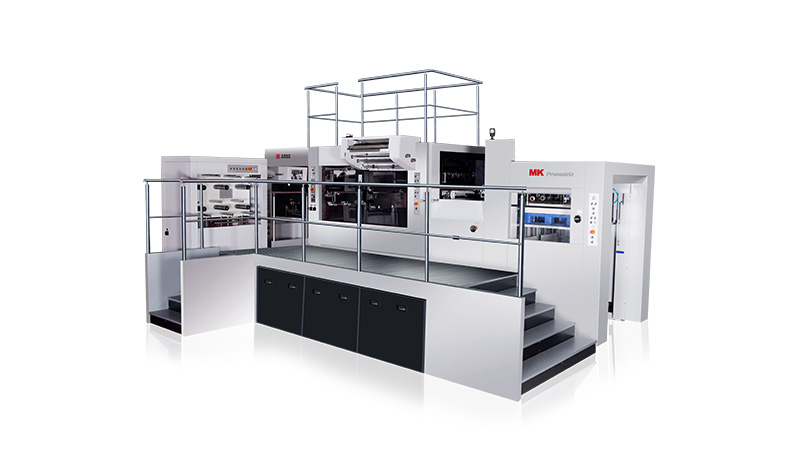
For packaging designs that can be separated directly after die cutting, a specialized configuration may reduce unnecessary stations. Masterwork’s Procut 106CB, for example, is designed to support direct blanking after die cutting for suitable double-knife layouts, while retaining the option of full-sheet delivery.
| Required Production Result | Suitable Configuration |
|---|---|
| Die-cut sheets for manual finishing | Cutting only |
| Clean sheets with waste removed | Cutting with stripping |
| Individual cartons separated and stacked | Cutting, stripping, and blanking |
| Suitable products separated directly after cutting | Direct-blanking configuration |
| Foil, embossing, and cutting in combined production | Dual-station machine |
The die-cutting station cannot produce efficiently if sheets are not supplied and removed consistently.
Evaluate whether the feeder can handle:
Minimum and maximum sheet sizes
Thin and thick substrates
Coated surfaces
Warped corrugated sheets
Large piles
Double-sheet detection
Missed-sheet detection
Pile adjustment
Non-stop feeding
Pre-feeder integration
For corrugated material, feeding should be tested with actual warped sheets rather than only perfectly flat samples.
The Ecocut 130CS uses downside suction feeding to reduce surface scratching and improve the handling of warped corrugated sheets. The system also uses a high-torque servo motor to control sheet arrival at the front lay.
Non-stop feeding allows the operator or logistics system to prepare or change piles without stopping production.
Its value increases when:
Orders are long
Sheet consumption is high
Pile changes are frequent
Labor is limited
The machine is connected to automated logistics
For short runs, the economic impact may be lower because jobs may finish before multiple pile changes are needed.
Delivery options may include:
High-pile delivery
Counting conveyor
Non-stop delivery
Automatic pallet change
Tie-sheet insertion
Batch separation
Sample-sheet removal
Waste-edge conveyor
Automatic pile alignment
The correct delivery configuration depends on what happens next.
A high-pile delivery may suit full-sheet output, while a counting conveyor may be more appropriate for corrugated products that need batch separation.
Products
Contact us
Related Information
Content

We look forward to hearing from you. In order to respond to your message more quickly, we need some information. *These are required