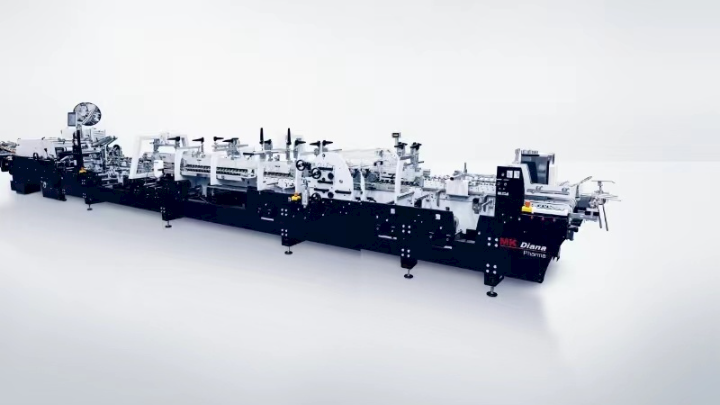
Foil stamping is widely used in packaging to create metallic, holographic, and decorative effects that help products stand out on shelves. Two of the most common processes are hot foil stamping and cold foil stamping.
The main difference is how the foil is transferred to the packaging material. Hot foil stamping uses heat and pressure to transfer foil through a heated die, while cold foil stamping uses adhesive and printing pressure without a heated stamping die.
Neither process is universally better. Hot foil stamping is often preferred for premium packaging, fine details, embossing effects, and high-end finishes, while cold foil stamping is often chosen when high production speed, large foil areas, and inline printing efficiency are more important.
Understanding the differences can help packaging manufacturers choose the right process for folding cartons, labels, cosmetics packaging, pharmaceutical boxes, food packaging, and other printed products.
Hot foil stamping is a finishing process that transfers a thin foil layer onto a substrate using heat, pressure, and a stamping die.
During the process, foil passes between the heated die and the packaging material. Heat activates the release and adhesive layers in the foil, while pressure transfers the decorative layer onto the substrate.
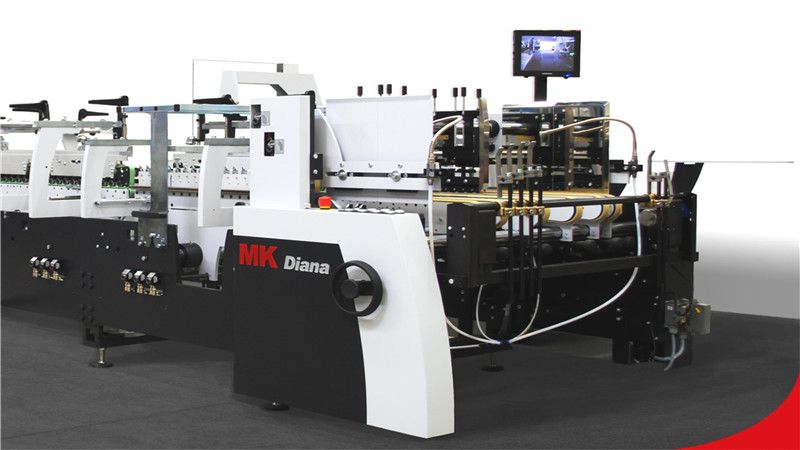
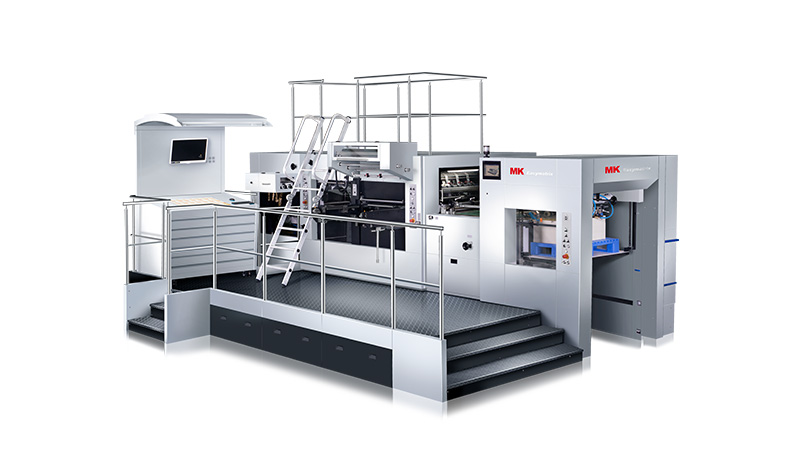
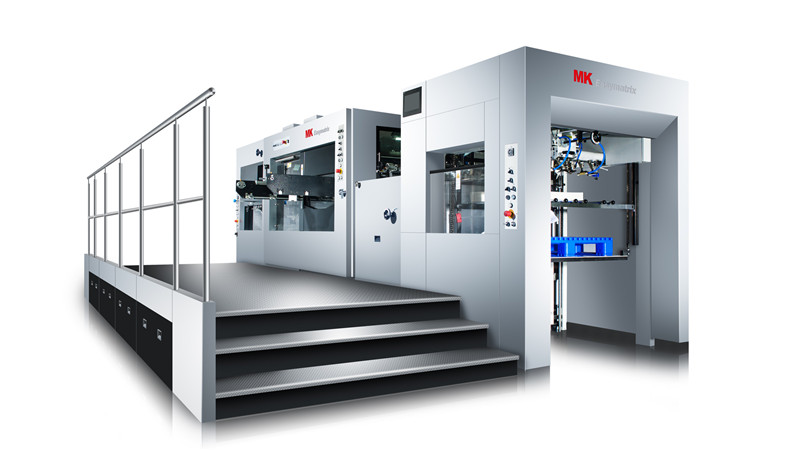
An industrial foil stamping machine can apply metallic gold, silver, colored, holographic, or specialty foils to paperboard and other compatible packaging materials.
Hot foil stamping is commonly used for:
Folding cartons
Luxury packaging
Cosmetic boxes
Pharmaceutical packaging
Wine and spirits cartons
Gift boxes
Premium labels
Book covers
Branded paper products
Because the process uses a physical die, it can produce highly defined logos, lettering, borders, patterns, and decorative details.
Cold foil stamping, often called cold foil printing, transfers foil without using a heated stamping die.
Instead, an adhesive is first printed onto selected areas of the substrate. Foil is then pressed against the adhesive, and the carrier film is removed, leaving the foil attached only where adhesive was applied.
A typical cold foil process involves:
Applying adhesive to the required image area.
Bringing foil into contact with the adhesive.
Applying pressure.
Removing the foil carrier.
Curing or drying the adhesive when necessary.
Printing additional colors over or around the foil.
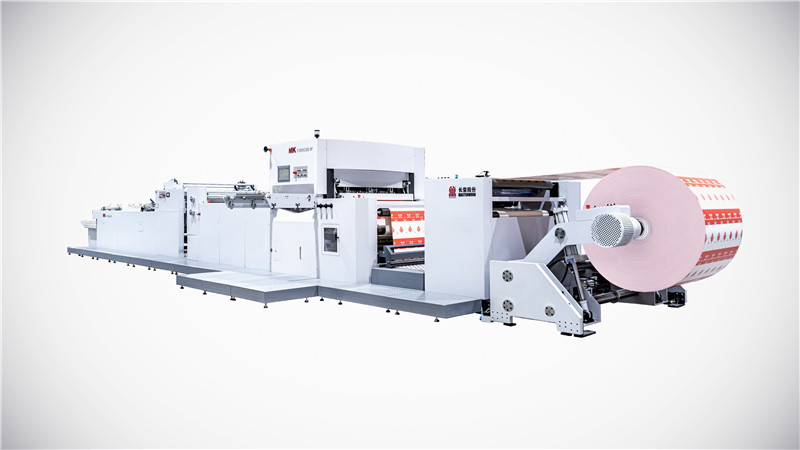
Cold foil is frequently integrated into printing lines, particularly flexographic and offset production.
It is commonly used for:
Labels
Folding cartons
Food packaging
Beverage packaging
Pharmaceutical cartons
Promotional packaging
Large metallic graphics
Its biggest advantage is often production efficiency because foil application can be integrated into the printing process.
| Factor | Hot Foil Stamping | Cold Foil Stamping |
|---|---|---|
| Foil transfer method | Heat + pressure + die | Adhesive + pressure |
| Heated die required | Yes | No |
| Metallic brilliance | Usually excellent | Very good, substrate-dependent |
| Fine details | Excellent | Very good |
| Embossing capability | Possible | No true embossing during foil transfer |
| Large foil areas | Suitable, but efficiency depends on job | Often highly efficient |
| Production speed | Moderate to high | Often higher in inline printing |
| Tooling | Stamping die required | Printing plate/adhesive system required |
| Substrate sensitivity | Heat must be considered | Better for some heat-sensitive materials |
| Overprinting foil | More limited depending on foil | Often a major advantage |
| Premium packaging | Excellent | Suitable |
| High-volume labels | Suitable | Often very competitive |
For applications where foil brilliance, sharp edges, and a premium appearance are the main priorities, hot foil stamping often has an advantage.
Because the foil is transferred through controlled heat and pressure using a precisely manufactured die, hot stamping can create very clean edges and strong metallic effects.
This is particularly valuable for:
Fine lettering
Small logos
Thin decorative lines
Intricate patterns
Luxury branding elements
Hot stamping is therefore frequently associated with premium cosmetic boxes, fragrance packaging, spirits cartons, luxury gifts, and high-end retail packaging.
Cold foil can also achieve highly reflective metallic effects, especially on smooth coated substrates. Its appearance, however, can depend more strongly on adhesive application, surface smoothness, printing conditions, and subsequent coating or printing.
For many commercial packaging applications, both processes can produce excellent results. The difference becomes more noticeable when extremely sharp details or premium tactile finishing are required.
Cold foil stamping can be particularly attractive when a design contains large metallic areas.
Instead of repeatedly transferring foil through a heated die, cold foil can be applied inline across relatively large image areas using an adhesive printing process.
This can make cold foil suitable for:
Large metallic backgrounds
Wide decorative bands
High-coverage packaging designs
High-volume label production
Metallic areas intended for overprinting
Hot foil stamping can also handle large areas, but large solid foil blocks require careful control of pressure, temperature, foil release, die flatness, and substrate condition.
The larger the stamping area, the more important uniform pressure becomes.
Therefore:
For small, detailed premium elements, hot foil is often highly efficient. For very large metallic coverage in high-volume printing, cold foil may offer greater production advantages.
Hot foil stamping is generally an excellent choice for fine details.
A precision die can reproduce:
Small lettering
Thin lines
Complex logos
Decorative borders
Detailed patterns
Because foil transfer occurs only where the heated die contacts the material, the process can create highly defined edges when the die, foil, pressure, temperature, and substrate are correctly matched.
Cold foil can also reproduce fine graphics, especially with advanced printing systems. However, adhesive spreading, substrate characteristics, and printing resolution can influence edge definition.
For premium packaging where very small metallic text or highly detailed decorative elements are important, hot foil stamping is often preferred.
This is one of the most important differences.
Hot foil stamping can be combined with embossing or debossing, allowing manufacturers to create both visual and tactile effects.
For example, a logo can have:
Metallic foil
Raised texture
Defined edges
Three-dimensional appearance
This combination is widely used in luxury packaging because consumers can both see and feel the decorative element.
Cold foil itself is essentially a surface transfer process. It does not create the same raised or recessed effect during foil application.
If tactile depth is an important part of the packaging design, hot foil stamping usually offers more finishing possibilities.
Cold foil stamping often has an advantage when production speed is considered as part of an integrated printing line.
Because adhesive application and foil transfer can occur inline with printing, manufacturers may reduce the need for a separate offline finishing stage.
This is especially useful in high-volume production environments such as:
Label printing
Pharmaceutical packaging
Food packaging
Beverage packaging
Large folding carton runs
Hot foil stamping normally requires a dedicated foil stamping operation, although modern automatic equipment can achieve high production speeds and may combine foil stamping with other post-press processes.
The important distinction is not simply machine speed.
Manufacturers should compare the total production workflow:
Printing → Foiling → Die Cutting → Stripping → Delivery
A process that is faster at one individual stage may not necessarily produce the shortest total production time.
Cold foil has an obvious advantage in applications involving substrates that are sensitive to heat.
Hot foil stamping requires the stamping die to operate at elevated temperatures. If the substrate has low heat resistance, excessive temperature or dwell time can cause:
Deformation
Shrinkage
Surface damage
Curling
Loss of dimensional stability
Paper and paperboard generally work very well with hot foil stamping, but certain plastic films and synthetic materials require closer process control.
Cold foil does not depend on a heated die, so it can be more suitable for some heat-sensitive substrates.
However, cold foil compatibility still depends on adhesive performance, surface energy, coatings, and curing requirements.
For folding carton production, both processes can work effectively.
Hot foil stamping is especially common on:
SBS paperboard
Coated folding boxboard
Solid board
Premium carton materials
Laminated packaging board
Its combination of metallic appearance, precise registration, detailed stamping, and optional embossing makes it particularly suitable for premium folding cartons.
Cold foil is also widely used on smooth coated board, especially when foil is incorporated into the printing workflow.
The best choice depends heavily on the package design.
For example:
Small gold logo on a cosmetic carton:
Hot foil stamping may be preferable.
Large silver area with printed colors over the metallic surface:
Cold foil may be more efficient.
Gold logo combined with embossing:
Hot foil stamping is generally the better option.
Large-volume carton requiring extensive metallic graphics:
Cold foil deserves strong consideration.
Cold foil has an important design advantage: foil can often be overprinted with conventional inks.
For example, a printer can apply silver cold foil first and then print transparent or colored inks over it.
This allows one metallic foil base to create multiple effects such as:
Metallic blue
Metallic red
Metallic green
Metallic purple
Metallic gradients
Multicolor metallic graphics
This flexibility can reduce the need to stock many different foil colors.
It also gives designers greater freedom when creating complex packaging graphics.
Hot foil is normally applied as a specific finished foil color or effect. Although other printing and finishing processes can be combined with hot foil, overprinting flexibility is one of cold foil's strongest advantages.
Hot foil stamping remains particularly strong in luxury packaging.
Luxury packaging frequently requires more than metallic color. It may require:
Strong brilliance
Very sharp details
Fine typography
Embossed logos
Tactile decoration
Multiple foil positions
Premium visual contrast
These requirements are well suited to hot stamping.
Typical applications include:
Gold and silver foil can highlight logos, product names, borders, and decorative patterns.
Metallic stamping can emphasize premium branding, limited editions, and high-value product positioning.
Foil combined with embossing can create a strong tactile premium effect.
Metallic decorative elements are frequently used on chocolate, gift, and seasonal packaging.
Cold foil can certainly be used for premium packaging as well, particularly where complex printed metallic effects or larger decorative areas are required.
The choice should therefore follow the design objective rather than simply the product price level.
There is no universal answer because foil stamping cost depends on production volume, design, substrate, foil coverage, tooling, setup, and existing equipment.
Typical cost factors include:
Stamping dies
Foil
Machine setup
Make-ready sheets
Production time
Temperature control
Changeover time
Hot foil can be highly economical for repeat packaging jobs because dies can often be reused.
Cost factors may include:
Adhesive
Foil
Printing plates
Curing requirements
Printing line configuration
Waste
Production speed
Cold foil's ability to operate inline may reduce handling and additional processing steps.
For high-volume production with extensive foil coverage, these workflow savings can become significant.
Therefore, manufacturers should compare cost per finished package, not simply foil price or tooling cost.
| Packaging Application | Often Preferred | Why |
|---|---|---|
| Luxury cosmetic cartons | Hot foil | High brilliance, fine detail, embossing |
| Perfume packaging | Hot foil | Premium appearance and tactile finishing |
| Wine and spirits cartons | Hot foil | Sharp logos and decorative effects |
| Pharmaceutical cartons | Both | Depends on volume, design and production line |
| Food cartons | Both | Depends on foil area and throughput |
| Pressure-sensitive labels | Cold foil | Strong inline production advantages |
| Large metallic graphics | Cold foil | Efficient coverage and overprinting |
| Small metallic logos | Hot foil | Precise transfer and sharp edges |
| Embossed metallic logos | Hot foil | Foiling and dimensional effects |
| Multicolor metallic designs | Cold foil | Foil can be overprinted |
These are general guidelines rather than absolute rules. Actual suitability should be confirmed by substrate testing and production requirements.
Hot foil stamping is usually worth considering when:
Premium appearance is a priority.
The design contains small or detailed foil elements.
Sharp metallic text and logos are required.
Embossing or debossing is part of the design.
The substrate tolerates heat well.
The product is a folding carton or premium paperboard package.
Consistent foil definition is important.
Multiple post-press finishing operations are required.
It is particularly effective when foil is being used as a distinct premium finishing element rather than a large printed metallic background.
Cold foil may be more suitable when:
Large foil areas are required.
Production volume is very high.
Foil needs to be integrated into an inline printing process.
The foil will be overprinted with multiple colors.
The substrate is sensitive to heat.
Rapid production is a major priority.
Metallic graphics form a significant part of the printed design.
For label and high-volume packaging production, these characteristics can make cold foil particularly attractive.
Yes.
The two technologies are not necessarily competing processes. Some packaging designs can benefit from both.
For example, cold foil could be used to create a large metallic background, while hot foil stamping could later add:
A premium gold logo
Fine metallic lettering
An embossed brand mark
A holographic security feature
Using different finishing techniques strategically allows packaging designers to balance visual impact, production efficiency, and cost.
For packaging manufacturers, the choice can be summarized relatively simply.
Choose hot foil stamping when premium appearance, fine detail, sharp edges, embossing, and high-end decorative finishing are the priorities.
Choose cold foil stamping when large metallic areas, high production speed, inline processing, overprinting flexibility, or heat-sensitive substrates are more important.
For many folding carton applications, especially cosmetics, fragrance, spirits, gifts, and other premium packaging, hot foil stamping remains a highly effective finishing process. Cold foil, meanwhile, can provide significant advantages in high-volume printing environments where metallic decoration needs to be integrated directly into the printing workflow.
The best process ultimately depends on the substrate, package design, foil coverage, required finish, order volume, and overall production workflow rather than on a single technical difference between the two technologies.
Products
Contact us
Related Information
Content

We look forward to hearing from you. In order to respond to your message more quickly, we need some information. *These are required