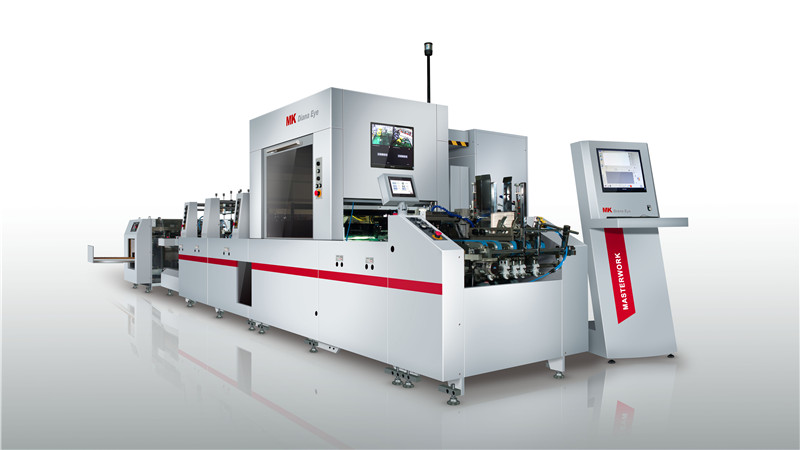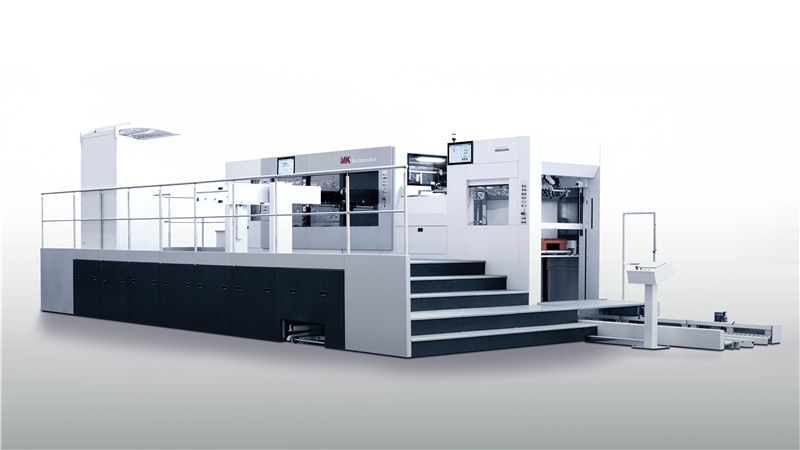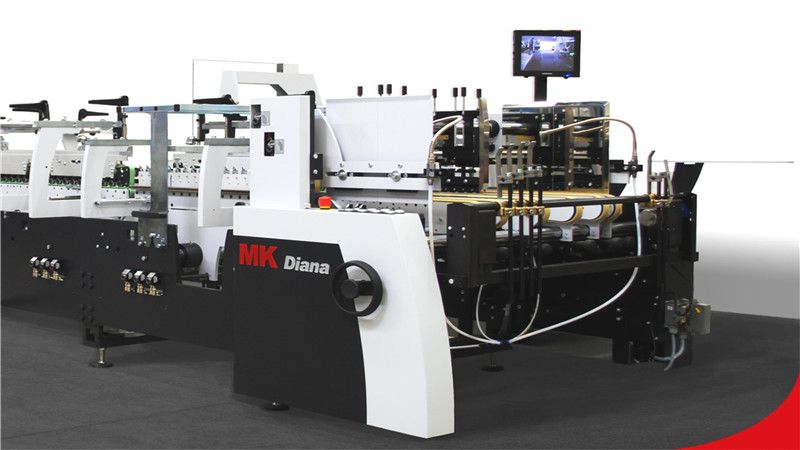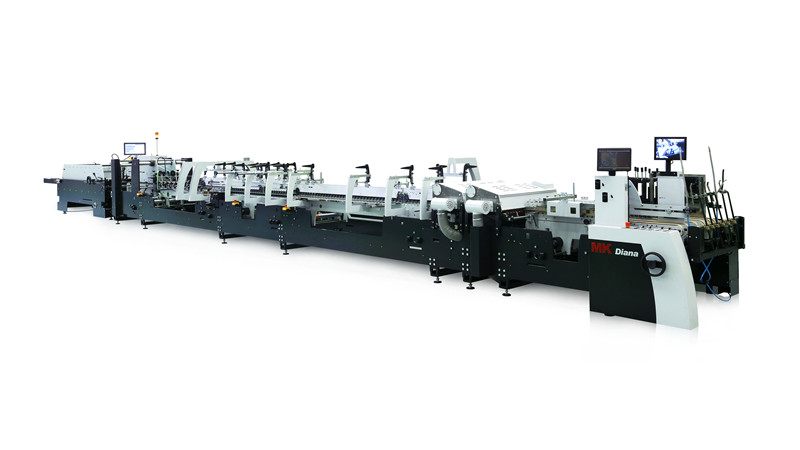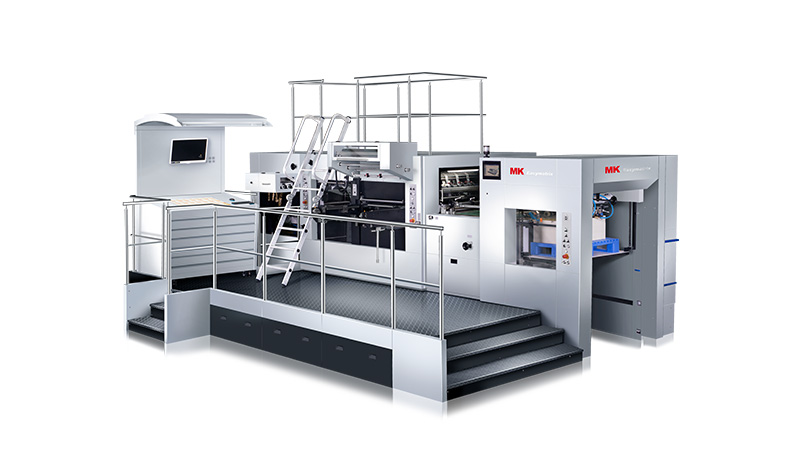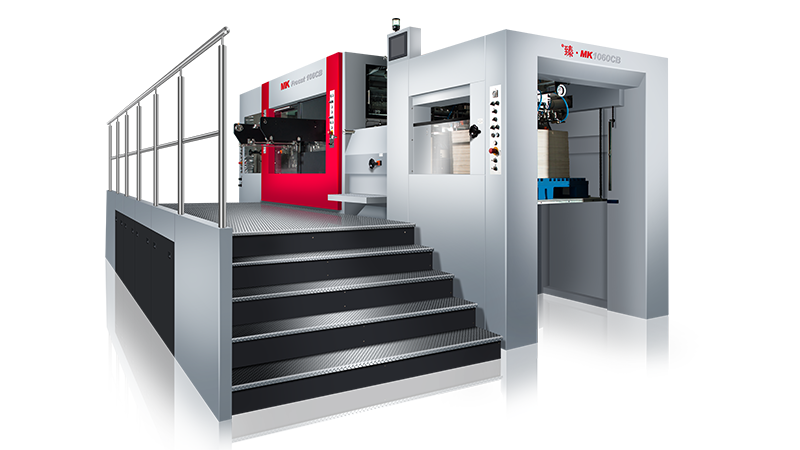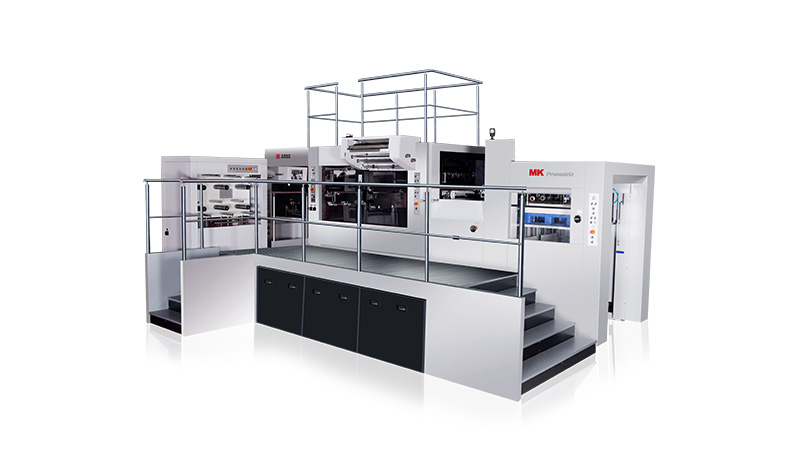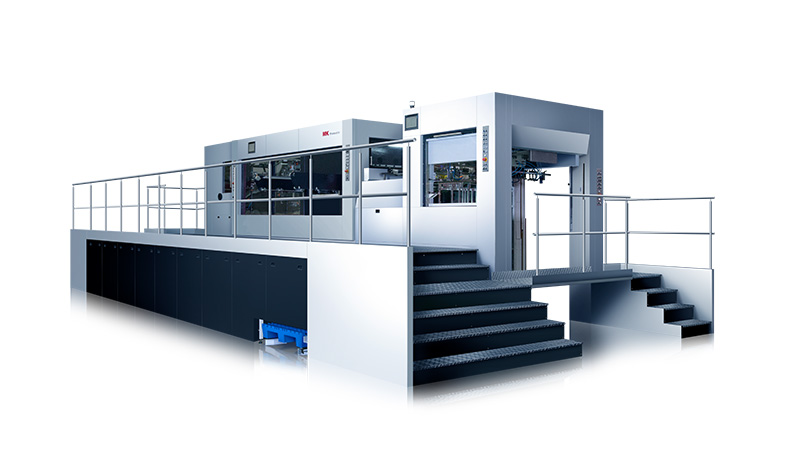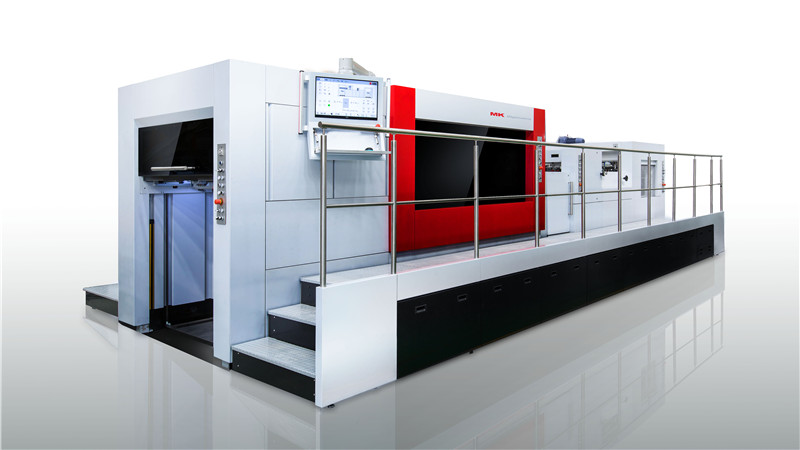
An industrial die cutting machine is a production-grade system that uses a shaped die and controlled pressure to cut, crease, score, perforate, emboss, strip, and separate packaging materials at repeatable speed. Unlike craft, manual, or tool-free digital cutters, it is built for continuous feeding, accurate registration, automated waste removal, and long operating shifts. Packaging plants mainly use automatic flatbed die cutters, selected according to substrate, sheet format, pressure, accuracy, sustainable speed, automation level, and changeover requirements.
An industrial die cutting machine converts printed or unprinted sheets into packaging blanks by pressing a prepared cutting die against the material under precisely controlled pressure.
The cutting die normally contains steel cutting rules, creasing rules, perforating rules, rubber ejection materials, and other tooling arranged according to the packaging dieline. During each machine cycle, the die can perform several operations simultaneously.
| Operation | Function in Packaging Production |
|---|---|
| Cutting | Separates the outer profile, windows, handles, openings, and internal shapes |
| Creasing | Compresses the material along controlled lines so cartons can be folded accurately |
| Scoring | Creates a controlled line or partial-depth impression for folding or positioning |
| Perforating | Produces tear lines, detachable sections, opening features, or ventilation areas |
| Embossing | Creates raised or recessed decorative and functional details |
| Stripping | Removes internal and external waste after die cutting |
| Blanking | Separates individual finished packaging blanks from the die-cut sheet |
A single industrial machine may therefore replace several separate manual processes. The result is not only higher output, but also more consistent dimensions, crease positions, waste removal, and blank quality.
The term “industrial” does not simply mean that the machine is physically larger. It describes a production system designed to maintain repeatable quality across long operating shifts and large order volumes.
| Machine Category | Feeding and Operation | Typical Application | Main Limitation |
|---|---|---|---|
| Craft die cutting machine | Manually loaded and operated | Cards, labels, samples, decorative products | Not designed for commercial packaging output |
| Manual die cutter | Sheets are placed and removed manually | Small workshops, basic cartons, limited orders | High labor requirement and inconsistent cycle time |
| Semi-automatic die cutter | Some feeding, cutting, or delivery stages are automated | Medium production volumes and simpler packaging | Manual intervention can restrict output and consistency |
| Fully automatic industrial die cutting machine | Automatic feeding, registration, cutting, waste removal, and delivery | Folding cartons, corrugated packaging, premium printed boxes | Higher investment and more detailed production planning |
| Digital cutting system | Computer-controlled blade without a physical cutting die | Samples, prototypes, personalized packaging, short runs | Lower output for repeated high-volume orders |
A fully automatic industrial die cutting machine is built around continuous material flow. It normally includes controlled sheet feeding, front and side registration, gripper transportation, pressure-controlled die cutting, automated stripping or blanking, pile delivery, operator interfaces, safety systems, and production monitoring.
Modern automatic flatbed systems can also include recipe management, non-stop feeding, non-stop delivery, quick-lock tooling, automatic pressure control, remote maintenance, and integration with downstream packaging equipment. Masterwork’s current portfolio includes small-, medium-, and large-format automatic flatbed machines with cutting, stripping, blanking, and dual-station configurations.
Although equipment configurations vary, an automatic sheet-fed die cutting line normally follows the same fundamental production sequence:
Feeding → Registration → Die Cutting → Stripping → Blanking → Delivery
Each stage affects the quality and productivity of the next stage. Stable feeding without accurate registration will still produce misaligned cutting. Accurate die cutting without effective stripping may simply move the labor requirement to the end of the line.
| Production Stage | What Happens | Main Performance Risk |
|---|---|---|
| Material loading | Paperboard or corrugated sheets are loaded onto a pallet, pile, conveyor, or pre-feeder | Incorrect pile alignment or unstable sheets |
| Sheet separation | Air, suction, mechanical devices, or front-edge feeding systems separate one sheet at a time | Double sheets, missed sheets, surface scratches |
| Feeding | The separated sheet enters the machine at a controlled speed | Skewing, slipping, inconsistent spacing |
| Front and side registration | Front lays and side lays position the sheet before gripping | Print-to-cut misregistration |
| Gripper transport | Gripper bars carry the sheet through the processing stations | Sheet movement, vibration, gripper margin variation |
| Die cutting and creasing | The platen applies pressure through the cutting and creasing die | Incomplete cutting, weak creasing, board crushing |
| Waste stripping | Internal holes and surrounding waste are removed | Remaining waste, torn blanks, manual cleanup |
| Blanking | Finished blanks are separated and stacked individually | Mixed blanks, unstable stacking, product damage |
| Delivery and stacking | Full sheets or finished blanks are aligned and collected | Disordered piles and downstream handling delays |
| Data and fault monitoring | PLC and HMI systems record operating conditions and display alarms | Delayed troubleshooting or repeated production faults |
Sheet-fed packaging production begins with a stable pile. Folding carton board is usually relatively flat and uniform, while corrugated and litho-laminated sheets may be warped, thick, uneven, or more difficult to separate.
The feeder must separate one sheet without scratching the printed surface, pulling two sheets together, or interrupting production. Depending on the material and machine design, the system may use:
Suction feeder heads
Bottom suction feeding
Front-edge feeding
Air blowers
Side blowers
Double-sheet detection
Auxiliary feeding devices
Automatic pile lifting
Non-stop pre-feeding systems
For corrugated board, feeding stability is particularly important because flute structure and sheet warpage can affect both separation and registration. Masterwork’s Ecocut corrugated models use dedicated feeding configurations, servo-controlled sheet movement, front-lay detection, and double-sheet detection according to the machine format and application.
After entering the machine, the sheet must be aligned with the cutting die. Front lays control the longitudinal position, while side lays or optical alignment systems control lateral positioning.
Registration quality becomes especially important when the material has already been printed, laminated, or coated. Even a small position error can cause:
Uneven borders
Cutting through printed graphics
Misaligned windows
Incorrect crease positions
Folding problems
Rejected packaging blanks
Once positioned, the sheet is held by a gripper bar and transported through the machine. The gripper system must accelerate and decelerate the sheet without losing its registered position.
At the die-cutting station, a prepared cutting die is mounted inside the cutting chase. The machine closes the platen and applies pressure across the sheet.
A high-quality die-cutting section must provide:
Sufficient total pressure
Uniform pressure across the working area
Stable platen movement
Accurate die positioning
Secure chase locking
Controlled cutting plate adjustment
Protection against missing sheets and abnormal pressure
The required pressure depends on more than material thickness. It is also affected by the total cutting rule length, number of blanks per sheet, crease configuration, board density, flute structure, embossing area, and complexity of the packaging design.
After cutting, the sheet may still contain external trim, internal holes, windows, and other waste. A stripping station removes these materials automatically.
Blanking goes one step further by separating individual products from the remaining sheet skeleton. The finished blanks can then be counted, interleaved, stacked, or prepared for downstream folder-gluer production.
Not every job requires both stations:
| Required Output | Recommended Configuration |
|---|---|
| Full die-cut sheets will be processed manually | Die cutting only |
| Waste must be removed, but blanks remain connected | Die cutting with stripping |
| Individual blanks must be separated automatically | Die cutting with stripping and blanking |
| Product layout allows direct blanking without conventional stripping | Die cutting with dedicated blanking configuration |
The MK 106CB, for example, is configured to enable direct blanking after die cutting for suitable double-knife layouts. It includes quick-lock blanking tools, center positioning, paper interleaving, counting, and non-stop delivery functions.
The delivery section aligns processed sheets or blanks into a controlled pile. Depending on the machine, delivery options may include:
High-pile delivery
Counting conveyor delivery
Non-stop delivery
Automatic pallet change
Gripper-edge removal
Sample-sheet removal
Paper interleaving
Automatic logistics interfaces
PLC and HMI systems allow the operator to set production parameters, monitor machine status, identify alarms, manage recipes, and diagnose faults. Modular electrical systems and remote maintenance interfaces can reduce troubleshooting time when technical support is required.
Industrial die cutting machines can be classified according to the way the cutting force is applied, the feeding format, and whether a physical die is required.
| Type | Feeding Method | Main Materials | Typical Volume | Main Advantages | Typical Applications |
|---|---|---|---|---|---|
| Flatbed | Sheet-fed or web-fed | Folding carton board, solid board, corrugated board, laminated board | Medium to high volume | Stable pressure, accurate creasing, flexible tooling, complex shapes | Folding cartons, corrugated boxes, premium packaging |
| Rotary | Continuous web or corrugated sheets | Labels, thin web materials, corrugated board | Very high volume | Continuous movement and high-volume output | Long-run converting and repeated packaging structures |
| Digital | Sheet or roll | Paper, board, thin sheet materials, selected flexible materials | Low volume | No physical die, rapid design changes | Samples, prototypes, short runs |
| Laser | Sheet or roll | Paper and selected thin materials | Low to medium volume | Intricate patterns, no conventional cutting die | Personalized packaging, decorative work |
A flatbed machine uses a flat cutting die and a flat platen. The material is positioned between them, and pressure is applied vertically across the cutting area.
For packaging production, this configuration offers several important advantages:
Strong and evenly distributed cutting pressure
Accurate creasing
Compatibility with relatively thick or rigid substrates
Flexible steel-rule die design
Effective stripping and blanking integration
Easier tooling changes than many rotary configurations
Suitability for printed, laminated, and multi-blank sheets
Automatic flatbed die cutting is therefore the central technology within Masterwork’s industrial packaging equipment portfolio. Different machine formats are designed for folding cartons, medium-format corrugated packaging, large corrugated sheets, blanking applications, and combined hot stamping or embossing processes.
A rotary machine uses a cylindrical die and an anvil or opposing cylinder. The material passes continuously between the rotating components.
Rotary systems can be highly efficient for long, repeated production runs, particularly where the same packaging structure is produced continuously. However, rotary tooling can require a higher initial investment, and the economics may be less favorable when jobs change frequently.
Digital and laser systems eliminate the need for conventional steel-rule dies. This makes them useful for prototypes, sampling, personalized packaging, and short production runs.
Their main advantage is flexibility rather than continuous high-volume output. Once a packaging structure becomes standardized and order volumes increase, an automatic flatbed machine will generally provide a more production-oriented combination of cutting, creasing, stripping, blanking, and stacking.
The different technologies should therefore be treated as selection boundaries rather than direct substitutes in every application:
Digital or laser for prototypes and frequent design changes
Flatbed for flexible industrial packaging production
Rotary for stable, repeated, very high-volume converting
The performance of an automatic die cutter depends on how its components work together. Evaluating only the cutting station gives an incomplete picture of the machine.
| Component | Primary Function | Direct Production Impact |
|---|---|---|
| Feeder | Separates and introduces sheets | Continuous operation, double-sheet rate, feeding stops |
| Registration system | Positions each sheet | Print-to-cut consistency and crease alignment |
| Gripper system | Transports registered sheets | Sheet stability, repeatability, allowable gripper margin |
| Die-cutting platen | Applies cutting pressure | Cutting completeness and pressure uniformity |
| Cutting chase | Holds the cutting die | Tooling compatibility and changeover efficiency |
| Pressure adjustment | Controls applied force | Cut quality, crease depth, board protection |
| Stripping station | Removes internal and external waste | Manual labor and downstream efficiency |
| Blanking station | Separates finished products | Direct output of counted packaging blanks |
| Delivery system | Aligns and stacks production | Pile quality and connection with downstream logistics |
| Lubrication system | Supplies lubricant to moving components | Maintenance time and mechanical service life |
| PLC and HMI | Controls operation and displays machine data | Operator efficiency, fault response, recipe control |
| Remote maintenance interface | Supports off-site diagnostics | Service response and downtime reduction |
| Safety system | Monitors access, pressure, sheets, and machine status | Operator protection and equipment protection |
A feeder must handle the target substrate consistently at both low and high production speeds. Important feeder evaluation points include:
Double-sheet detection
Missed-sheet detection
Suction strength
Sheet separation
Printed-surface protection
Warped-board handling
Pile adjustment
Non-stop loading capability
An unstable feeder reduces the value of every downstream station because repeated stops lower effective hourly output.
The registration system determines whether cutting and creasing remain aligned with the printed design. Mechanical front and side lays are widely used, while advanced machines may also offer optical sheet alignment.
Registration must be evaluated on the buyer’s actual materials. Coated paperboard, embossed sheets, litho-laminated corrugated board, warped sheets, and reflective surfaces can behave differently during alignment.
Gripper bars carry sheets through the machine while maintaining the position established at registration. Their design affects:
Transport stability
Sheet acceleration
Production speed
Gripper margin
Machine vibration
Sheet release at delivery
The platen and drive mechanism must apply pressure evenly across the working format. Large-format and multi-blank jobs place particularly high demands on machine rigidity.
Poor pressure distribution may cause one side of the sheet to cut correctly while another side remains partially connected. Excessive pressure can damage the cutting plate, compress corrugated flute structures, accelerate tooling wear, and increase mechanical stress.
The cutting chase holds the prepared die. Center positioning, pneumatic locking, air-cushion handling, and quick-lock systems can reduce makeready time.
This matters because a machine generates revenue only while producing acceptable sheets. Time spent installing, aligning, adjusting, and removing tooling reduces effective capacity.
Stripping and blanking systems should be evaluated according to the actual packaging layout, not only the machine specification.
A simple folding carton may require limited waste removal. A multi-blank corrugated display with windows, handles, ventilation holes, and internal cutouts may require a more advanced stripping arrangement.
Delivery affects pile quality, operator workload, and compatibility with downstream production. Important features include:
Front, rear, and side pile alignment
Non-stop pile change
Counting
Interleaving
Sample removal
Conveyor delivery
Pallet handling
Automated logistics compatibility
Masterwork’s corrugated Ecocut models provide different high-pile and counting-conveyor delivery arrangements, while selected systems can support non-stop delivery and automated logistics options.
The core industrial packaging market involves paper-based substrates rather than the full range of materials that may be processed by specialized cutting systems.
| Packaging Material | Typical Characteristics | Main Die Cutting Considerations |
|---|---|---|
| Folding carton board | Smooth, printable, foldable | Precise registration and controlled creasing |
| Solid board | Dense and relatively rigid | Sufficient pressure and clean edge quality |
| Corrugated board | Fluted structure with greater thickness | Stable feeding, controlled pressure, flute protection |
| Litho-laminated board | Printed sheet laminated to corrugated board | Print registration, warpage, surface protection |
| Kraft board | Strong fibers and natural surface | Cutting-rule condition and crease control |
| Coated board | Smooth coated surface | Scratch prevention and crease-cracking control |
| Laminated packaging board | Multiple bonded layers | Adhesion stability and complete cutting through all layers |
| Specialty paperboard | Metallic, textured, embossed, or functional surfaces | Material testing and customized pressure settings |
Folding carton production often requires accurate cutting and creasing because the blank must pass through high-speed folding and gluing equipment. Small dimensional errors can cause folding misalignment, open seams, or unstable carton geometry.
Corrugated board requires a machine capable of handling thicker, less uniform, and sometimes warped sheets. The machine must apply enough force to complete cutting while avoiding unnecessary flute crushing.
The MK Ecocut 130CS is designed for medium-format corrugated sheets up to 1300 × 960 mm and material thicknesses from 1 to 5 mm. The Ecocut 145CS and Ecocut 170CS expand the working format and support corrugated material specifications up to 8.5 mm, including E-, B-, C-, A-, and AB-flute configurations.
Litho-laminated packaging combines high-quality printed surfaces with corrugated structural strength. It is commonly used for retail packaging, displays, food and beverage boxes, and premium shipping cartons.
The die cutter must protect the printed surface, position the sheet accurately, control the pressure, and accommodate possible warpage created during laminating.
Machine specifications must be interpreted together. A larger format is not automatically better, and a higher stated speed does not necessarily produce a lower cost per acceptable blank.
| Specification | What It Describes | Why It Matters |
|---|---|---|
| Maximum sheet size | Largest sheet that can enter the machine | Determines format compatibility and imposition options |
| Minimum sheet size | Smallest sheet the machine can transport | Affects suitability for smaller orders |
| Maximum die-cutting area | Usable processing area inside the sheet | May be smaller than the maximum sheet size |
| Substrate thickness | Material range supported by the machine | Determines board and flute compatibility |
| Maximum cutting pressure | Highest available die-cutting force | Affects complex, thick, and multi-blank jobs |
| Maximum speed | Highest rated mechanical output | Useful for comparison but not equal to normal production |
| Sustainable production speed | Speed maintained with the buyer’s actual job | More relevant to realistic capacity calculations |
| Die-cutting accuracy | Repeatability of the cut position | Affects dimensions and downstream converting |
| Registration accuracy | Alignment between printed image and die | Critical for printed packaging |
| Feeder pile height | Material capacity at the infeed | Influences loading frequency |
| Delivery pile height | Processed material capacity at delivery | Influences pile changes and logistics |
| Gripper margin | Sheet area reserved for gripper handling | Affects usable material and dieline layout |
| Makeready time | Time required to prepare a specific job | Directly affects uptime |
| Changeover time | Time from the end of one job to stable output of the next | Critical for multi-order production |
The maximum sheet size describes what the machine can transport, but the maximum die-cutting area may be slightly smaller because of the gripper margin and mechanical layout.
Buyers should calculate:
Finished blank dimensions
Number of blanks per sheet
Gripper margin
Waste edges
Printing press format
Cutting die dimensions
Downstream folder-gluer capacity
Pressure should not be compared without considering machine format and application. A larger cutting area, thicker board, longer total cutting rule, or more complex multi-blank layout may require greater total pressure.
The MK Ecocut 170CS has a maximum sheet size of 1700 × 1260 mm, a maximum cutting area of 1700 × 1245 mm, a maximum pressure of 400 T, and a stated maximum speed of 6,000 sheets per hour. It is designed for large-format corrugated and litho-laminated board from 1 to 8.5 mm.
The MK 106CB has a maximum sheet size of 1060 × 720 mm, a maximum die-cutting area of 1060 × 705 mm, a maximum pressure of 2.6 MN, and a stated maximum speed of 8,000 sheets per hour. Its published die-cutting accuracy is no more than ±0.075 mm.
These machines should not be compared by speed alone. They are designed for different sheet formats, materials, packaging layouts, and finishing requirements.
Maximum speed is normally measured under defined machine, material, tooling, and environmental conditions. Daily production speed may be lower because of:
Sheet warpage
Material thickness
Packaging complexity
Number of internal cutouts
Stripping difficulty
Blank layout
Operator experience
Tooling condition
Job changeovers
Pile changes
Downstream production limits
A more useful capacity calculation is:
Qualified sheets per shift = sustainable speed × operating time × uptime rate × acceptable quality rate
The machine with the highest brochure speed may not produce the highest number of acceptable blanks if it requires more frequent stops, creates more setup waste, or cannot maintain stability with the buyer’s normal materials.
Makeready includes installing and aligning the cutting die, cutting plate, stripping tools, and blanking tools. It can also include pressure adjustment, sample inspection, and correcting the first production sheets.
Quick-lock systems, center positioning, recipe storage, preparation tables, and standardized tooling can reduce this non-production time.
Automation should be evaluated stage by stage. A machine described as “automatic” may automate feeding and cutting but still require manual pile changes, pressure adjustment, waste removal, or tool positioning.
| Automation Function | Main Benefit |
|---|---|
| Manual feeding | Lower equipment cost for limited production |
| Automatic feeding | Consistent sheet supply and reduced operator workload |
| Automatic registration | More stable print-to-cut alignment |
| Automatic pressure adjustment | Faster setup and more repeatable pressure settings |
| Automatic stripping | Reduced manual waste removal |
| Automatic blanking | Finished blanks separated and stacked automatically |
| Non-stop feeding | Pile preparation without stopping production |
| Non-stop delivery | Finished pile changes with reduced interruption |
| Recipe management | Faster recall of repeat-job parameters |
| Remote diagnosis | Faster fault analysis and service support |
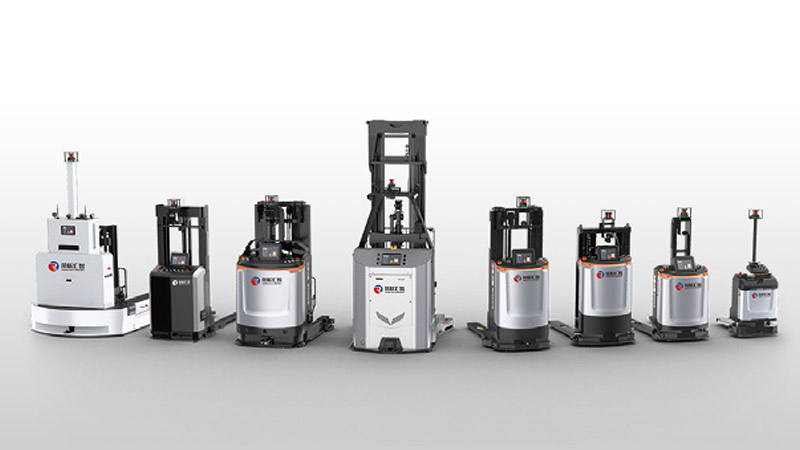
| Logistics and AGV integration | Reduced manual pallet handling and better material flow |
Entry-level industrial automation may include automatic feeding, mechanical registration, die cutting, and high-pile delivery. It is suitable when stripping is simple or performed separately.
This configuration is valuable when internal and external waste would otherwise require significant manual removal. It is widely used for corrugated packaging and complex folding carton layouts.
Blanking systems automatically separate individual products. They are useful when the production line requires counted, stacked blanks ready for subsequent folding and gluing.
Higher automation levels may include:
Motorized feeder adjustment
Optical sheet alignment
Automatic pressure control
Production order management
Stored job recipes
Non-stop pallet systems
Sample-sheet removal
Predictive service functions
Remote support
Connection with automated logistics
Automation should reduce variability and non-productive time. It should not be evaluated only by the number of functions listed in the specification.
A practical machine evaluation should measure output, quality, cost, and production-line compatibility.
| Performance Indicator | Recommended Measurement |
|---|---|
| Output | Qualified sheets or finished blanks per hour and per shift |
| Accuracy | Cut-position, crease-position, and print-registration consistency |
| Uptime | Percentage of scheduled production time spent producing |
| Waste rate | Setup waste plus rejected production sheets |
| Changeover efficiency | Time from final acceptable sheet of one job to first acceptable sheet of the next |
| Labor requirement | Operators required for feeding, inspection, stripping, and delivery |
| Tooling compatibility | Ability to use existing dies, chases, plates, and stripping tools |
| Maintenance accessibility | Time required for lubrication, adjustment, inspection, and part replacement |
| Energy per finished sheet | Total energy consumption divided by qualified production |
| Downstream integration | Compatibility with folder gluers, inspection systems, pallet handling, and logistics |
Output should be measured in acceptable products rather than theoretical machine cycles. For multi-blank layouts, the number of usable blanks per sheet must also be included.
Accuracy should be tested across the entire sheet, not at a single point. Large-format dies can reveal pressure or positioning differences that may not appear on smaller test jobs.
Uptime includes more than mechanical reliability. It is affected by:
Feeding stops
Pile changes
Tool installation
Pressure adjustment
Sample inspection
Waste removal
Cleaning
Maintenance
Operator response
Waste rate should include both makeready sheets and rejected production. A machine that reaches the required quality with fewer setup sheets may produce a better total return even if its nominal speed is lower.
Existing cutting dies and stripping tools can represent a substantial investment. Before purchasing a new machine, buyers should verify:
Chase dimensions
Rule height
Cutting plate format
Centerline system
Gripper margin
Stripping frame compatibility
Blanking tool compatibility
Required tooling modifications
The die cutter should not create output faster than the factory can inspect, move, fold, glue, count, pack, or palletize it.
A complete evaluation should therefore include upstream printing format, material flow, downstream folder-gluer capacity, pallet dimensions, and available factory space.
The correct machine depends on the combination of material, sheet format, production volume, packaging layout, waste-removal requirements, and downstream process.
| Production Requirement | Recommended Machine Direction |
|---|---|
| Small- and medium-format folding cartons at high speed | 106-format automatic flatbed die cutter |
| Medium-format corrugated packaging | Ecocut 130CS or equivalent format |
| Thick corrugated board and larger cartons | Ecocut 145CS or equivalent format |
| Extra-large sheets and multi-blank corrugated layouts | Ecocut 170CS or equivalent large format |
| Hot foil stamping, embossing, and die cutting in combined production | Dual-station machine |
| Automatic separation of individual products | Machine with blanking station |
| Complex prototypes and frequently changing designs | Digital or laser cutting system |
| Repeated ultra-high-volume standardized jobs | Rotary die cutting system may be considered |
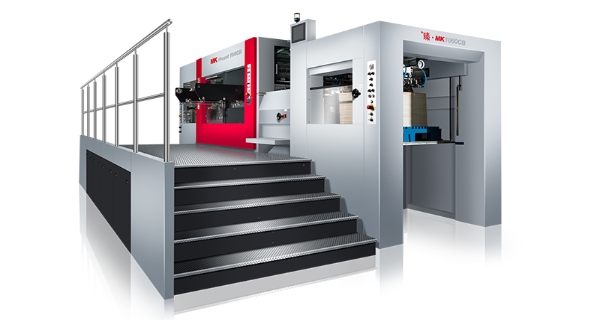
A 106-format automatic die cutter is generally suited to folding cartons and other paperboard packaging where production speed, registration accuracy, creasing quality, and blanking efficiency are important.
The MK 106CB is designed for die cutting followed by direct blanking in suitable layouts. Its application range includes pharmaceutical packaging and selected double-knife packaging products such as paper cups and instant-noodle bowls.
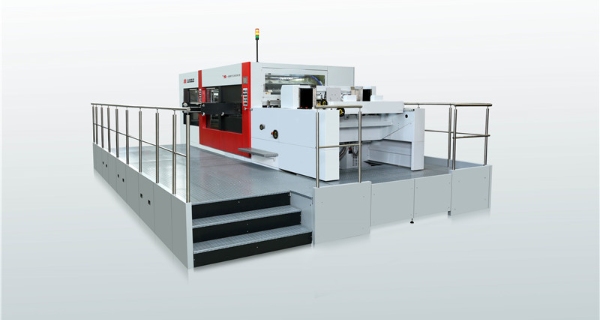
The Ecocut 130CS is positioned for medium-format corrugated packaging. Its published maximum sheet size is 1300 × 960 mm, and it supports corrugated board from 1 to 5 mm. It incorporates stripping, quick-change chase functions, gripper-edge removal, and alternative high-pile or conveyor delivery arrangements.
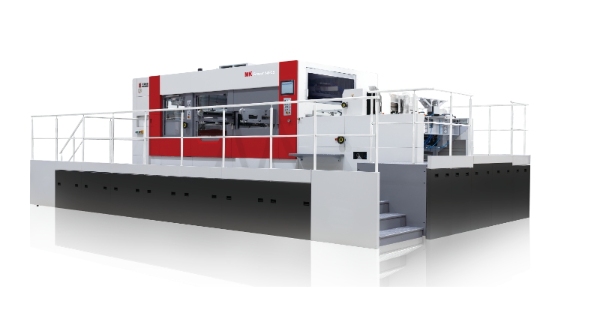
The Ecocut 145CS expands the maximum sheet size to 1450 × 1060 mm and supports corrugated board specifications from 1 to 8.5 mm. It is designed for corrugated box and folding carton production and includes a maximum pressure of 4.0 MN and a stated maximum speed of 6,000 sheets per hour.
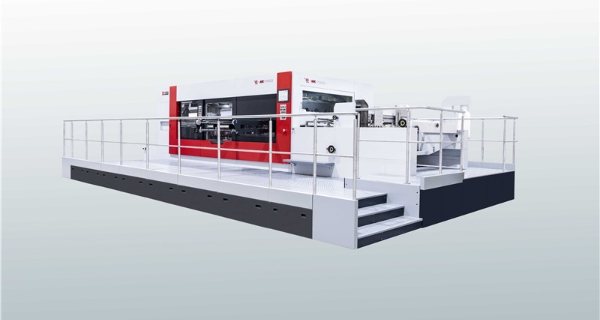
The Ecocut 170CS is intended for large-format, multi-blank corrugated and litho-laminated packaging. Its 1700 × 1260 mm sheet format allows more finished products to be imposed on one sheet when the packaging dimensions and printing format permit.
Its feeding, pressure, stripping, and delivery configuration is designed around the specific challenges of large and thick corrugated sheets rather than simply scaling up a folding-carton machine.
A dual-station machine may combine processes such as foil stamping, embossing, and die cutting. This approach can reduce separate handling steps for premium packaging, but the correct configuration depends on the decorating process, pressure requirement, tooling design, order volume, and quality standard.
Digital and laser systems remain appropriate when the job involves:
Prototype packaging
Structural design testing
Personalized products
Very small quantities
Frequent design revisions
Intricate decorative patterns
Orders that do not justify a physical cutting die
Once the design becomes stable and production volumes increase, an automatic flatbed system normally provides a more scalable industrial workflow.
Q:What is an industrial die cutting machine?
A:An industrial die cutting machine is an automated production system that uses a prepared die and controlled pressure to cut, crease, perforate, emboss, strip, and separate packaging materials. It is designed for repeatable commercial production rather than craft or low-volume manual work.
Q:What materials can an industrial die cutter process?
A:Packaging-focused industrial die cutters commonly process folding carton board, solid board, coated board, kraft board, laminated packaging board, corrugated board, and litho-laminated board. The permitted material thickness and flute structure depend on the specific machine.
Q:What is the difference between cutting, stripping, and blanking?
A:Cutting creates the packaging shape. Stripping removes internal and external waste. Blanking separates individual finished products from the remaining sheet structure and prepares them for stacking or downstream production.
Q:How much pressure does a packaging die cutter need?
A:Required pressure depends on sheet format, material density, thickness, flute structure, total cutting-rule length, number of blanks, creasing rules, and embossing requirements. The machine should be selected using actual tooling and product information rather than material thickness alone.
Q:Is flatbed die cutting suitable for corrugated board?
A:Yes. Flatbed die cutting is widely used for corrugated and litho-laminated packaging because it provides controlled pressure, accurate creasing, flexible steel-rule tooling, and integrated stripping. The feeder and transport system must be designed to handle corrugated thickness and possible sheet warpage.
Q:What determines die-cutting accuracy?
A:Accuracy is affected by sheet separation, front and side registration, gripper transport, cutting-die positioning, pressure uniformity, tooling condition, material stability, machine rigidity, and operating speed.
Q:What is a good production speed?
A:A good production speed is the highest speed at which the machine can maintain stable feeding, accurate registration, complete cutting, effective stripping, and an acceptable rejection rate on the buyer’s actual job. It should not be defined only by the maximum brochure speed.
Q:Can existing dies be used on a new machine?
A:Existing dies may be reusable when their chase size, rule height, centerline, gripper margin, cutting plate, and stripping configuration are compatible with the new machine. Tooling measurements should be reviewed before purchase, and sample production should be completed when possible.
Q:How long does job changeover take?
A:Changeover time depends on the number of tooling stations, machine format, operator experience, die complexity, pressure adjustment, and whether center-positioning, quick-lock, preparation-table, or recipe-management functions are available.
Q:Is a stripping station always necessary?
A:No. Simple jobs may be delivered as full die-cut sheets or cleaned manually. Automatic stripping becomes more valuable when the packaging layout contains many internal holes, windows, small waste sections, or external trim.
Q:When is a blanking station worth the investment?
A:Blanking is valuable when individual products must be separated, counted, stacked, and supplied directly to downstream production. It can reduce manual labor and improve material flow, especially for repeated high-volume jobs.
Products
Contact us
Related Information
Content

We look forward to hearing from you. In order to respond to your message more quickly, we need some information. *These are required