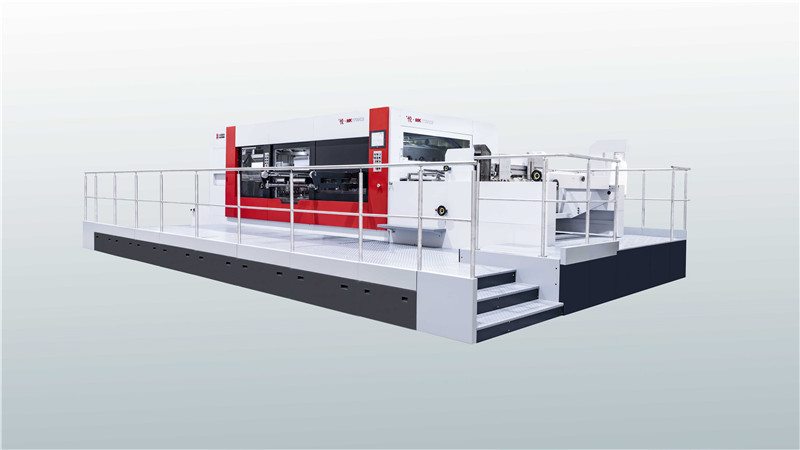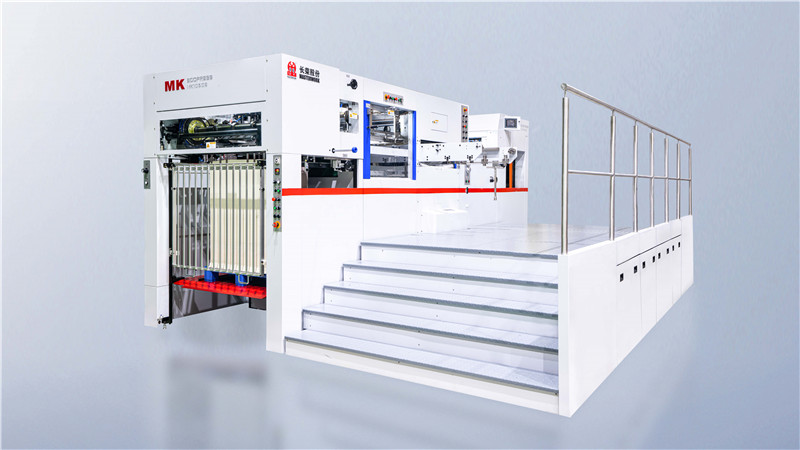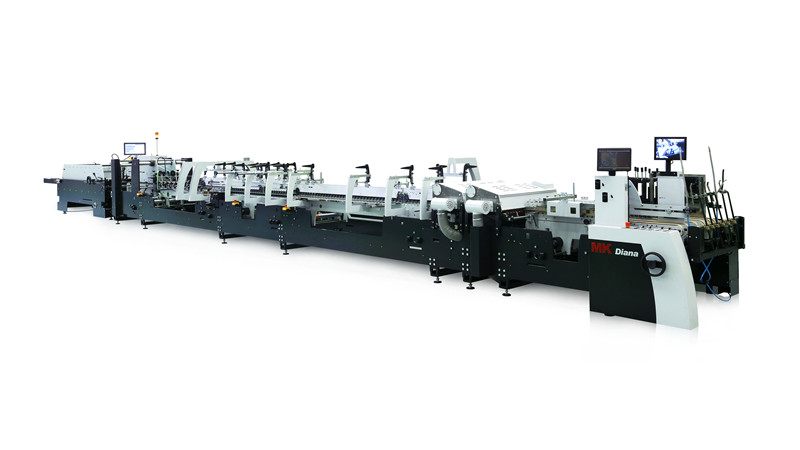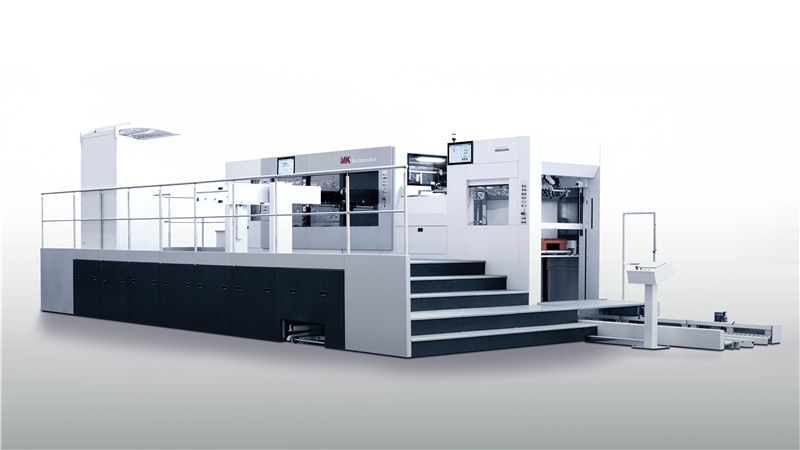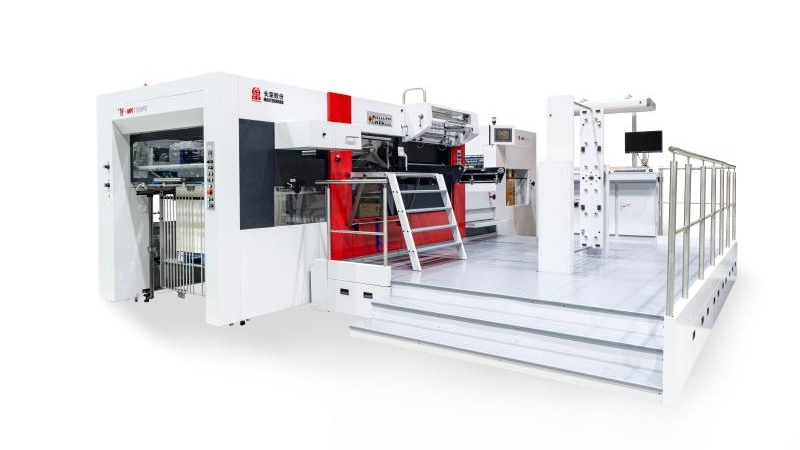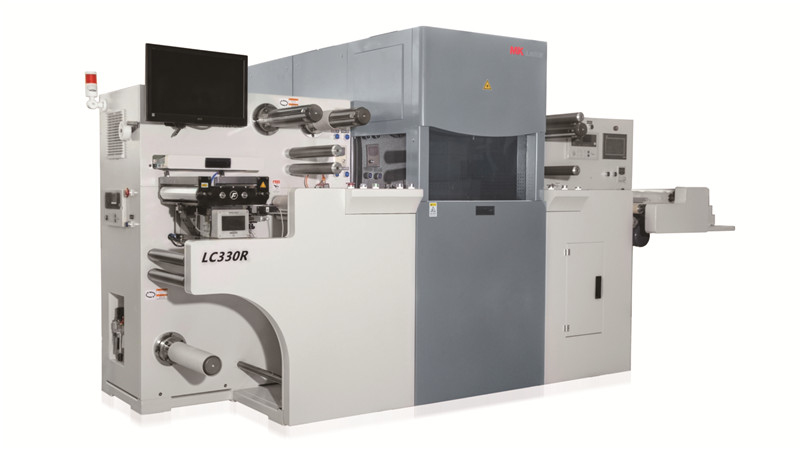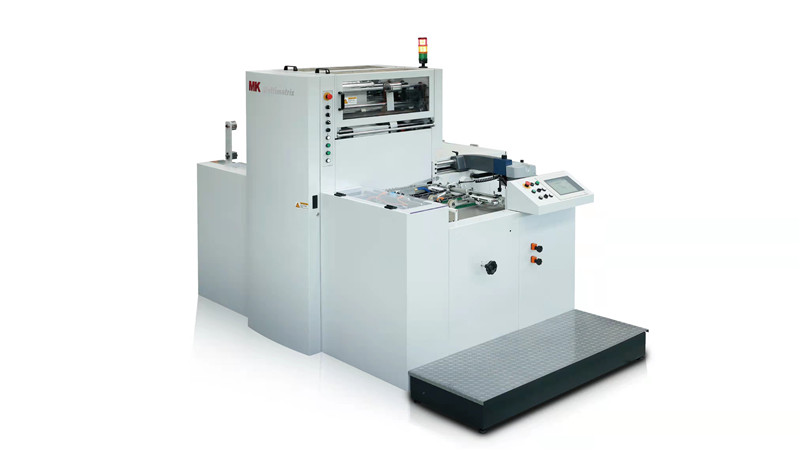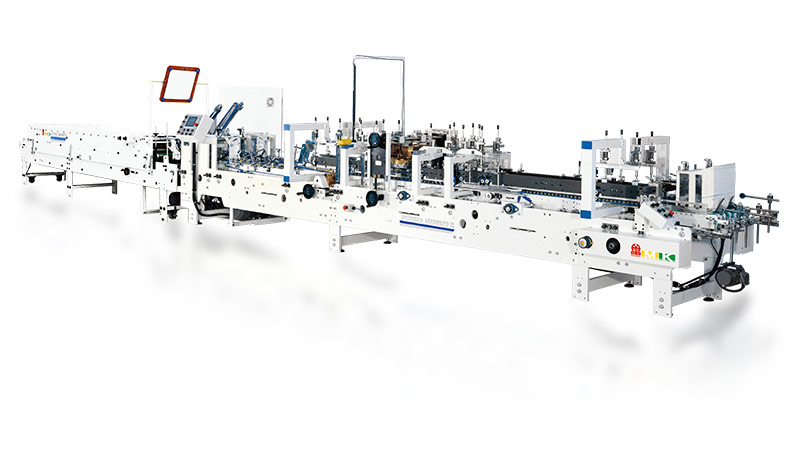
When comparing a flatbed vs rotary die cutting machine, flatbed technology is generally better for folding cartons, litho-laminated packaging, thicker corrugated board, complex shapes, accurate creasing, and frequently changing orders. Rotary technology is generally stronger for continuous, standardized, high-volume production. The correct choice depends on substrate thickness, sheet or web format, run length, tooling cost, registration requirements, changeover frequency, waste removal, and the quality expected from the finished package.
Neither technology is universally better. A machine that delivers the highest mechanical speed may not provide the lowest cost per finished carton when tooling investment, setup waste, changeovers, stripping, maintenance, and order diversity are included.
For packaging converters, the decision should therefore be based on the entire production model rather than on speed alone.
A flatbed machine presses a flat cutting die against a flat cutting surface. A rotary machine passes the substrate between rotating cylindrical tooling and an opposing anvil or pressure cylinder.
This difference in motion affects almost every production variable, including tooling design, cutting pressure, material handling, operating speed, changeover time, creasing quality, and suitable order length. Flatbed systems remain central to sheet-fed folding carton and corrugated packaging production, while rotary systems are widely used where continuous movement and high repeated output are required.
| Comparison Area | Flatbed Die Cutting | Rotary Die Cutting |
|---|---|---|
| Cutting motion | Intermittent vertical pressing | Continuous rotary motion |
| Tool shape | Flat steel-rule die | Cylindrical solid or flexible die |
| Common feeding format | Individual sheets | Webs or continuously fed sheets |
| Material range | Paperboard, solid board, laminated board, corrugated board | Paper, labels, flexible materials, folding cartons, corrugated board |
| Cutting pressure | High pressure applied over a flat area | Pressure applied continuously between cylinders |
| Creasing quality | Strong control over crease position and depth | Depends heavily on tooling and cylinder settings |
| Complex packaging shapes | Highly suitable | Possible, but tooling can be more demanding |
| Tooling cost | Generally lower for comparable packaging jobs | Solid rotary dies are generally more expensive |
| Tooling storage | Flat dies are relatively easy to store | Cylindrical dies require more storage space |
| Changeover | Flexible for mixed orders | Efficient on advanced systems, but tooling handling can be more complex |
| Production volume | Short, medium, and long runs | Most attractive for repeated high-volume runs |
| Stripping and blanking | Commonly integrated into one machine | Depends on production-line configuration |
| Main packaging strengths | Folding cartons, premium boxes, litho-laminated board, displays | Standardized cartons, labels, continuous corrugated production |
| Main selection factor | Flexibility and finished quality | Continuous output and repeated volume |
The table provides a general comparison rather than an absolute rule. Modern equipment can reduce traditional differences through servo drives, automated registration, quick-change tooling, recipe storage, and integrated waste removal.
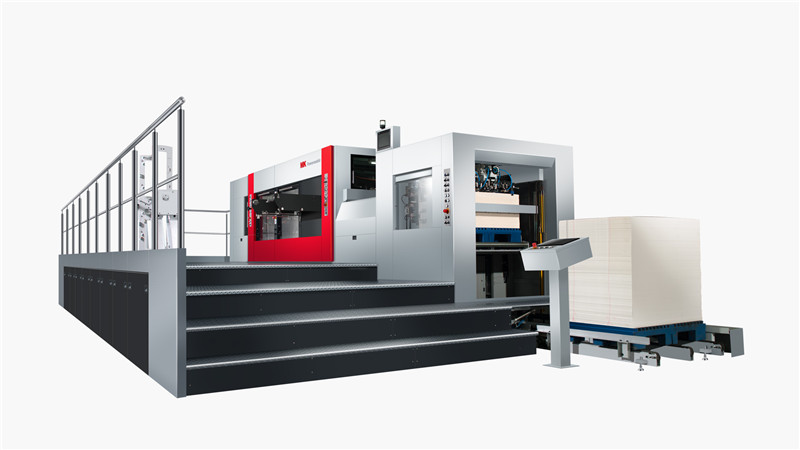
A flatbed die cutting machine uses a flat die mounted in a chase and a flat cutting plate or platen. The sheet is registered, transported into the die-cutting station, and pressed between the die and platen.
The die usually contains cutting rules, creasing rules, perforating rules, and rubber ejection materials. During one pressure cycle, the machine can cut the carton profile, form crease lines, create perforations, and produce internal openings.
In a fully automatic machine, the typical process is:
Sheet feeding → Registration → Gripper transport → Die cutting and creasing → Stripping → Blanking → Delivery
This process makes an automatic flatbed machine more than a press. It is a complete sheet-converting system that controls material movement before, during, and after die cutting.
At the cutting station, the platen closes and transfers pressure across the die-cutting area. Because the die and cutting surface are flat, pressure can be distributed across complex multi-blank layouts.
The machine then opens, the processed sheet advances, and the next sheet enters the station. Although this intermittent movement is mechanically different from continuous rotary production, it allows precise registration and controlled processing of thick, rigid, printed, and laminated substrates.
Flatbed machines normally use steel-rule dies mounted in a plywood or composite die board. The tooling can incorporate:
Cutting rules
Creasing rules
Scoring rules
Perforating rules
Rubber ejection material
Embossing elements
Stripping pins
Blanking tools
Flat steel-rule tooling is relatively economical, replaceable, and adaptable to complex packaging layouts. This is one reason flatbed technology remains widely used when converters manage multiple carton structures and frequent order changes.
A sheet-fed die cutting machine must position each sheet before cutting. Front lays establish the sheet’s forward position, while side lays or optical alignment systems control lateral position.
Once registered, gripper bars carry the sheet through the cutting, stripping, blanking, and delivery stations. Stable registration is especially important for printed folding cartons and litho-laminated corrugated packaging because cutting and creasing must align with the graphics.
A rotary die cutting machine uses cylindrical tooling that rotates against an anvil cylinder or another pressure cylinder. As the substrate passes through the rotating station, the die continuously cuts or creases the material.
Unlike the start-stop motion of a flatbed machine, rotary systems maintain continuous or near-continuous material movement. This gives rotary technology a strong advantage in repeated, high-volume converting.
Rotary die cutting is used for folding cartons, corrugated boxes, labels, tags, flexible substrates, and other converted products. The exact material range depends on whether the machine uses solid dies, flexible dies, sheet feeding, web feeding, or an integrated printing and converting line.
A solid rotary die is a machined cylindrical tool with cutting and creasing elements built into the cylinder. It is robust and suitable for long repeated runs.
Its primary advantages include:
Continuous production
High repeatability
High mechanical output
Long tooling life when correctly maintained
Suitability for stable, repeated packaging structures
However, solid rotary dies usually involve higher manufacturing costs and longer preparation lead times than flat steel-rule dies. They also require more storage space and handling equipment.
Flexible dies are thinner metal plates mounted around a magnetic cylinder. They are commonly associated with labels and other web-fed materials, although their application range depends on die construction and substrate requirements.
Flexible dies can reduce tool weight and storage requirements, but they are not always suitable for heavy board, deep creasing, or demanding corrugated packaging.
A corrugated rotary die cutter often forms part of an integrated corrugated converting line. Printing, slotting, creasing, die cutting, waste removal, and stacking may be connected in one continuous production process.
This arrangement is particularly valuable when a converter repeatedly manufactures large volumes of standardized corrugated packaging. However, the total production line can require substantial floor space, tooling investment, and production volume to justify the capital cost.
The mechanical difference between a flat platen and rotating cylinders affects the complete converting process.
An industrial flatbed die cutter applies pressure when the platen closes. Rotary equipment applies pressure continuously as the die cylinder turns against the anvil.
Flatbed pressure is well suited to:
Thick paperboard
Corrugated board
Multi-layer laminated material
Long cutting-rule layouts
Complex carton structures
Combined cutting and creasing
Selected embossing operations
Rotary pressure is well suited to:
Continuous material flow
Repeated structures
Consistent material thickness
Long production runs
High-throughput converting
A flatbed machine generally provides more direct control over heavy cutting and precise creasing. Rotary systems can provide high repeatability, but their performance depends on cylinder condition, die geometry, anvil setting, material caliper, and pressure consistency.
Flatbed equipment is commonly sheet-fed. Printed sheets are separated, registered, gripped, and transported through the machine.
Rotary systems may be:
Web-fed
Sheet-fed
Corrugated board-fed
Integrated with flexographic printing
Integrated with sheeting or finishing units
The feeding format must match upstream printing and downstream converting.
A converter using offset-printed folding carton sheets will usually find a sheet-fed flatbed workflow easier to integrate. A corrugated plant producing repeated flexo-printed shipping boxes may benefit more from an integrated rotary line.
Flatbed equipment positions each sheet before cutting. This supports tight print-to-cut alignment for premium folding cartons and litho-laminated packaging.
Rotary systems rely on continuous web or sheet control, cylinder synchronization, and registration technology. High-quality rotary machines can achieve accurate results, but the production line must control speed, material tension, sheet movement, and cylinder position.
The choice should be based on actual print tolerances rather than assumptions that one technology is automatically accurate and the other is not.
Cutting quality is determined by more than machine type. Important variables include:
Die design
Cutting-rule condition
Creasing-rule height
Creasing matrix selection
Pressure setting
Cutting plate condition
Board grain direction
Moisture content
Material thickness
Machine rigidity
Registration stability
Flatbed machines are particularly valued for controlled creasing because folding carton production requires crease lines that fold cleanly without surface cracking or inaccurate carton geometry. Masterwork’s technical guidance identifies machine rigidity, registration, drive stability, tooling quality, and control precision as major contributors to accuracy and repeatability.
Flatbed tooling can accommodate:
Windows
Handles
Ventilation holes
Curved carton profiles
Internal cutouts
Tear-open features
Multi-blank layouts
Complex point-of-sale displays
Rotary dies can also create complex shapes, but tooling cost and lead time may become less attractive when designs change frequently.
For packaging businesses with many custom carton structures, flat tooling often provides a more flexible path from approved dieline to production.
Material is one of the first factors to consider when comparing flatbed vs rotary die cutting.
| Material | Flatbed Suitability | Rotary Suitability | Main Consideration |
|---|---|---|---|
| Folding carton board | Excellent | Excellent | Run length, printing process, creasing quality |
| Solid board | Excellent | Suitable on correctly configured systems | Material thickness and pressure |
| Coated paperboard | Excellent | Excellent | Surface protection and registration |
| Litho-laminated board | Excellent | Possible | Printed-surface alignment and sheet warpage |
| E-flute corrugated board | Excellent | Excellent | Order volume and printing workflow |
| B-flute corrugated board | Excellent | Excellent | Feeding stability and crease quality |
| C-flute corrugated board | Excellent on suitable large-format machines | Common in corrugated rotary lines | Board thickness and required output |
| Double-wall corrugated board | Suitable on machines designed for the thickness | Possible with dedicated equipment | Pressure, feeding, crushing risk |
| Labels and thin web materials | Possible but rarely the most efficient choice | Excellent | Continuous web processing |
| Flexible films | Limited to suitable configurations | Often preferred | Tension control and tool design |
| Short-run samples | Possible but requires a die | Usually uneconomical | Digital cutting may be more suitable |
Folding carton board can be processed by both technologies. The choice often depends on:
Printing format
Number of orders
Average run length
Carton complexity
Required creasing quality
Embellishment processes
Stripping and blanking needs
A flatbed machine is particularly suitable when orders change frequently or when cartons require complex creasing, windows, embossing, or precise blank separation.
Rotary technology can be attractive when the same or similar carton structures are produced continuously in large quantities.
Flatbed die cutting for corrugated board is widely used for high-quality printed boxes, litho-laminated packaging, retail displays, food and beverage packaging, and complex transport cartons.
Flatbed technology is particularly useful when the application requires:
Large sheet formats
Accurate print-to-cut registration
Controlled creasing
Complex internal waste removal
Multiple blanks on one sheet
Regular changes between packaging designs
Clean conversion of litho-laminated board
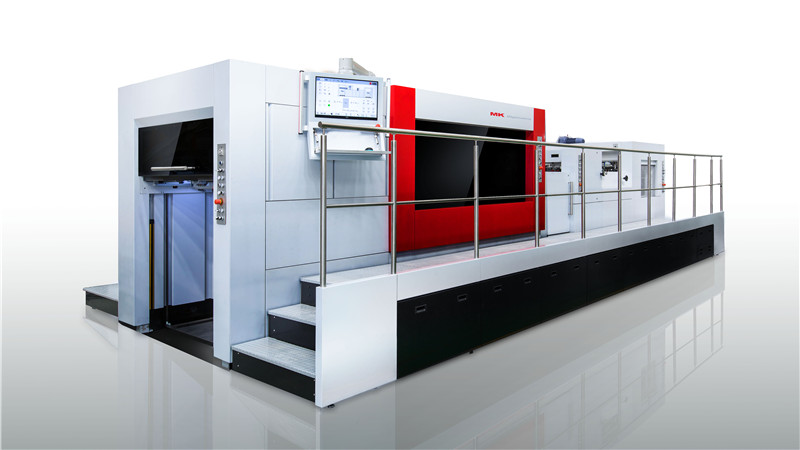
The Masterwork Ecocut 170CS, for example, is a large-format flatbed machine designed for corrugated and litho-laminated board from 1 to 8.5 mm. Its published configuration includes a 1700 × 1260 mm maximum sheet format, in-line stripping, center-positioned tooling, quick-lock systems, and a stated maximum speed of 6,000 sheets per hour.
A rotary die cutter for packaging is highly effective when corrugated products are standardized and manufactured in long, repeated runs.
Typical applications include:
Regular slotted cartons
Shipping boxes
E-commerce boxes
Food and beverage transit packaging
Agricultural packaging
Repeated flexo-printed boxes
High-volume shelf-ready packaging
A corrugated rotary line may combine printing and die cutting, reducing separate sheet handling. The economic advantage is strongest when enough repeated production is available to use the line efficiently.
The common statement that flatbed is for short runs and rotary is for long runs is useful, but incomplete.
Production economics depend on:
Tooling cost
Tooling lead time
Setup time
Setup waste
Mechanical speed
Sustainable speed
Order frequency
Number of design changes
Tool storage
Maintenance cost
Stripping requirements
Downstream capacity
Flatbed equipment is usually more flexible for short and medium runs because a flat steel-rule die is relatively economical and easier to replace than a solid rotary die.
However, very short orders may still be inefficient if the converter must produce a new die, prepare stripping tools, adjust pressure, and approve initial sheets. Digital cutting may be more suitable for samples or extremely short orders.
Rotary technology becomes more attractive when:
The design is stable
Order volume is consistently high
The same tooling will be reused
Material specifications are controlled
Upstream printing supports continuous production
Downstream stacking can handle the output
Changeovers are relatively infrequent
A converter may produce cosmetics cartons in the morning, pharmaceutical packaging in the afternoon, and a short repeat order the following day. In this environment, the machine must handle frequent changes in:
Sheet size
Board grade
Dieline
Cutting pressure
Stripping layout
Blank layout
Delivery method
Here, makeready time can be more important than maximum running speed. Masterwork’s technical guidance notes that setup time often has a greater effect on efficiency and cost than maximum speed in short-run and high-mix production.
Tooling is one of the most important economic differences between these two packaging die cutting methods.
| Tooling Factor | Flatbed Tooling | Rotary Tooling |
|---|---|---|
| Basic form | Flat steel-rule die | Solid cylinder or flexible die |
| Initial cost | Generally lower | Generally higher for solid rotary dies |
| Manufacturing lead time | Usually shorter | Often longer for solid rotary tooling |
| Modification | Relatively straightforward | Can require remachining or replacement |
| Storage | Flat storage system | Requires cylinder racks or dedicated storage |
| Handling | Can often be handled manually with assistance | Large solid dies may require lifting systems |
| Suitability for frequent design changes | High | Lower when solid dies are used |
| Suitability for repeated long runs | Good | Excellent |
Tooling cost should be calculated over the expected number of repeat orders. An expensive rotary die may provide a competitive unit cost when used for millions of identical products. The same investment may not be justified if the carton design is changed after one or two orders.
Flatbed tooling is not cost-free. Complex stripping and blanking tools can add substantial preparation time and expense. However, the modular nature of flat tooling generally supports a wider product mix.
Changeover includes more than removing one die and installing another.
A complete job change may include:
Removing the previous cutting die
Installing the new die
Changing or adjusting the cutting plate
Installing stripping tools
Installing blanking tools
Loading a new material
Adjusting the feeder
Adjusting registration
Setting cutting pressure
Running test sheets
Correcting cutting or creasing
Approving the first acceptable sheet
Flatbed systems can reduce this time through:
Centerline tooling
Quick-lock cutting plates
Quick-lock stripping frames
Preparation tables
Motorized feeder settings
Recipe storage
Automatic pressure adjustment
Optical registration
Non-stop feeding and delivery
The MK Ecocut 170CS uses center-positioning and quick-lock systems for cutting and stripping tools to reduce job-change and makeready time.
Advanced rotary lines can also provide quick die exchange and automated settings. However, the physical size and weight of solid cylinders may still affect handling time.
Die cutting does not end when the material has been cut.
Packaging sheets may still contain:
Outer trim
Internal windows
Ventilation holes
Handle openings
Small paper bridges
Gripper edges
Sheet skeletons
An automatic flatbed system can integrate cutting, stripping, blanking, counting, interleaving, and delivery.
This is particularly useful for folding cartons and litho-laminated packaging that must move directly to folder-gluing or packing operations. Stripping removes the waste, while blanking separates individual finished cartons from the carrier sheet.
Rotary lines can also include waste removal and stacking systems. Their efficiency depends on how well the entire line is configured for the product.
The correct comparison is therefore not simply:
Flatbed press vs rotary press
It is:
Complete flatbed converting workflow vs complete rotary converting workflow
Finished packaging quality depends on whether the blank can be folded, glued, filled, transported, and presented as intended.
Premium printed packaging requires the cut profile to align with graphics, borders, windows, foil, embossing, and other decorative elements.
A flatbed machine registers individual sheets before gripping them. This makes it particularly suitable for offset-printed and litho-laminated packaging.
Rotary systems can also achieve precise registration, especially when printing and cutting are integrated. However, the converter must control continuous material movement and synchronization.
Creasing affects:
Folding accuracy
Carton squareness
Surface cracking
Glue-joint alignment
Automatic packing performance
Finished appearance
Flatbed machines offer strong control of crease-rule and matrix interaction. They are therefore widely selected for folding cartons, premium paperboard packaging, and corrugated products requiring accurate folds.
Corrugated board must be cut and creased without unnecessarily damaging the flute structure.
Excessive pressure may:
Compress the board
Reduce stacking strength
Create visible surface marks
Damage printed liners
Produce weak folds
Insufficient pressure may leave incomplete cuts or poorly formed creases.
Machine rigidity, even pressure distribution, suitable tooling, and accurate setup are therefore more important than total pressure alone.
Choose a flatbed system when the production profile includes several of the following conditions.
An industrial flatbed die cutter is highly suitable for cosmetics, pharmaceutical, food, beverage, electronics, and personal-care cartons where printed graphics must remain accurately aligned with cutting and creasing.
Flatbed equipment provides the registration and pressure control required for printed sheets laminated to corrugated board.
Displays, gift boxes, handles, windows, ventilation areas, and irregular carton structures can be efficiently produced with flexible steel-rule dies.
Converters serving multiple brands or product categories benefit from relatively economical flat tooling and configurable stripping systems.
Flatbed production can balance speed, flexibility, and tooling cost across a broad range of order lengths.
A flatbed machine can cut, crease, strip, separate, count, and stack blanks in one controlled sheet-fed process.
Flatbed equipment is widely used for thicker substrates that require strong cutting pressure and controlled creasing.
Choose rotary technology when the production model includes the following conditions.
The strongest rotary economics occur when the same packaging structure is produced repeatedly in large quantities.
Rotary motion avoids the repeated opening and closing cycle of a flat platen, supporting high continuous throughput.
A rotary system can integrate flexographic printing, slotting, creasing, die cutting, and delivery.
Rotary systems are particularly well suited to continuous web production and flexible substrates.
A corrugated rotary die cutter can be highly efficient for standardized shipping boxes and flexo-printed packaging.
Rotary investment is easier to justify when tooling is reused and frequent structural changes are limited.
Flatbed and rotary machines are not the only options.
Digital or laser cutting may be more appropriate for:
Structural packaging samples
Prototypes
One-off products
Personalized packaging
Extremely short orders
Rapid design testing
Products that change before every run
Digital systems do not require a conventional physical die, reducing tooling preparation. However, their cutting speed is usually less competitive when the same carton must be produced repeatedly at industrial volume.
A practical production strategy may use digital cutting for development and sampling, followed by flatbed or rotary production after the design and order quantity are confirmed.
Purchase price alone does not determine which machine is more economical.
| Cost Category | Flatbed Consideration | Rotary Consideration |
|---|---|---|
| Machine investment | Depends on format and automation | Integrated rotary lines can require higher investment |
| Tooling | Lower-cost flat dies in many applications | Solid dies can be expensive |
| Setup labor | Affected by cutting, stripping, and blanking setup | Affected by cylinder change and line settings |
| Setup waste | Depends on registration and pressure preparation | Depends on line setup and material synchronization |
| Production speed | High, but based on intermittent sheet movement | Potentially higher in continuous production |
| Job flexibility | Strong across varied orders | Strongest with stable repeated production |
| Floor space | Concentrated sheet-fed machine footprint | Integrated lines can require greater length |
| Tool storage | Flat storage | Cylinder storage may require dedicated racks |
| Maintenance | Platen, grippers, chains, feeder, tooling stations | Cylinders, bearings, drives, anvils, web or board transport |
| Downstream labor | Reduced through stripping and blanking | Reduced when stacking and separation are integrated |
The correct metric is usually:
Total cost per acceptable finished blank
This calculation should include:
Machine depreciation
Tooling
Labor
Material waste
Energy
Maintenance
Downtime
Changeover time
Rejects
Finished blanks per sheet
Sustainable sheets per hour
| Production Requirement | Better Starting Point | Reason |
|---|---|---|
| Premium printed folding cartons | Flatbed | Accurate sheet registration and creasing |
| Litho-laminated corrugated boxes | Flatbed | Strong print-to-cut control |
| Large-format corrugated displays | Flatbed | Complex shapes and multi-blank flexibility |
| Frequently changing packaging designs | Flatbed | More economical and adaptable tooling |
| Short and medium commercial runs | Flatbed | Better balance of tooling cost and flexibility |
| Cutting, stripping, and blanking in one machine | Flatbed | Integrated sheet-fed workflow |
| Heavy paperboard or thicker corrugated sheets | Flatbed | Controlled pressure and creasing |
| Repeated standard cartons at very high volume | Rotary | Continuous production |
| Integrated flexo printing and die cutting | Rotary | Inline workflow |
| Labels and roll-fed materials | Rotary | Continuous web handling |
| Stable products using reusable cylindrical tooling | Rotary | Tool investment distributed over long runs |
| Prototypes or one-off samples | Digital or laser | No conventional cutting die required |
The flatbed vs rotary die cutting machine decision should begin with the buyer’s real production data, not with a general claim that one technology is faster or more advanced.
Choose a flatbed machine when your business depends on:
Varied carton structures
Printed sheet registration
Accurate creasing
Corrugated and litho-laminated board
Frequent job changes
Integrated stripping and blanking
Flexible tooling
Short, medium, and mixed order lengths
Choose a rotary machine when your business depends on:
Continuous output
Stable packaging structures
Repeated long runs
Inline printing and converting
High-volume corrugated or web-fed production
Maximum use of reusable rotary tooling
For many folding carton and corrugated packaging manufacturers, an automatic flatbed system provides the broadest balance of substrate flexibility, finished quality, tooling economics, and order-change capability. Masterwork’s flatbed portfolio covers medium-format folding carton production and large-format corrugated converting, including equipment developed for cutting, stripping, blanking, and multi-blank litho-laminated applications.
The final decision should be made by testing actual material, dies, sheet formats, packaging structures, and expected order volumes. A realistic test should record sustainable speed, setup waste, cutting and creasing quality, changeover time, labor requirements, and finished output—not only the machine’s stated maximum speed.
Products
Contact us
Related Information
Content

We look forward to hearing from you. In order to respond to your message more quickly, we need some information. *These are required