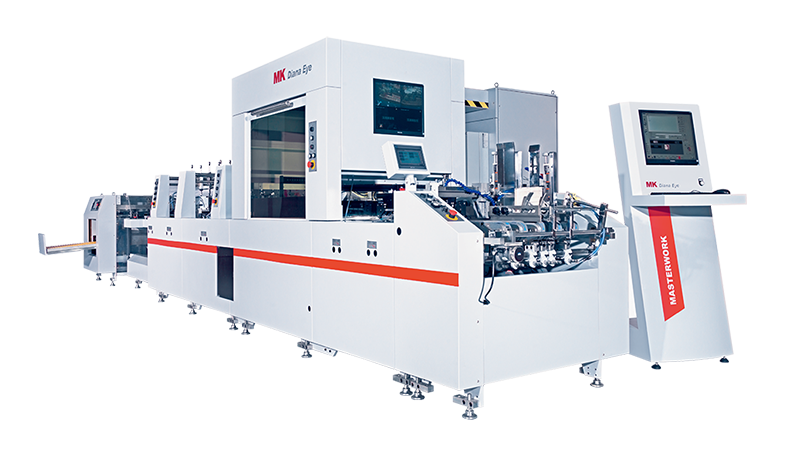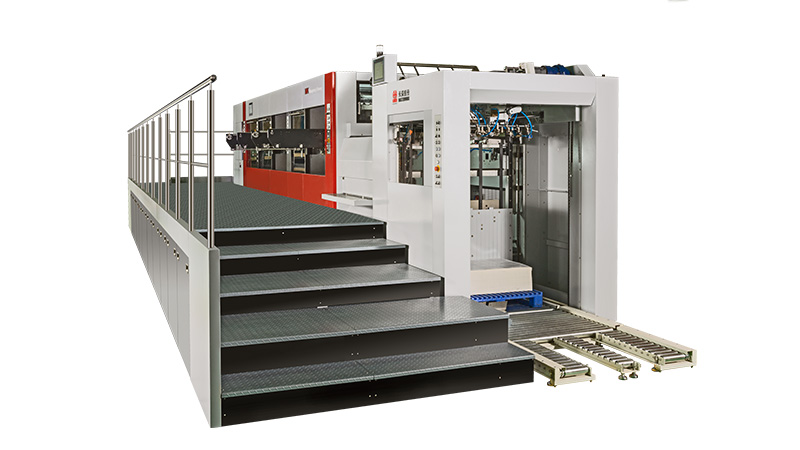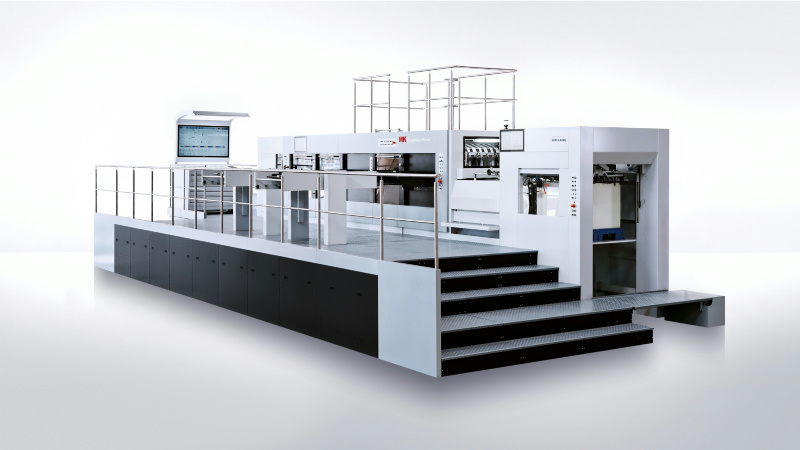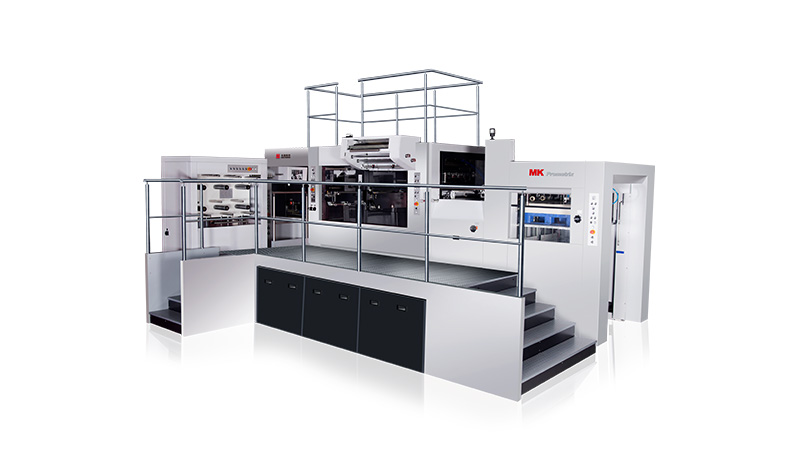
When evaluating an automatic die cutting machine, one of the first specifications buyers check is its maximum operating speed, usually measured in sheets per hour (sheets/hour or S/H).
However, a machine rated at 9,000 sheets per hour does not necessarily produce 72,000 finished sheets during an eight-hour shift.
Actual production output depends on several factors, including operating speed, setup time, material handling, unexpected downtime, and the percentage of acceptable finished products.
For packaging manufacturers, understanding these factors is essential for planning production schedules, comparing equipment, and estimating manufacturing costs.
This guide explains how to calculate the actual output of an automatic die cutting machine using practical formulas and a realistic production example.
Before calculating output, it is important to distinguish between three common production measurements.
| Measurement | Meaning | Example |
|---|---|---|
| Rated machine speed | Maximum operating speed specified by the manufacturer | 9,000 sheets/hour |
| Actual running speed | Average speed while the machine is operating | 7,200 sheets/hour |
| Actual production output | Acceptable sheets produced during the scheduled production period | 45,396 good sheets/shift |
Rated speed describes the equipment's maximum stated processing capability under specified conditions. It is useful for comparing equipment specifications but does not account for daily production interruptions.
Actual running speed reflects how quickly the machine processes sheets while operating. It may be lower than the rated speed because of material characteristics, carton complexity, feeding stability, or required quality standards.
Actual production output represents the number of acceptable sheets completed over a defined production period, after accounting for downtime and rejected products.
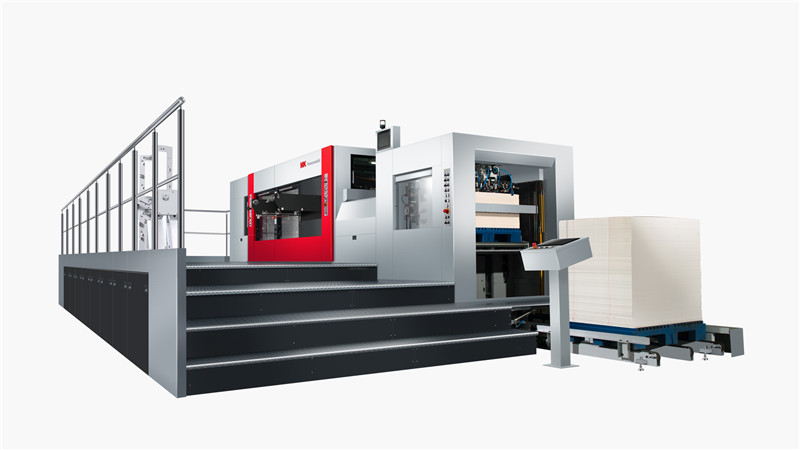
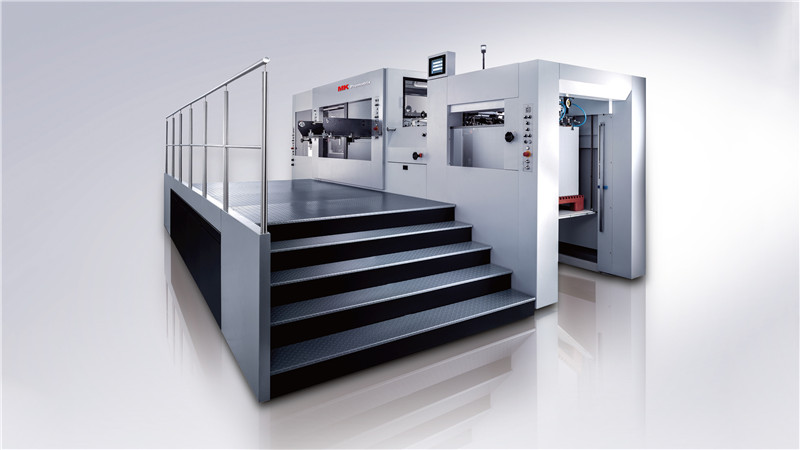
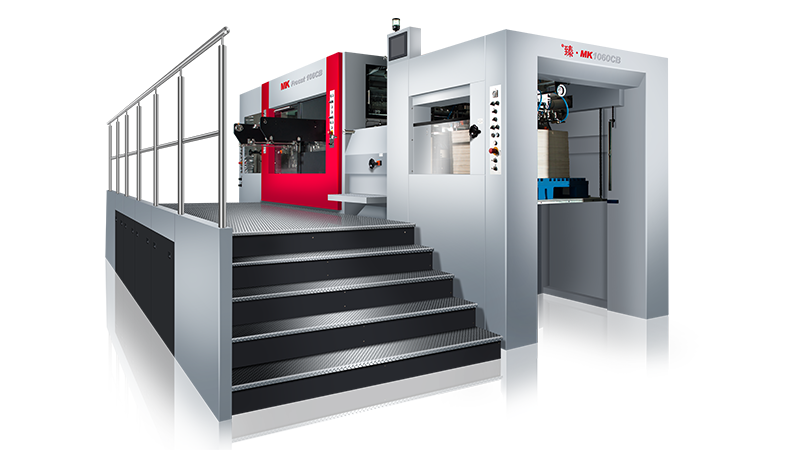
For example, the Mastermatrix 106CSB from MK Masterwork has a maximum rated speed of 9,000 sheets per hour.
However, the manufacturer's specifications also indicate that machine speed varies with the product being processed.
Therefore, production managers should use actual operating data rather than rated speed alone when forecasting daily output.
The calculation requires three primary variables:
Actual running time: The time the machine is physically processing sheets.
Average running speed: The average number of sheets processed per operating hour.
Good-sheet yield: The proportion of processed sheets that meet the required quality standards.
The basic formula is:
Actual Output = Running Time × Average Running Speed × Good-Sheet Yield
For example, if a machine operates for six hours at an average speed of 7,000 sheets/hour with a 98% good-sheet yield:
Actual Output = 6 × 7,000 × 0.98
Actual Output = 41,160 good sheets
This calculation provides a more realistic production estimate than multiplying the maximum rated speed by the total shift duration.
For production planning, each variable should be based on previous production records or verified trial runs whenever possible.
A production shift includes activities other than cutting sheets.
Common sources of downtime include:
Cutting die changes and machine setup.
Feeder adjustments and material replenishment.
Cutting pressure and registration corrections.
Cleaning, troubleshooting, and unexpected equipment stoppages.
Actual running time can be calculated as:
Running Time = Planned Production Time − Total Downtime
For example, consider an eight-hour production shift with the following interruptions:
| Production activity | Time |
|---|---|
| Planned production time | 480 minutes |
| Machine setup and changeover | 45 minutes |
| Material replenishment | 15 minutes |
| Equipment stoppages and adjustments | 30 minutes |
| Actual running time | 390 minutes |
In this case:
Running Time = 480 − 45 − 15 − 30 = 390 minutes
390 ÷ 60 = 6.5 operating hours
Although the shift lasts eight hours, the machine is actually processing sheets for only 6.5 hours.
This example assumes the entire eight-hour period is scheduled production time. Any excluded breaks should be deducted before calculating downtime.
The next step is to identify the machine's actual running speed.
Suppose an automatic die cutting machine has a maximum rated speed of 9,000 sheets/hour but operates at an average of 7,200 sheets/hour during a particular packaging job.
The machine's running-speed ratio is:
Running-Speed Ratio = 7,200 ÷ 9,000 × 100%
Running-Speed Ratio = 80%
This does not necessarily indicate a mechanical problem.
Different carton materials, sheet sizes, cutting layouts, and production requirements may affect the operating speed selected by the operator.
For example, relatively straightforward folding carton layouts may allow faster processing, while difficult materials or complex stripping requirements may require slower operation to maintain consistent quality.
For meaningful comparisons, manufacturers should record the average running speed for each material and job type rather than assume that every product can be processed at the same speed.
Not every processed sheet becomes an acceptable finished product.
Some sheets may be rejected because of:
Incomplete cutting.
Incorrect registration.
Creasing defects.
Paperboard damage.
Incomplete waste removal.
Other quality problems identified during inspection.
Good-sheet yield measures the proportion of acceptable sheets among all processed sheets.
The formula is:
Good-Sheet Yield = Acceptable Sheets ÷ Total Processed Sheets × 100%
For example, if a machine processes 10,000 sheets and 9,700 meet the required quality standards:
Good-Sheet Yield = 9,700 ÷ 10,000 × 100%
Good-Sheet Yield = 97%
Quality losses directly reduce usable production output.
This is why a machine operating at a high speed with frequent cutting defects may deliver fewer acceptable products than a slightly slower machine with more stable production quality.
Consider a hypothetical folding carton production facility using an automatic die cutting machine rated at 9,000 sheets/hour.
The plant operates one eight-hour shift.
Based on its production records, the facility identifies the following operating conditions:
| Production parameter | Value |
|---|---|
| Maximum rated machine speed | 9,000 sheets/hour |
| Planned production time | 8 hours |
| Setup and other downtime | 1.5 hours |
| Actual running time | 6.5 hours |
| Average running speed | 7,200 sheets/hour |
| Good-sheet yield | 97% |
The output calculation follows three steps.
1. Calculate total processed sheets
6.5 × 7,200 = 46,800 sheets
2. Calculate rejected sheets
46,800 × 3% = 1,404 sheets
3. Calculate acceptable output
46,800 − 1,404 = 45,396 good sheets
Therefore, the estimated actual output is 45,396 acceptable sheets per shift.
Compare this with the theoretical maximum:
9,000 × 8 = 72,000 sheets
The difference is significant.
| Output measurement | Sheets per shift |
|---|---|
| Theoretical maximum | 72,000 |
| Total sheets processed | 46,800 |
| Acceptable finished sheets | 45,396 |
| Difference from theoretical maximum | 26,604 |
This percentage is not an actual performance result for any particular MK machine. It illustrates why maximum speed alone should not be used to estimate daily production capacity.
Packaging manufacturers often need to calculate the number of finished carton blanks rather than the number of processed sheets.
A single printed sheet may contain multiple carton layouts, depending on the packaging design and imposition arrangement.
For example, one sheet might contain four carton blanks.
The basic calculation is:
Acceptable Carton Blanks = Acceptable Sheets × Carton Blanks per Sheet
Using the previous example:
45,396 good sheets × 4 blanks per sheet = 181,584 acceptable carton blanks
This calculation assumes that every blank on each accepted sheet meets the required quality standards and that no additional losses occur during separation or collection.
For more complex layouts, manufacturers should record acceptable carton blanks directly, especially when partially defective sheets may still contain usable cartons.
It is also important to distinguish between die-cut carton blanks and fully assembled cartons.
If the production process includes folding and gluing, downstream waste and equipment capacity must be considered separately.
The final output of the entire packaging line may be limited by a process other than die cutting.
Overall Equipment Effectiveness (OEE) is another useful method for evaluating actual production performance.
OEE combines three measurements:
OEE = Availability × Performance × Quality
Each measurement represents a different source of production loss.
Availability measures how much of the scheduled production time the machine actually operates.
Availability = Running Time ÷ Planned Production Time
Using the previous example:
6.5 ÷ 8 × 100% = 81.25%
Performance measures the actual processing rate compared with an established ideal operating rate.
Performance = Actual Running Speed ÷ Ideal Running Speed
Using the rated speed as the ideal reference:
7,200 ÷ 9,000 × 100% = 80%
For formal OEE tracking, the ideal speed must be defined consistently and should represent a valid ideal processing rate for the machine and measured production process.
Quality measures the percentage of acceptable products.
Quality = Good Sheets ÷ Total Processed Sheets
In this example:
45,396 ÷ 46,800 × 100% = 97%
OEE = 81.25% × 80% × 97%
OEE = 63.05%
This matches the ratio of acceptable output to theoretical maximum output in the example.
However, the individual OEE components are more useful than the final percentage alone.
They show whether production losses primarily result from downtime, reduced operating speed, or quality problems.
For more information about production efficiency measurement and improvement, see MK's article on packaging production efficiency.
Once the actual output has been calculated, manufacturers can identify where improvements are most likely to increase production capacity.
Frequent job changes reduce the number of hours available for processing sheets.
This is particularly important in packaging plants producing many carton designs in relatively small batches.
Quick-lock tooling systems, advance preparation, and reusable settings can help reduce unnecessary setup delays.
Paperboard quality, sheet flatness, pile preparation, and feeder stability affect production continuity.
Frequent feeding interruptions or delivery adjustments can reduce effective running time.
Automatic feeding adjustments and non-stop material handling systems, where available, can help minimize interruptions associated with material replenishment.
Increasing machine speed is not beneficial if it leads to more rejected products.
Cutting dies, pressure settings, registration accuracy, and material characteristics must be compatible with the intended operating conditions.
Stable cutting and creasing quality helps maintain good-sheet yield and reduces the need for repeated adjustments.
In packaging production, cutting is only one part of the process.
Waste removal and finished-carton separation can also influence the machine's sustainable operating speed.
For example, the Promatrix 106CSB incorporates stripping and blanking stations, quick-lock tooling systems, and sample-sheet removal for production quality inspection.
These functions address several operations that affect production continuity, although actual output still depends on the job and operating conditions.
Worn components, insufficient lubrication, and inconsistent setup procedures can contribute to unexpected downtime.
Routine inspection, preventive maintenance, and operator training can help reduce avoidable production interruptions.
Tracking stoppage reasons is often more useful than simply recording total downtime because it identifies the specific problems that need attention.
Increasing the maximum running speed is not always the most effective way to improve productivity.
Consider the previous production example, where the machine achieves 45,396 acceptable sheets per shift.
Suppose the plant introduces better tooling preparation and reduces total downtime from 1.5 hours to 1 hour.
If average running speed and quality yield remain unchanged:
Running Time = 8 − 1 = 7 hours
Actual Output = 7 × 7,200 × 97%
New Actual Output = 48,888 good sheets
The difference is:
48,888 − 45,396 = 3,492 additional good sheets per shift
That represents an output increase of approximately 7.7%, without increasing the machine's running speed.
This example demonstrates why reducing downtime can be just as important as improving operating speed.
Manufacturers should evaluate improvements based on acceptable finished output, not simply higher machine speed readings.
When selecting a new automatic die cutting machine, buyers should look beyond the maximum speed listed in the technical specifications.
A more useful evaluation includes:
| Evaluation factor | Question to ask |
|---|---|
| Maximum speed | What is the manufacturer's rated processing speed? |
| Sustainable speed | How fast can the machine process our actual materials consistently? |
| Setup efficiency | How long does a typical job change require? |
| Material handling | Can feeding and delivery operations minimize interruptions? |
| Finished quality | What percentage of sheets meet the required cutting and creasing standards? |
| Automation | Are stripping, blanking, and production setting functions available? |
| Service support | What maintenance, training, and technical support can the supplier provide? |
Whenever possible, buyers should request machine demonstrations using their own paperboard, carton layouts, and quality requirements.
A test using actual production materials can help establish a more realistic estimate of operating speed, acceptable output, and equipment suitability.
The rated speed depends on the machine model. However, actual production output is affected by material characteristics, operating conditions, downtime, and quality yield.
Buyers should distinguish between maximum rated speed, average running speed, and acceptable output per scheduled production hour.
Actual output may be lower because of setup time, material replenishment, machine stoppages, reduced operating speed, and rejected sheets.
These factors reduce the amount of acceptable production completed during a shift.
Multiply actual running hours by average running speed and good-sheet yield.
If a factory operates multiple shifts, calculate each shift separately and combine the acceptable output.
This is particularly important when different shifts process different carton designs or materials.
Both are useful, but they measure different things.
Sheets per hour indicates the machine's processing rate, while cartons per hour reflects the number of carton blanks produced from the sheet layout.
For packaging production planning, acceptable carton blanks may be a more useful commercial output measurement.
Not necessarily. A higher-rated machine may deliver less usable output if changeovers, feeding interruptions, or quality losses reduce productive time.
The most suitable equipment depends on order volume, material requirements, production flexibility, and achievable output under actual operating conditions.
Calculating the actual output of an automatic die cutting machine requires more than multiplying maximum speed by working hours.
Running time, average operating speed, and acceptable-product yield all influence the final result.
By recording these factors and monitoring OEE, packaging manufacturers can better understand their existing capacity, identify production losses, and make more informed equipment investment decisions.
For buyers comparing automatic die cutting solutions, the most meaningful performance indicator is not the highest advertised speed, but the number of acceptable carton blanks the machine can reliably deliver under real production conditions.
Products
Contact us
Related Information
Content

We look forward to hearing from you. In order to respond to your message more quickly, we need some information. *These are required