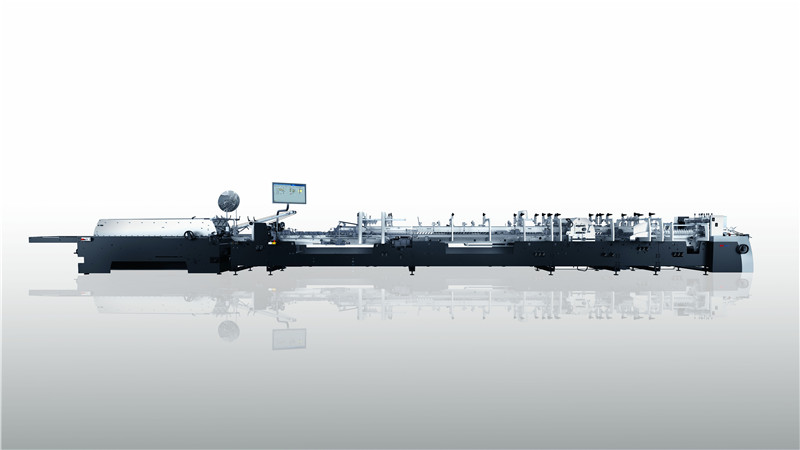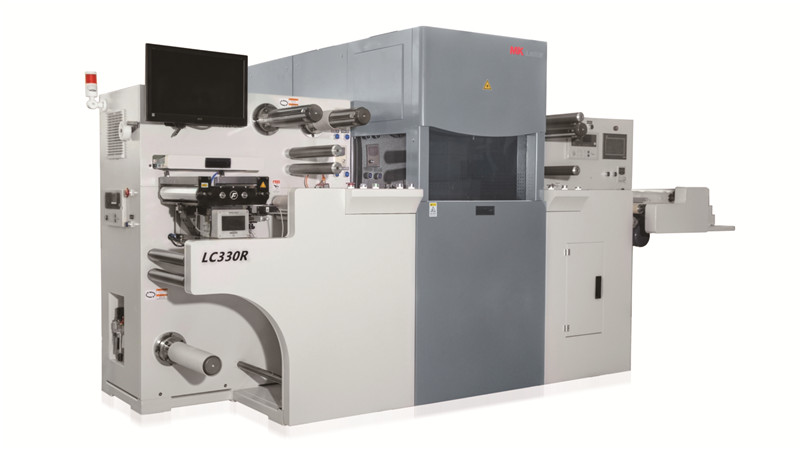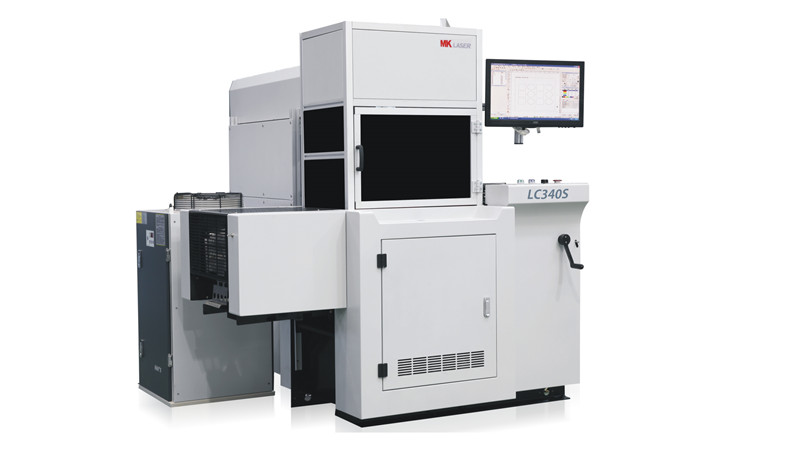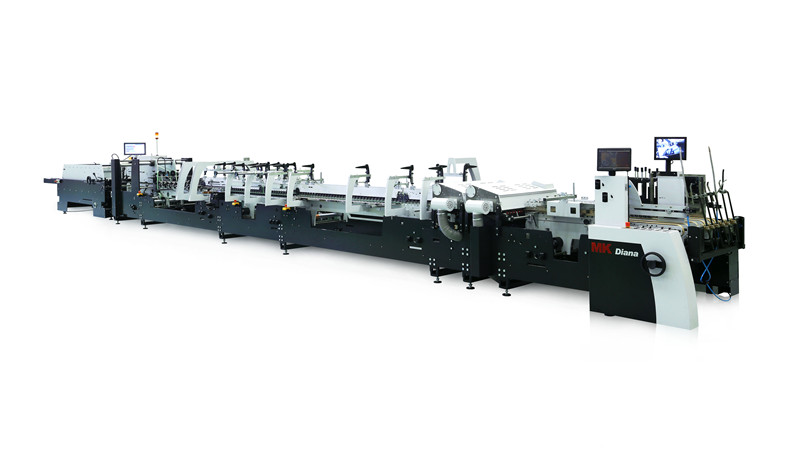
A complete folding carton production line typically requires prepress equipment, a printing press, a die cutting machine and folding and gluing equipment. Depending on the packaging design and quality requirements, manufacturers may also need foil stamping machines, coating equipment, inspection machines and automated material handling systems.
For standard folding cartons, printing, die cutting, creasing, folding and gluing form the primary production workflow. Premium packaging may require additional finishing processes such as hot foil stamping and embossing.
The appropriate equipment configuration depends on carton design, sheet size, paperboard thickness, production volume, finishing requirements and the desired level of automation.
Printing presses, die cutting machines and folder gluers are the primary equipment used in conventional printed folding carton production.
Foil stamping machines are added when metallic decoration or other compatible premium finishing effects are required.
Stripping and blanking systems can reduce manual handling after die cutting.
Inspection machines help identify printing and finishing defects before cartons are delivered.
Production line capacity should be calculated using actual operating output rather than maximum machine speed alone.
MK Masterwork supplies industrial postpress equipment for folding carton production, including die cutting machines, foil stamping machines, folder gluers and inspection machines.
The following table summarizes the principal equipment used in a folding carton production line and its role in the manufacturing process.
| Equipment | Main Function | Configuration Requirement |
|---|---|---|
| Prepress Equipment | Artwork preparation, structural design and printing plate production | Required for in-house prepress |
| Printing Press | Prints graphics, text and branding onto paperboard | Required for in-house printing |
| Coating or Laminating Equipment | Provides surface protection and decorative finishes | Application-dependent |
| Foil Stamping Machine | Applies decorative foil and supports compatible premium finishing processes | Optional |
| Die Cutting Machine | Cuts and creases printed paperboard into carton blanks | Core equipment |
| Stripping and Blanking Systems | Remove waste and separate individual carton blanks | Application-dependent |
| Folder Gluer | Folds and glues carton blanks into the required structure | Core equipment for glued cartons |
| Inspection Machine | Detects printing, finishing and other supported quality defects | Recommended according to quality requirements |
| Material Handling Equipment | Transfers paperboard, work-in-progress and finished products | Automation-dependent |
Not every manufacturer needs to purchase all these machines. Businesses that outsource printing or coating can focus their investment on postpress converting equipment.
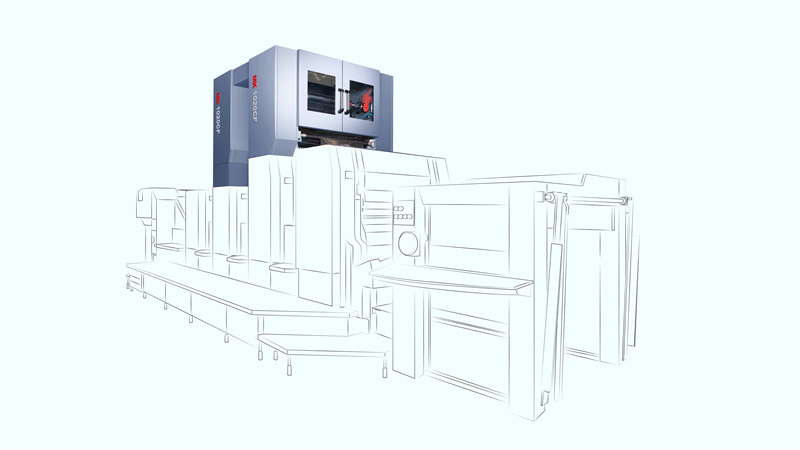
A printing press transfers graphics, product information and branding onto paperboard before the material is converted into folding cartons.
Sheet-fed offset printing is widely used in conventional folding carton manufacturing because it supports detailed graphics and consistent color reproduction. Digital printing may be suitable for short runs, customized packaging and frequent artwork changes.
When evaluating a printing press, manufacturers should consider:
Maximum and minimum sheet size.
Paperboard compatibility.
Number of printing colors.
Color consistency and registration.
Coating requirements.
Actual operating speed.
The printing press format should be compatible with the sheet formats accepted by downstream finishing equipment.
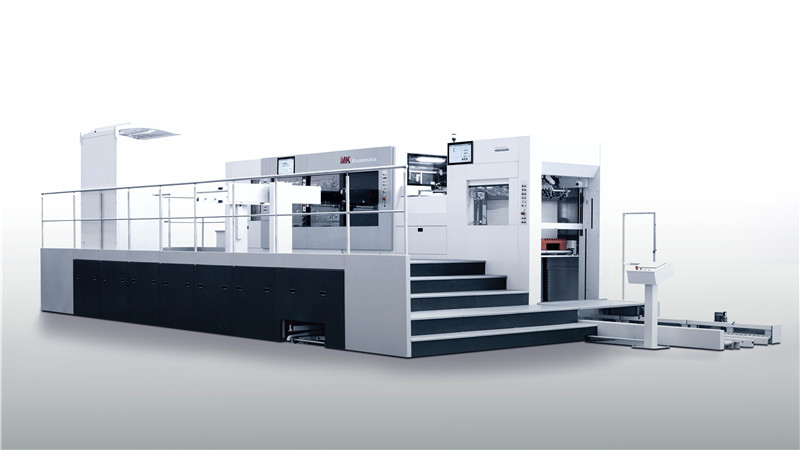
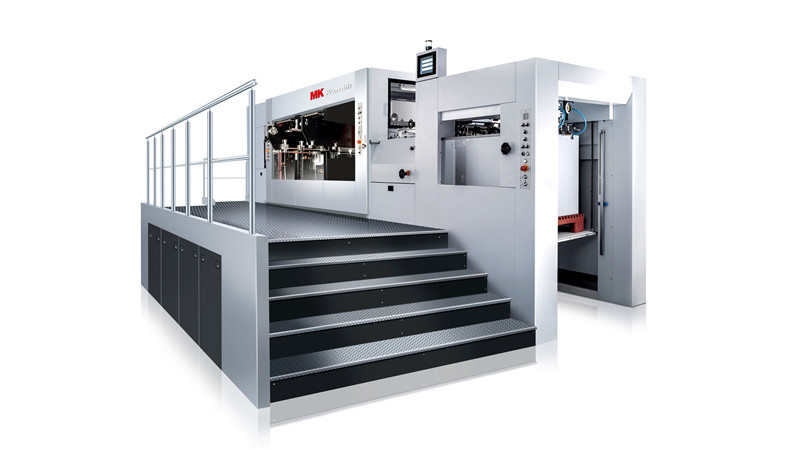
A die cutting machine converts printed paperboard into flat carton blanks by cutting the required outlines and forming crease lines.
For conventional folding carton production, flatbed die cutting is widely used because it supports different carton structures, detailed shapes and creasing operations.
Industrial automatic die cutting machines may also include stripping and blanking stations, depending on their configuration. Stripping removes unwanted material surrounding or within carton blanks, while blanking separates individual blanks for subsequent processing.
When purchasing a die cutting machine, manufacturers should evaluate sheet format, cutting pressure, material thickness, registration accuracy, stripping requirements and actual output.
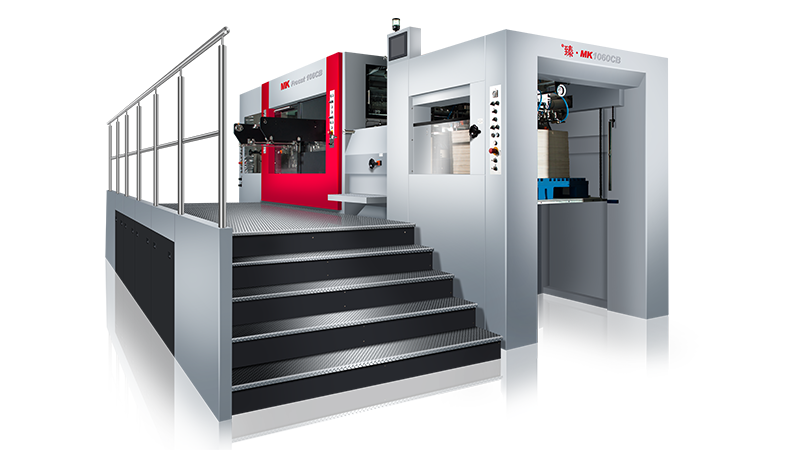
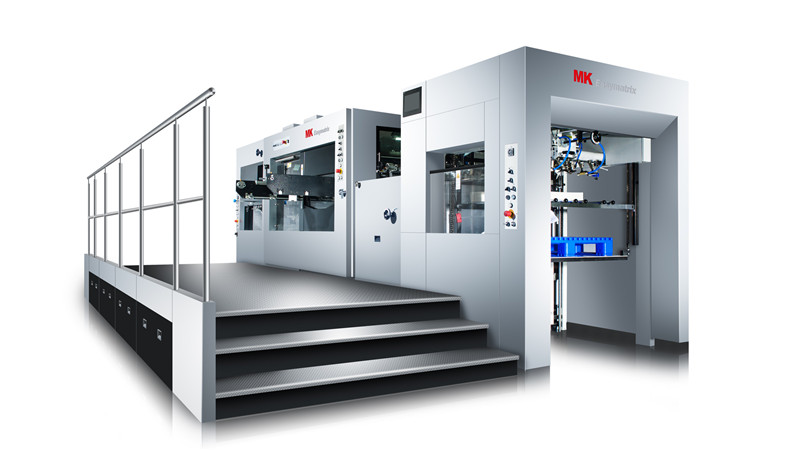
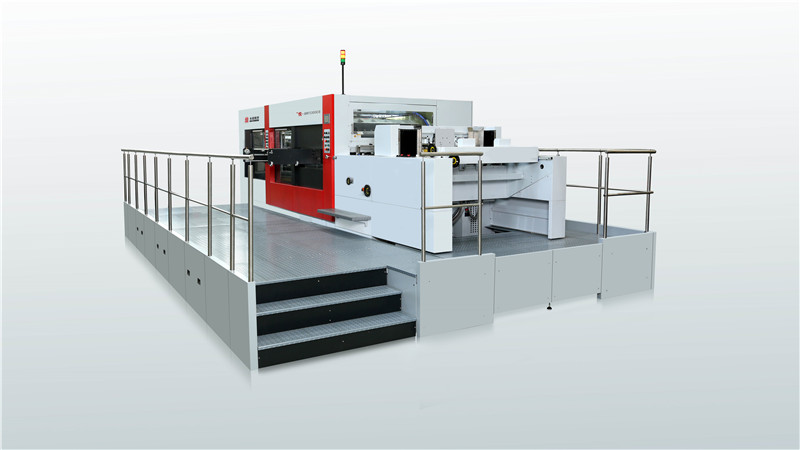
MK Masterwork offers automatic die cutting equipment for different sheet formats and production requirements, including Easymatrix 106C CS, Promatrix 145CSB and Mastermatrix 106CSB.
A foil stamping machine is used when folding cartons require metallic graphics, decorative logos, holographic effects or other compatible premium finishes.
It is particularly relevant to cosmetics, wine and spirits, confectionery and luxury packaging applications.
Foil stamping can be performed as a separate production operation or integrated with other finishing processes using suitable equipment.
Manufacturers producing premium packaging should consider stamping area, foil feeding configuration, temperature control, registration accuracy, embossing requirements and expected foil consumption.
For smaller-format production, MK Masterwork offers the Multimatrix 60FC. For larger or more complex packaging requirements, the Promatrix 106FC and Duopress 106FCSB provide different finishing configurations.
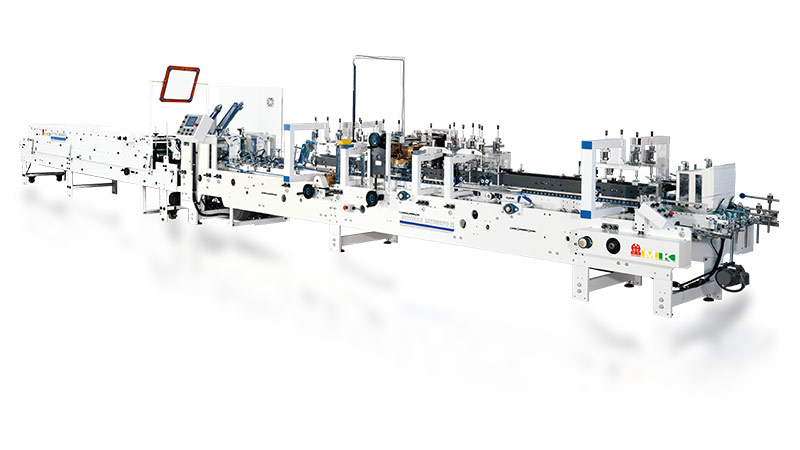
A folder gluer converts flat, die-cut carton blanks into folded and glued packaging products.
The machine feeds individual blanks, folds them along their crease lines, applies adhesive and delivers the finished cartons in the required folded configuration.
Different carton structures may require additional folding modules or specialized configurations. Common applications include straight-line cartons, lock-bottom cartons and more complex multi-corner boxes.
When selecting a folder gluer, manufacturers should evaluate carton blank dimensions, supported box structures, adhesive requirements, operating speed and changeover efficiency.
An inspection machine helps packaging manufacturers identify quality defects that could otherwise reach customers.
Depending on its inspection capabilities and configuration, the equipment may detect color variations, missing print, contamination, surface defects or problems associated with decorative finishing.
Inspection equipment is particularly relevant to pharmaceutical, cosmetic and premium consumer packaging, where printed appearance and product information are important.
Manufacturers should select inspection equipment according to the defects they need to detect, the carton format and the required inspection speed.
Larger folding carton factories may benefit from automated material handling systems that coordinate the transfer of paperboard, pallets, semi-finished products and finished cartons between production areas.
Automated guided vehicles, conveying systems and other logistics equipment can reduce repetitive manual transportation and support more consistent material flow.
Material handling automation should be introduced according to factory layout, production volume and existing workflow bottlenecks.
There is no single equipment configuration suitable for every folding carton manufacturer. The appropriate production line depends on the type of packaging being produced and the processes performed in-house.
| Packaging Application | Recommended Core Equipment | Additional Equipment to Consider |
|---|---|---|
| Standard Food and Retail Cartons | Printing press, die cutting machine, folder gluer | Coating, stripping and blanking |
| Pharmaceutical Cartons | Printing press, die cutting machine, folder gluer | Inspection equipment and application-specific finishing |
| Cosmetic and Luxury Packaging | Printing press, foil stamping machine, die cutting machine, folder gluer | Embossing, coating and inspection |
| Short-run Customized Packaging | Suitable printing press, flexible die cutting machine, folder gluer | Small-format foil stamping equipment |
| High-volume Folding Carton Production | Printing press, automatic die cutting machine, high-capacity folder gluer | Automated blanking, inspection and material handling |
Food-contact packaging, pharmaceutical packaging and other specialized applications may require additional material, process and quality controls according to their intended use.
MK Masterwork provides a range of postpress equipment for different folding carton production requirements. The following machines illustrate how equipment can be selected according to packaging format and finishing needs.
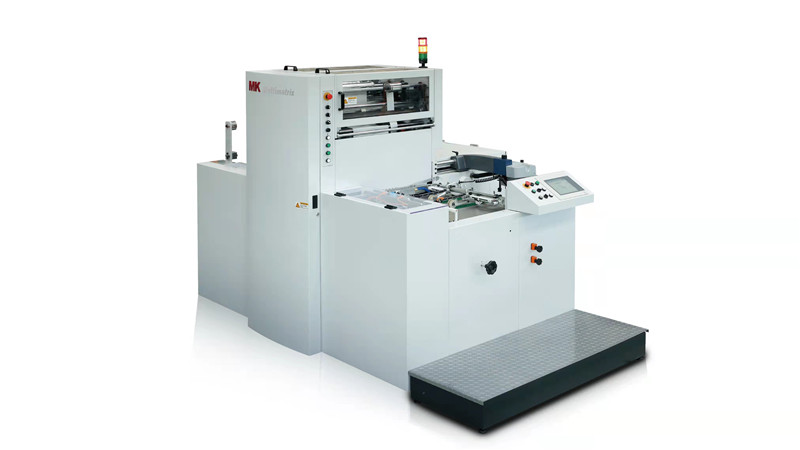
The Multimatrix 60FC is a small-format machine supporting die cutting, hot foil stamping and embossing, with a maximum sheet format of 450 × 600 mm.
It is suitable for manufacturers handling smaller packaging formats that require flexible finishing capabilities.
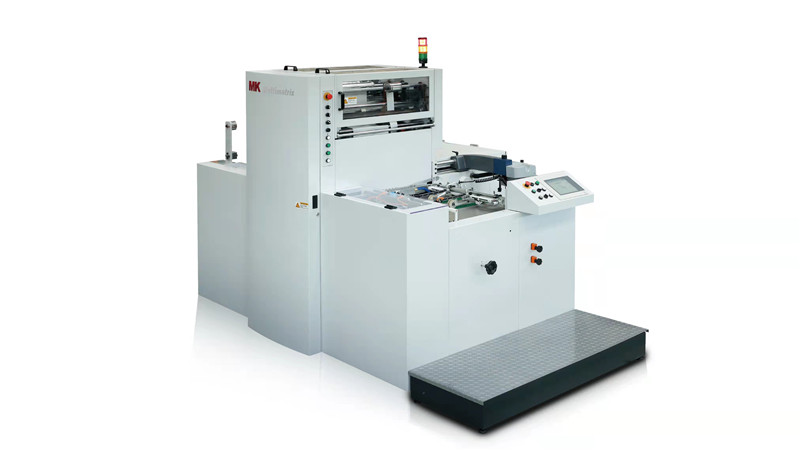
The Promatrix 106FC is an industrial hot foil stamping machine with a maximum sheet format of 760 × 1,060 mm and a published maximum hot foil stamping speed of 7,500 sheets per hour.
Its programmable foil feeding system provides flexibility for different stamping layouts and premium packaging applications.
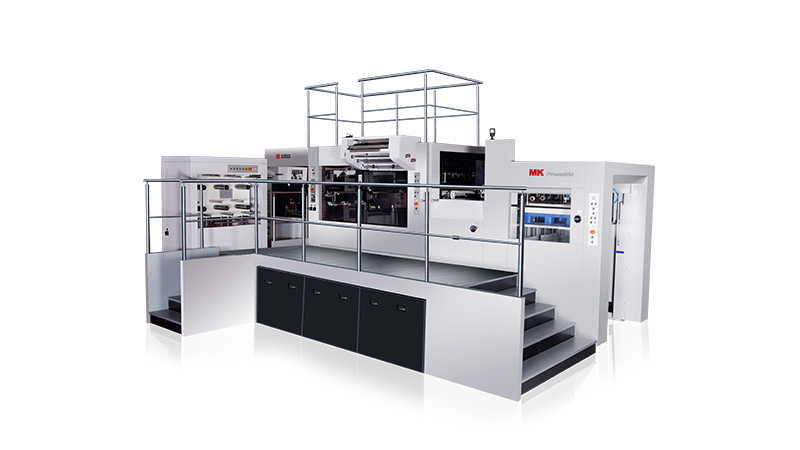
The Duopress 106FCSB is a multifunctional finishing machine integrating foil stamping, embossing, die cutting, stripping and blanking.
This configuration is suitable for packaging manufacturers looking to combine multiple finishing operations and reduce intermediate material handling.
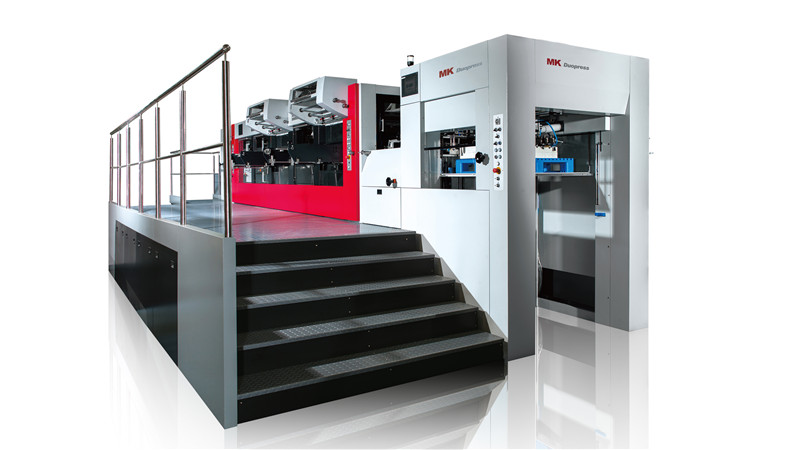
The Mastermatrix 106CSB is an automatic die cutting solution designed for industrial folding carton production, integrating cutting, stripping and blanking operations.
Equipment suitability should be confirmed according to the required sheet format, substrate, tooling, carton design and production conditions. Published maximum machine speeds do not necessarily represent sustained production output.
A conventional printed folding carton manufacturing process generally follows the sequence below:
Prepress and Artwork Preparation: Prepare the carton structure, graphic design and printing files.
Printing: Transfer graphics, branding and product information onto paperboard.
Surface Finishing: Apply coating, foil stamping or embossing where required.
Die Cutting and Creasing: Cut the printed sheets into carton shapes and create fold lines.
Stripping and Blanking: Remove unwanted material and separate individual carton blanks where required.
Folding and Gluing: Convert flat carton blanks into finished packaging structures.
Quality Inspection and Packing: Check finished products and prepare them for delivery.
Some multifunctional machines can combine several finishing processes, reducing the number of separate material transfers. For example, a combined foil stamping and die cutting configuration may be suitable for premium cartons requiring multiple decorative and converting operations.
The exact sequence should be established according to material characteristics, coating requirements, tooling and finished carton design. Inspection may also take place at intermediate production stages.
Production line capacity should be determined by the effective output of its slowest required operation. For a sheet-fed converting process, acceptable output can be estimated using the following formula:
Acceptable Carton Output per Hour = Processed Sheets per Hour × Cartons per Sheet × Acceptable Product Yield
For example, a die cutting machine processing 6,000 sheets per hour, with four carton blanks per sheet and a 98% acceptable product yield, would produce:
6,000 × 4 × 98% = 23,520 acceptable carton blanks per hour.
If the downstream folder gluer processes only 20,000 acceptable cartons per hour, the sustainable output of these connected operations cannot exceed 20,000 cartons per hour without additional capacity or changes to the workflow.
This is an illustrative calculation, not a guaranteed performance specification for a particular machine. Manufacturers should also consider setup time, maintenance, order changes, material replenishment and equipment availability when estimating daily or annual capacity.
Before requesting a quotation for a folding carton production line, buyers should prepare the following information:
Packaging applications: Food, pharmaceutical, cosmetic, retail or luxury cartons.
Carton structure: Straight-line, lock-bottom or multi-corner designs.
Material: Paperboard grade, thickness and surface treatment.
Sheet format: Minimum and maximum production sheet dimensions.
Production volume: Required daily and annual finished carton output.
Order characteristics: Average order size, SKU count and changeover frequency.
Finishing requirements: Foil stamping, embossing, coating and other processes.
Quality requirements: Registration, cutting accuracy and inspection requirements.
Factory conditions: Available floor space, utilities and material flow.
Technical support: Installation, operator training, maintenance and spare parts.
Providing this information allows equipment suppliers to evaluate compatibility between machines and recommend a production configuration based on actual project requirements.
Established in 1995, MK Masterwork develops and supplies industrial printing and packaging equipment, with a product portfolio covering multiple postpress converting and finishing processes.
MK Masterwork helps packaging manufacturers evaluate machine configurations, production requirements and workflow optimization through its industrial equipment portfolio and technical consultation services.
Available equipment categories include die cutting machines, foil stamping machines, folder gluers and inspection machines.
For customers establishing new production facilities or upgrading existing packaging lines, selecting compatible equipment and balancing the capacity of different operations are essential to achieving stable long-term production.
Yes. Manufacturers can purchase printed paperboard from external suppliers and perform die cutting, finishing, folding and gluing in-house. This approach can reduce initial equipment investment when printing is not part of the company's core production capability.
No. A foil stamping machine is not required for standard cartons without foil decoration. It is typically added for premium packaging that requires metallic logos, decorative graphics, holographic effects or other compatible finishing applications.
Yes. Certain multifunctional machines can combine foil stamping and die cutting with additional finishing operations. The MK Masterwork Duopress 106FCSB, for example, integrates foil stamping, embossing, die cutting, stripping and blanking.
A die cutting machine cuts paperboard into carton shapes and creates crease lines. A folder gluer folds and glues those flat blanks into the required packaging configuration. They perform different but complementary functions.
The cost depends on machine configuration, sheet format, production capacity, finishing requirements, inspection equipment and automation level. A project-specific quotation is more reliable than a general price range because not every factory requires the same equipment.
Production capacity should be determined by the slowest required process after accounting for actual operating speeds, material yield and production interruptions. Printing, die cutting and folding-gluing capacities should be compared in equivalent finished cartons per hour.
Planning a new folding carton production line or upgrading your existing packaging equipment? Contact MK Masterwork for professional technical consultation, customized postpress equipment recommendations and a project-specific quotation.
Products
Contact us
Related Information
Content

We look forward to hearing from you. In order to respond to your message more quickly, we need some information. *These are required